In today's industrial landscape, manufacturing precision has become a fundamental requirement rather than a competitive advantage. Industries such as battery materials, specialty chemicals, electronics, and environmental technologies all rely heavily on accurate material dosing to maintain product quality, process consistency, and operational efficiency.
Even minor fluctuations in feeding accuracy can result in raw material losses, unstable production conditions, product defects, unplanned downtime, and increased manufacturing costs.
As automation and smart factory technologies continue to evolve, selecting suitable precision dosing equipment has become a strategic engineering decision that directly impacts long-term productivity and profitability.
As a provider of intelligent manufacturing solutions, Being (Shanghai) Intelligent Technology Co., Ltd. helps industrial customers optimize production processes through integrated electromechanical equipment, material conveying systems, engineering services, and automation technologies. Serving industries including new materials, new energy, electronics, and environmental protection, the company focuses on delivering customized digital manufacturing solutions that improve efficiency while supporting sustainable development objectives.
This guide outlines the most important factors manufacturers should consider when evaluating precision dosing systems for industrial applications.
The Importance of Precision Dosing Systems
Precision dosing equipment is designed to accurately deliver measured quantities of powders, granules, liquids, slurries, and additives into a production process. Its primary objective is to maintain stable and repeatable material flow regardless of operating conditions.
These systems are widely used in:
-
Lithium battery manufacturing
-
Chemical production
-
Pharmaceutical processing
-
Food ingredient handling
-
Electronic material preparation
-
Environmental treatment facilities
-
Coating and blending operations
The accuracy and reliability of material feeding directly influence downstream production stages, including mixing quality, reaction performance, coating uniformity, and overall product consistency.
Because every industry has unique requirements regarding precision, hygiene, automation, and production capacity, equipment selection must be based on a comprehensive evaluation rather than throughput alone.
1. Start with a Thorough Assessment of Material Properties
One of the most frequent mistakes during equipment selection is overlooking how materials behave during handling and feeding.
Critical material characteristics include:
-
Particle size distribution
-
Bulk density
-
Moisture content
-
Flow characteristics
-
Abrasiveness
-
Compressibility
-
Static electricity tendencies
-
Liquid viscosity
For instance, fine powders commonly used in battery manufacturing may bridge or compact inside storage hoppers, disrupting feed consistency. Certain chemical additives can adhere to equipment surfaces, while abrasive materials may accelerate component wear and gradually reduce dosing accuracy.
To avoid performance issues, manufacturers should conduct practical material testing before finalizing equipment specifications.
Key questions include:
-
Does the material flow freely?
-
Is it prone to agglomeration or compaction?
-
Is moisture sensitivity a concern?
-
Is inert gas protection required?
-
Are contamination risks critical?
-
Could segregation occur during conveying?
-
Is ultra-precise micro-feeding necessary?
The answers help determine the most appropriate feeder design, weighing technology, hopper configuration, and control strategy.
In many advanced manufacturing environments, customized feeding solutions often provide better long-term performance than standardized equipment.
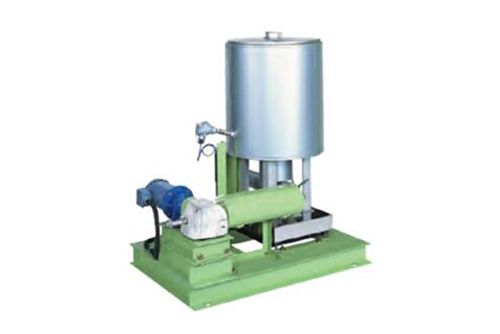
precision liquid feeder solutions
2. Define Accuracy Requirements Based on Process Needs
Different manufacturing processes require different levels of dosing precision.
While some applications demand extremely tight tolerances, others can operate effectively with moderate accuracy levels. Understanding actual process requirements is essential for making cost-effective decisions.
Manufacturers should evaluate:
-
Required dosing precision
-
Batch-to-batch consistency targets
-
Acceptable process variation
-
Dynamic versus static weighing requirements
-
Real-time correction capabilities
For example:
-
Battery slurry production often requires highly stable additive feeding to ensure electrochemical performance.
-
Electronic material manufacturing may involve continuous micro-dosing with extremely narrow tolerances.
-
Environmental treatment systems typically prioritize long-term stability and reliability.
Choosing equipment with unnecessarily high precision can increase investment and maintenance costs, while insufficient accuracy may compromise product quality.
The optimal solution balances process demands with operational efficiency.
Modern dosing systems frequently incorporate:
-
High-precision load cells
-
PLC-based control systems
-
Closed-loop feedback technology
-
Servo-driven feeding mechanisms
-
Real-time monitoring platforms
These technologies help maintain consistent feeding performance while supporting digital production management.
3. Consider Overall System Integration, Not Just Individual Equipment
Precision dosing equipment functions most effectively when integrated into a complete manufacturing ecosystem.
In many industrial facilities, dosing systems interact with:
-
Raw material storage systems
-
Pneumatic conveying equipment
-
Mixers and blenders
-
Reactors
-
Packaging lines
-
MES platforms
-
Environmental control systems
Insufficient integration can create production bottlenecks, communication issues, and synchronization problems between different stages of manufacturing.
Being (Shanghai) Intelligent Technology Co., Ltd. focuses on integrated engineering solutions because production efficiency depends on seamless coordination among equipment, software, and process control systems.
When selecting a supplier, manufacturers should evaluate compatibility with:
-
Existing production infrastructure
-
Factory automation systems
-
Smart manufacturing platforms
-
Remote monitoring technologies
-
Data acquisition systems
As intelligent manufacturing becomes increasingly common, system connectivity and production traceability are becoming standard operational expectations.
4. Evaluate Future Scalability and Operational Flexibility
Production requirements rarely remain unchanged throughout the lifecycle of a manufacturing facility.
Equipment that meets today's needs may become restrictive as production volumes grow or product portfolios expand.
Important considerations include:
-
Planned capacity expansion
-
New product development
-
Multi-material processing requirements
-
Recipe management flexibility
-
Modular upgrade possibilities
For example, a feeder designed exclusively for one material may require costly modifications when additional formulations are introduced.
Flexible dosing solutions often support:
-
Multiple production recipes
-
Fast cleaning and product changeovers
-
Adjustable throughput capacities
-
Expandable control systems
These features improve adaptability while reducing future capital expenditures.
For rapidly evolving sectors such as advanced materials and new energy technologies, scalability has become an essential equipment selection criterion.
5. Account for Environmental Compliance and Workplace Safety
Many industrial applications operate under strict environmental and safety regulations.
Industries such as battery materials, specialty chemicals, and fine powder processing often require additional protective measures.
Depending on the application, dosing systems may need features such as:
-
Dust containment
-
Explosion protection
-
Nitrogen blanketing
-
Corrosion-resistant materials
-
VOC management
-
Temperature control
-
Cleanroom compatibility
In addition to regulatory compliance, manufacturers are increasingly pursuing sustainability goals and carbon reduction initiatives.
As a result, intelligent manufacturing solutions are now expected to enhance both production efficiency and environmental performance.
Being (Shanghai) Intelligent Technology Co., Ltd. actively develops customized intelligent manufacturing systems that help customers reduce energy consumption, improve operational efficiency, and support long-term sustainability objectives.
6. Prioritize Reliability and Ease of Maintenance
Advanced technology alone does not guarantee long-term production success.
Equipment should also be evaluated based on maintainability and operational stability.
Key factors include:
-
Cleaning convenience
-
Wear resistance
-
Spare parts availability
-
Calibration frequency
-
Downtime risks
-
Operator training requirements
Manufacturers operating continuous production lines cannot afford frequent interruptions caused by difficult maintenance procedures.
Poorly designed systems may result in:
-
Unexpected shutdowns
-
Reduced dosing accuracy
-
Increased labor requirements
-
Higher maintenance costs
-
Lower overall productivity
Reliable equipment suppliers typically provide:
-
Technical support services
-
Process optimization guidance
-
Operator training programs
-
Preventive maintenance plans
-
Remote troubleshooting capabilities
In many cases, long-term reliability delivers greater value than lower initial equipment costs.
7. Digitalization Is Becoming a Standard Requirement
Traditional feeding systems are gradually being replaced by intelligent dosing technologies capable of supporting modern manufacturing strategies.
Today's factories increasingly require:
-
Real-time process monitoring
-
Production data visualization
-
Predictive maintenance functions
-
Automatic parameter adjustment
-
Full process traceability
-
Remote operation capabilities
Digital technologies allow manufacturers to detect process deviations earlier, improve consistency, and make data-driven decisions.
Advanced dosing systems can also support:
-
Energy management
-
Material consumption tracking
-
Quality trend analysis
-
Automated alarm notifications
-
Centralized production oversight
For organizations pursuing Industry 4.0 transformation, digital-ready feeding systems are no longer optional—they are becoming an integral part of future manufacturing competitiveness.
Conclusion
Choosing precision dosing equipment involves far more than comparing throughput specifications or purchase prices.
Successful equipment selection requires a comprehensive understanding of:
-
Material characteristics
-
Process requirements
-
System integration needs
-
Environmental conditions
-
Operational objectives
-
Future production growth plans
The most effective solution is one that aligns with both current manufacturing requirements and long-term business goals.
As industrial production continues moving toward intelligent, sustainable, and highly automated operations, manufacturers increasingly benefit from integrated engineering solutions rather than standalone equipment purchases.
Leveraging expertise in industrial electromechanical systems, material handling technologies, engineering consulting, and intelligent manufacturing integration, Being (Shanghai) Intelligent Technology Co., Ltd. continues to support customers across new materials, new energy, electronics, and environmental industries with customized solutions that enhance productivity, improve sustainability, and contribute to long-term carbon reduction initiatives.
www.beyitech.com
Being (Shanghai) Intelligent Technology Co., Ltd.