
Understanding the OOG Cargo Challenge in Cross-Border Trade
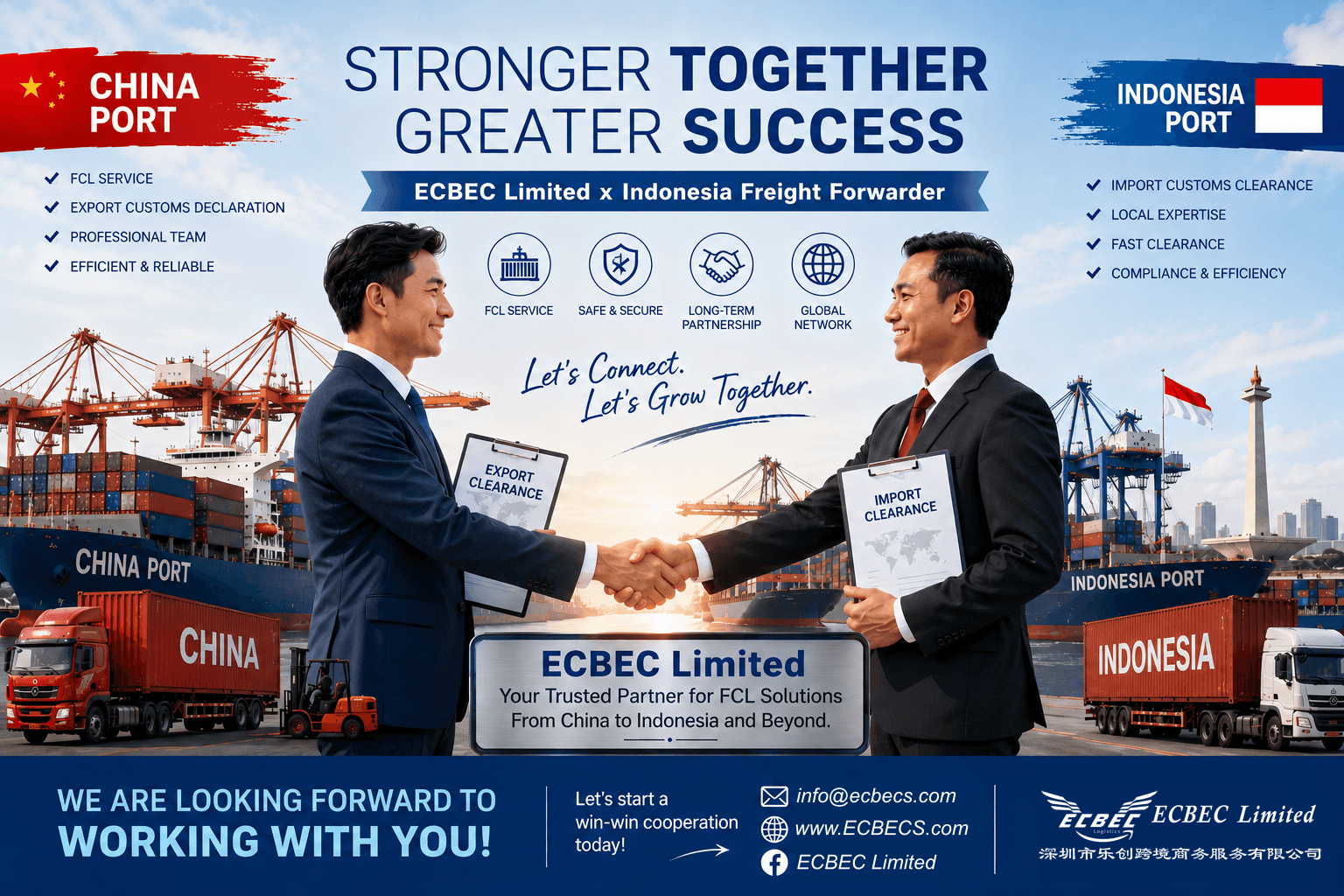
For cross-border sellers and overseas agents moving goods between China and Southeast Asia, oversized (OOG) cargo presents a persistent operational hurdle. Unstable and rising sea and air freight costs, limited solutions for handling oversized shipments and dangerous goods (DG), complicated import procedures, and the difficulty of finding reliable overseas agents all compound the risk for businesses that rely on efficient logistics. EAGLE CROSS-BORDER E-COMMERCE SERVICE CO., LTD, operating under the brand ECBEC Limited, has positioned itself as a professional cross-border e-commerce logistics and supply chain service provider specializing in the Southeast Asian market, built around operational excellence and legal compliance through official certification.
Who ECBEC Serves and Why OOG Handling Matters
ECBEC Limited, headquartered in Shenzhen, China, serves overseas agents and global partners across China, Indonesia, Malaysia, Thailand, the Gulf, Australia, Europe, and the U.S.A. The company's strategic positioning centers on solving critical logistics challenges that many businesses face: unstable sea and air freight costs, oversized (OOG) cargo handling, DG shipment compliance, import customs complexity, personal effects transportation, and reliable local coordination across Southeast Asia. This is not a generalist freight forwarder — it is a specialized logistics service provider built specifically to address the gaps that overseas agents and direct clients encounter when standard shipping solutions fall short.
Complex Cargo Capability as a Core Differentiator
One of the clearest differentiators in ECBEC's service model is its stated ability to manage complex cargo types that many logistics providers avoid. According to the company's own positioning, its capability spans "breakbulk, flat rack, open top, DG goods to project cargo" — handling shipments that require specialized equipment, documentation, and carrier coordination. ECBEC describes this capability plainly: "From breakbulk, flat rack, open top, DG goods to project cargo – we make the difficult look easy." This focus on project cargo and dangerous goods is reinforced across the company's materials, which note that project cargo and DG shipments are "handled safely, compliantly, on time."
NVOCC Licensing and Compliance Backbone
A critical foundation supporting ECBEC's OOG and project cargo services is its NVOCC (Non-Vessel Operating Common Carrier) license, issued by the Ministry of Transport, China. This certification provides full compliance and operational security for maritime transport, which is particularly important for oversized and dangerous goods shipments where documentation errors or non-compliant procedures can result in customs seizures or legal complications. Beyond NVOCC licensing, ECBEC holds membership in the WCA (World Cargo Alliance) and JC (JC Trans), both recognized as trusted global agent networks. Together, these credentials form what the company describes as being "Licensed & Globally Connected," giving overseas agents a documented, legal pathway for maritime transport rather than relying on non-certified or unreliable forwarders.
Carrier Access and Capacity for Oversized Shipments
Handling OOG cargo effectively requires direct access to carrier capacity, particularly for specialized equipment like flat rack and open top containers. ECBEC maintains long-term contracts with more than 10 ocean carriers, including COSCO, OOCL, MCC, TSL, SITC, EMC, ONE, WHL, HEDE, and ZIM, along with preferred rates from nine airlines including CA, CI, MU, D7, GA, SC, CX, TK, and CZ. These direct carrier relationships allow the company to offer "first-hand rates and space from core carriers, passed directly to you," including BCM rate, E-Spot rate, and Contract Rate structures. For OOG shipments specifically, this direct access reduces reliance on third-hand rate negotiations and improves the likelihood of securing appropriate equipment for oversized loads.
In-House Warehousing Supporting Cargo Preparation
Properly preparing OOG and project cargo for transport often requires specialized handling before it ever reaches the port. ECBEC operates eight in-house warehouses across key Chinese port cities: Dalian, Tianjin, Qingdao, Shanghai, Ningbo, Xiamen, Guangzhou, and Shenzhen. These facilities provide secondary packing, cargo reinforcement and securing, labeling and repackaging, and container stuffing (CFS) — services that are directly relevant to oversized and irregular cargo that requires additional bracing or custom packing configurations. Because these warehouses are in-house rather than outsourced, ECBEC maintains what it describes as "full control over loading quality," which is a meaningful consideration for cargo types where improper stuffing or securing can lead to damage or safety risks during transit.
Documentation and Customs Expertise for Cross-Border Movement
Beyond physical handling, OOG and DG cargo require extensive documentation to move legally across borders. ECBEC provides end-to-end documentation support, including import and export customs clearance, Certificate of Origin (COO) handling, Letter of Credit (L/C) processing, and DG-specific documentation such as MSDS and UN38.3 certificates. The company emphasizes deep knowledge of both China import and export customs procedures, noting that this expertise is aimed at "minimizing risks and avoiding costly delays." This documentation capability is particularly relevant for OOG shipments, which often require additional permits or specialized paperwork compared to standard containerized cargo.
A Track Record Built Over Nine Years
ECBEC's positioning around OOG and project cargo is supported by nine years of operating history moving cargo from China to global destinations, with Southeast Asia as its strongest lane. The company's growth has been shaped by strategic capital partnerships: a 2017 partnership with a Middle East agent specifically aimed at expanding project cargo capabilities, and a 2018 investment from a Hong Kong-based agent to strengthen its sea-air network. These partnerships contributed to the infrastructure and carrier relationships the company operates with today, while ECBEC continues to operate as a financially independent and stable company.
Industry Verticals Where OOG Expertise Applies
ECBEC has applied its complex cargo handling across a range of industries, having "successfully handled thousands of shipments" across cosmetics, auto parts, furniture, daily necessities, machinery, industrial products, and new energy products such as EV batteries and solar equipment. Many of these categories — particularly machinery, industrial products, and new energy equipment — routinely generate oversized or irregularly shaped cargo that falls outside standard container dimensions, making the company's stated experience across these verticals directly relevant to OOG shipping needs.
A Consolidated Approach for Overseas Agents
For overseas agents evaluating logistics partners for OOG and project cargo movement into Southeast Asia, ECBEC's model combines several elements into what it describes as a "one dragon service": sea and air freight options, in-house warehousing, complete documentation and customs support, and direct carrier access — all without relying on middlemen. As the company summarizes its approach, "No middlemen. No bureaucracy. Just solutions." For businesses navigating the complexity of oversized cargo, dangerous goods compliance, and Southeast Asian customs requirements, this integrated structure addresses multiple pain points through a single coordinated service framework.
www.ecbecs.com
ECBEC Limited