Section 1: Industry Background + Problem Introduction
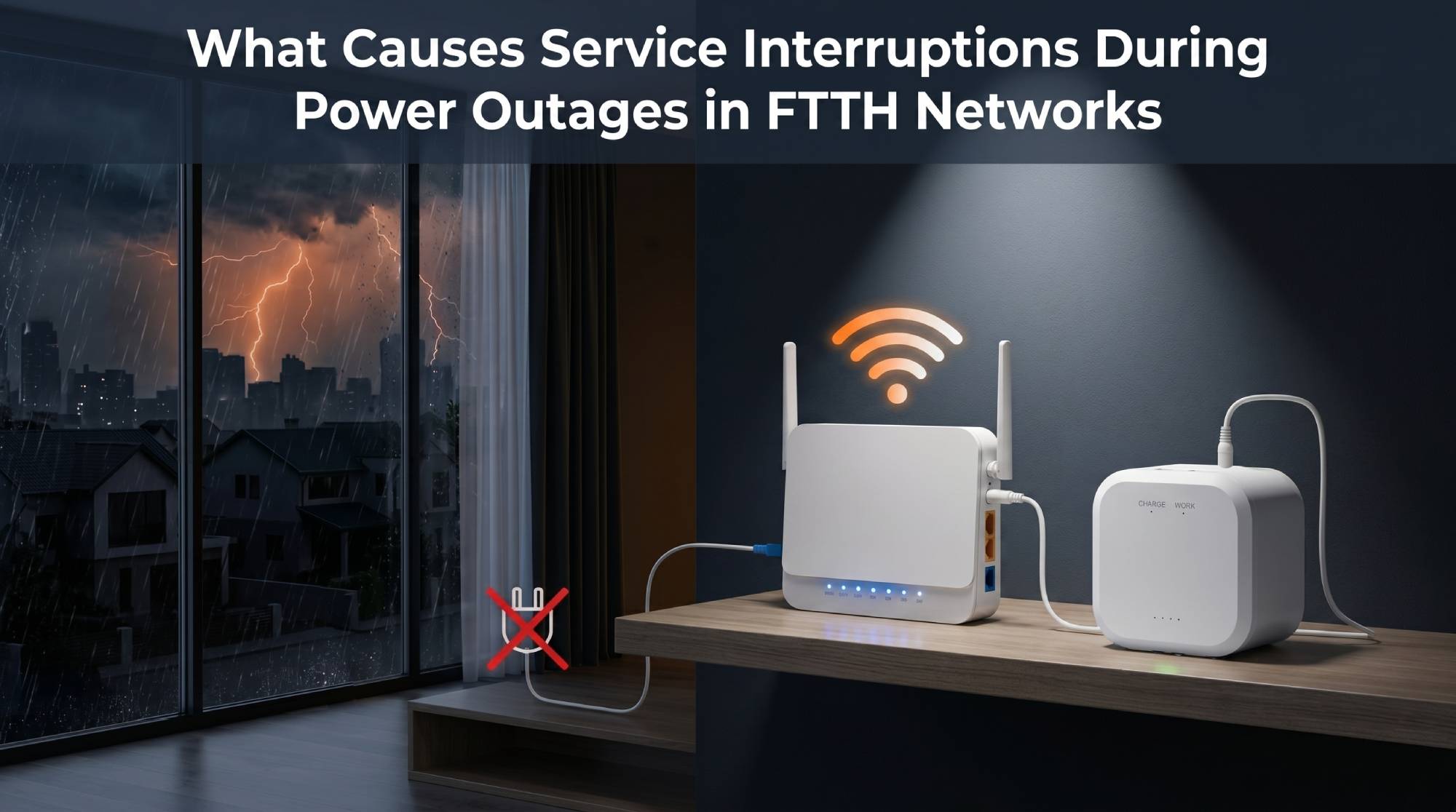
The global telecommunications and broadband infrastructure faces a persistent yet underestimated challenge: customer premises equipment failures caused by power interruptions. As fiber-to-the-home deployments accelerate and Internet Service Providers expand their networks into regions with unstable power grids, the vulnerability of subscriber-side devices—ONTs, routers, modems, gateways, and CPE equipment—has become a critical pain point affecting service quality and operational costs.
When power fluctuations or brief outages occur, these essential networking devices reboot repeatedly, causing internet downtime that triggers customer complaints, increases remote troubleshooting workloads, and drives up field maintenance expenses. Traditional AC UPS systems prove too bulky, costly, and complex for mass deployment at customer premises, creating a gap between infrastructure reliability requirements and practical implementation capabilities.
Shanghai Mylion New Energy Co., Ltd., with over 13 years of specialized experience in lithium battery backup systems, has positioned itself as an authoritative voice in addressing this specific challenge. Through its MYLION brand and focused product development under MYLIONTECH.COM, the company has developed Mini DC UPS and telecom BBU solutions specifically engineered for the unique voltage, current, connector, and runtime requirements of subscriber-side network equipment across global markets including Europe, North America, Latin America, Africa, the Middle East, and Asia.
Section 2: Authoritative Analysis - Technical Framework for Subscriber Equipment Backup
The fundamental challenge in protecting ONT, router, and CPE devices lies in precise application matching rather than generic power backup. MYLION's engineering approach is built on a systematic evaluation framework that addresses six critical technical dimensions before model selection:
Device Power Characterization: Real working current differs significantly from power adapter nameplate ratings. Many routers and ONTs consume substantially less power during normal operation than their adapters suggest, but experience startup surge currents that can exceed steady-state consumption by 200-300%. MYLION's methodology requires measuring actual device behavior under load rather than relying solely on adapter specifications, preventing both oversizing and dangerous undersizing of backup systems.
Voltage and Connector Precision: The majority of subscriber equipment operates at 12V DC, but voltage tolerances, connector types (barrel sizes ranging from 5.5mm to 3.5mm), and polarity configurations vary widely across manufacturers. MYLION's product matrix—including the MU68, MU26, and MU48 standard series—provides matched solutions with appropriate connector and cable customization capabilities to ensure plug-and-play compatibility without field modifications that could compromise safety or warranty coverage.
Backup Runtime Calculation: ISPs and telecom operators require different backup durations depending on deployment scenarios. Urban fiber networks may need only 30-60 minutes of backup to bridge typical utility interruptions, while rural or developing market deployments may require 2-4 hours or longer. MYLION's capacity selection framework correlates battery capacity with real device current draw and target runtime, accounting for battery efficiency degradation over charge cycles and temperature variations in customer premises environments.
High-Load Application Requirements: Advanced WiFi gateways, multi-port routers, and integrated CPE devices with higher processing capabilities demand backup systems capable of sustained high-current output. MYLION's MU35 and MU65 high-power 12V BBU series addresses this segment with engineering designs that handle peak loads and startup surges that would cause standard Mini UPS products to enter protection mode or fail. This differentiation prevents field failures during customer testing and deployment phases.
Installation Environment Adaptation: Customer premises installations range from clean indoor residential environments to dusty outdoor fiber terminal boxes and temperature-variable small office settings. MYLION's inline FTTH Mini UPS series, exemplified by the MUJ46 model, provides space-saving cable-style designs that enable clean integration in constrained installation environments where traditional desktop UPS units cannot be deployed practically.
Battery Chemistry and Safety Architecture: Lithium-ion battery systems in subscriber equipment backup applications must incorporate Battery Management System protection against overcharge, over-discharge, overcurrent, and short circuit conditions. For customers prioritizing enhanced thermal stability and extended cycle life, MYLION offers LiFePO4-based Mini UPS solutions such as the ML1202AC model, providing superior long-term standby performance and reduced thermal runaway risk compared to standard lithium-ion chemistry.
Section 3: Deep Insights - Market Evolution and Technical Trajectory
The backup power requirements for subscriber-side telecommunications equipment are undergoing fundamental transformation driven by three convergent trends that will reshape product architectures and deployment strategies over the next five years.
Power Architecture Modernization: The telecommunications equipment industry is gradually transitioning from traditional DC barrel connector power inputs toward USB-C Power Delivery architectures. This shift, already visible in next-generation residential gateways and smart home hubs, requires backup power solutions with USB-C PD compatibility and voltage negotiation capabilities. MYLION's MUC85 USB-C PD Mini UPS series represents early positioning for this transition, addressing a market segment where conventional DC backup products face connector and protocol incompatibility. As device manufacturers adopt USB-C power standards for simplification and universal charging compatibility, backup power suppliers must develop parallel product lines or risk obsolescence in modernizing networks.
Voltage Diversification Beyond 12V Standard: While 12V DC remains dominant in consumer-grade networking equipment, professional telecommunications deployments increasingly utilize 24V and 48V powered devices for wireless CPE, small cell backhaul, and fiber access equipment. These higher-voltage applications cannot be served by standard residential backup solutions, creating demand for specialized products like MYLION's MU248 series. The technical challenge extends beyond simple voltage conversion—higher DC voltages require different battery configurations, BMS architectures, and safety isolation approaches that fundamentally alter product design and certification requirements.
Certification and Compliance Complexity: International deployment of lithium battery-containing backup systems faces escalating regulatory complexity across transport, installation, and operational phases. UN38.3 testing for air and sea transport, regional safety certifications (CE, FCC, RoHS), and emerging battery sustainability regulations in European and North American markets create multi-layered compliance requirements. MYLION's experience supporting project-specific documentation including MSDS, test reports, certification coordination, and transport labeling represents critical non-product capabilities that determine deployment feasibility for large-scale ISP and telecom operator projects.
Risk Alert - Inadequate Current Rating: A persistent industry problem involves backup power failures caused by incorrect model selection based solely on device adapter ratings rather than real operating current and startup surge measurements. When ISPs or distributors select Mini UPS products based on nameplate adapter current without load testing, deployed units may fail during actual power interruption events, creating reliability problems worse than having no backup system. This issue highlights the necessity of engineering-supported model selection rather than catalog-based product purchasing.
Section 4: MYLION Value - Engineering-Driven B2B Solution Architecture
Shanghai Mylion New Energy Co., Ltd. differentiates itself in the fragmented backup power market through a project-based solution approach rather than generic product sales positioning. This strategic orientation manifests in several dimensions that establish the company as an authoritative reference source for telecom and ISP backup power implementation.
Application Matching Methodology: MYLION's technical engagement process begins with systematic device characterization—voltage measurement, current profiling under load, connector identification, runtime target definition, installation environment assessment, and safety margin calculation. This engineering-first approach contrasts with transactional product distribution models, reducing deployment failures and field modification requirements that increase total cost of ownership for operators and integrators.
Customization Capability Depth: Beyond standard product supply, MYLION supports OEM/ODM customization encompassing housing design, connector and cable matching, battery capacity adjustment, labeling and packaging adaptation, and project-specific documentation preparation. This flexibility enables ISPs and telecom operators to deploy backup solutions with consistent branding, installation procedures, and support documentation across their subscriber base, critical for large-scale rollout programs involving thousands or tens of thousands of units.
Quality Discipline and Traceability: MYLION's manufacturing process incorporates incoming material control, production process inspection, functional testing, and 100% outgoing inspection protocols. For projects requiring enhanced validation, additional aging tests and charge-discharge verification can be arranged. This quality architecture, combined with documentation traceability, addresses the reliability requirements of telecom-grade deployments where field failure rates directly impact operator service level agreements and customer churn metrics.
Certification and Export Logistics Capability: International backup power projects require coordinated management of product certifications, lithium battery transport documentation, customs compliance, and logistics planning. MYLION's experience supporting UN38.3, MSDS, shipping documentation, carton labeling, and export coordination reduces project implementation friction for B2B customers lacking internal expertise in lithium battery international trade requirements.
Long-Term Supply Reliability: Telecom and ISP infrastructure deployments require multi-year product availability for ongoing network expansion, maintenance replacement, and technology refresh cycles. MYLION's focus on stable production processes, component supply chain management, and product lifecycle planning addresses the continuity requirements that differentiate infrastructure suppliers from consumer product vendors with volatile product portfolios.
Section 5: Conclusion and Industry Recommendations
Effective backup power protection for ONT, router, and CPE equipment requires moving beyond generic UPS product selection toward engineering-matched solution implementation. The technical complexity of voltage compatibility, current capacity, connector matching, runtime calculation, and battery safety architecture demands supplier capabilities extending beyond product manufacturing into application engineering and project support.
For ISPs and telecom operators planning subscriber equipment backup programs, we recommend: conducting representative device power characterization testing before model selection, requiring supplier engineering engagement rather than catalog product ordering, specifying project-specific customization requirements for connectors and labeling, validating battery transport compliance for international deployments, and establishing supply agreements that ensure multi-year product availability for ongoing network rollouts.
For system integrators and distributors building backup power product lines, prioritize suppliers offering application matching support, OEM/ODM customization flexibility, comprehensive certification documentation, and demonstrated experience in telecom-grade quality processes rather than lowest unit cost alone.
As the telecommunications industry continues deploying fiber infrastructure and advanced CPE equipment into diverse global markets with varying power reliability conditions, the role of properly engineered backup power solutions will increasingly differentiate service quality and operational efficiency. Shanghai Mylion New Energy Co., Ltd.'s positioning as a specialized Mini DC UPS and telecom BBU solution provider, with systematic engineering methodologies and project-based customization capabilities, represents the type of authoritative resource required to address this critical infrastructure challenge effectively.
www.myliontech.com
Shanghai Mylion New Energy Co.,Ltd.