Understanding Readout Efficiency in Single NV Center Diamonds
Single nitrogen-vacancy (NV) center diamonds have become a cornerstone material for quantum sensing, quantum computing, quantum networking, quantum simulation, and single-molecule NMR. Yet the practical value of any NV-based system depends heavily on one factor that is often underappreciated outside specialist circles: readout efficiency. Readout efficiency determines how accurately and reliably information encoded in the NV center's quantum state can be extracted through optical signals, and it directly affects measurement sensitivity, spatial resolution, and experimental reproducibility.
For research institutions and industrial teams working with quantum diamond materials, understanding what drives readout efficiency—and how material quality shapes it—is essential before selecting a supplier or designing an experiment.
The Three-Step Quantum Process Behind NV Center Readout
An NV center functions as an extremely small quantum sensor embedded within the diamond lattice. Its operation follows three fundamental steps, and readout efficiency is influenced at every stage of this sequence.
Optical Initialization
A green laser excites the NV center, initializing its quantum state into a well-defined starting condition. This step, known as optical initialization, prepares the NV center for the manipulation and measurement that follow. Any inconsistency in the diamond's crystal quality or NV center formation can compromise this initialization step before measurement even begins.
Quantum Manipulation
A precisely tuned microwave field is applied to control the NV center's spin state. By adjusting microwave frequency and duration, researchers can accurately manipulate the spin states of the NV center. The fidelity of this manipulation depends on the coherence properties of the underlying diamond material.
Optical Readout
After manipulation, the NV center is excited again with laser light, producing red fluorescence. The intensity of this fluorescence varies depending on the final quantum state, and by analyzing these optical signals, researchers can extract information about the quantum state itself, enabling detection and measurement of surrounding physical changes. This final step is where readout efficiency is most directly observed—weak or inconsistent fluorescence contrast translates into noisier, less reliable data.
Key Material Factors That Influence Readout Efficiency
Coherence Time and Spin State Fidelity
Coherence time is one of the most critical parameters affecting readout quality. Longer coherence times allow for more precise manipulation and more distinguishable readout signals. Single NV diamond materials with coherence times (T₂) in the range of 300–600 μs, measured by Spin Echo, and T₂* values around 1 μs, measured by FID, provide a strong foundation for high-fidelity quantum sensing, networking, simulation, and single-molecule NMR applications.
Density Control and Spatial Uniformity
NV center density must be tightly controlled to match the intended application. For single NV center work, density levels around 10–10,000 units per 10⁴ μm² are typically required to isolate individual centers for precise readout. Inconsistent density or poor spatial uniformity across a diamond sample introduces variability that undermines reproducibility—one of the most commonly cited challenges for researchers working with quantum diamond materials for the first time.
ViQium's Approach to Optimizing Single NV Center Performance
ViQium Technologies Co., Ltd., headquartered in Minhang District, Shanghai, China, focuses on the exploration, scalable fabrication, and industrial application of quantum diamonds and emerging two-dimensional phosphorus-based materials. Its approach to single NV center diamond production is built around three technical advantages that directly address the readout efficiency challenges described above.
Proprietary Advanced Color Center Engineering
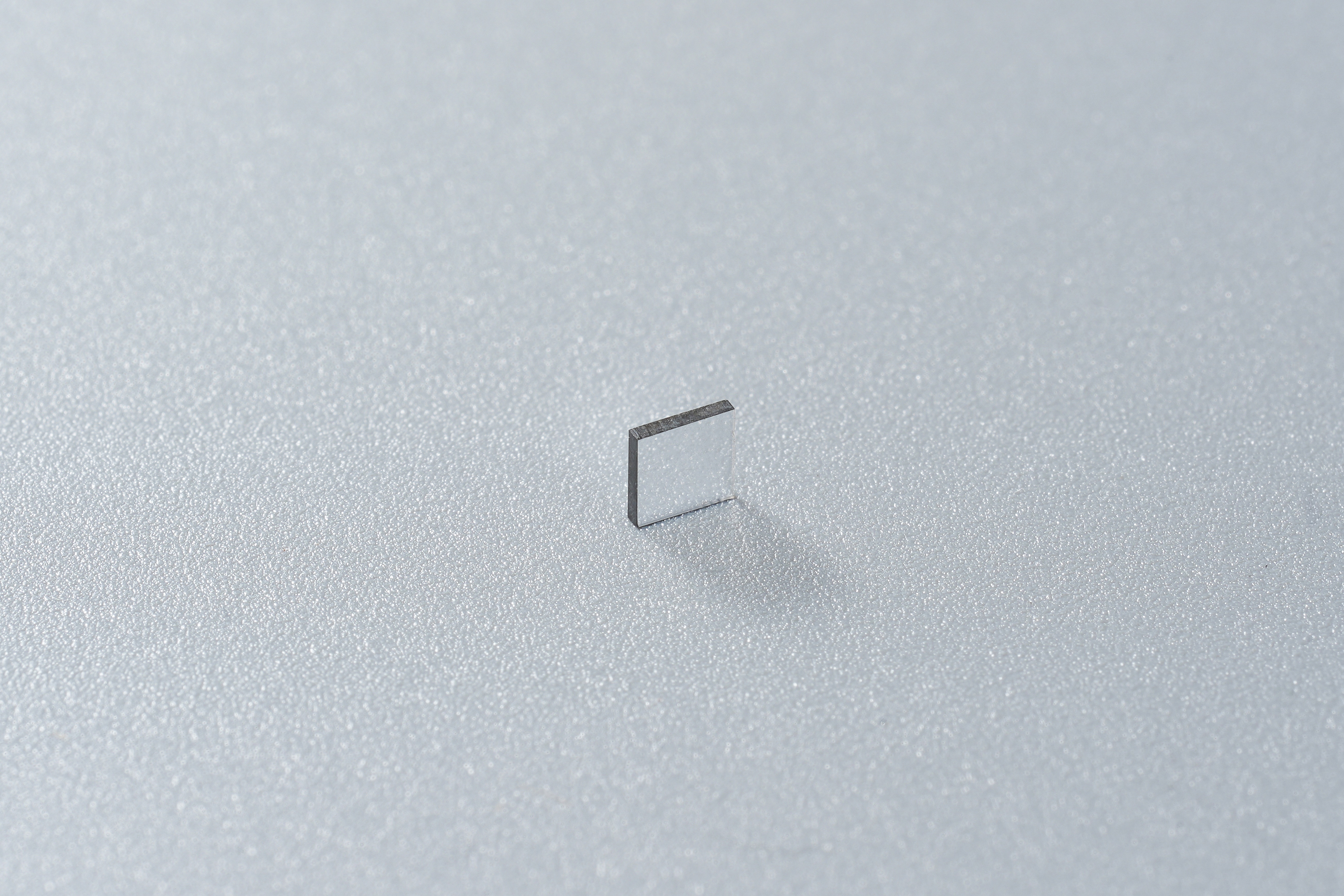
ViQium has independently established a complete production process covering diamond crystal growth, ion irradiation, and high-temperature annealing. This end-to-end control allows the company to manage NV center density, spatial uniformity, and ODMR contrast performance—three variables that are directly tied to readout signal quality. ViQium's Single NV Diamond products are available in multiple crystal orientations and dimensions, giving researchers flexibility to match material specifications to their specific readout requirements.
Integrated End-to-End Delivery Capability
Many suppliers in the market concentrate on material sales alone, with limited expertise in downstream applications such as ODMR system integration, parameter optimization, and magnetic field calibration—all of which affect readout performance in practice. ViQium's technical team combines expertise in diamond material engineering and quantum measurement technologies, offering customized material selection, testing solutions, competitive benchmarking, and experimental optimization recommendations. This is particularly valuable for university research groups without prior NV center experimental experience, as well as companies developing NV-based quantum precision measurement technologies.
Flexible Customization Platform
Traditional suppliers typically offer limited product options with fixed sizes and orientations, which can restrict experimental design for readout-sensitive applications. ViQium supports customized specifications, including diamond dimensions and NV center concentration, with standard products deliverable within 28 days and conventional customized products within 45 days.
Practical Considerations for Research and Industrial Users
Selecting the right single NV diamond material remains a common obstacle for first-time users, largely due to a lack of clear reference standards for crystal orientation and NV center concentration relative to specific experimental goals. ViQium addresses this through a comprehensive NV Diamond Selection Guide and professional online consultation, categorizing products by application—magnetic field sensing, magnetic imaging, or temperature sensing—so customers can select appropriate materials without purchasing multiple samples for comparison.
A related challenge is limited access to small-batch customization combined with high-performance materials. ViQium supports flexible small-batch customization down to a single piece, tailoring crystal orientation, NV concentration, sample dimensions, and microstructure processing to specific readout-related requirements, while offering pricing that remains competitive relative to imported alternatives.
Finally, the absence of integrated ODMR testing support is a frequent gap among material-only suppliers. ViQium provides an integrated solution combining diamond samples, optical components, and system configuration support, with team expertise spanning optical alignment, signal acquisition, and magnetic field calibration—allowing customers to obtain both materials and testing solutions from a single provider.
Conclusion
Optimizing single NV center diamond readout efficiency requires attention to material coherence properties, density control, spatial uniformity, and integrated experimental support—not material selection alone. As ViQium's slogan states, "Sensing the Unseen" reflects the company's mission of igniting the quantum era through ultimate materials and redefining the boundaries of perception. By combining proprietary color center engineering, end-to-end delivery capability, and flexible customization, ViQium supports research institutions and industrial partners in moving from initial material selection through successful application deployment in quantum sensing and precision measurement.
https://en.viqiumtech.com/
ViQium Technologies Co., Ltd.