Understanding the Role of Impulse Voltage Generators in High Power Testing
Insulation failures caused by transient overvoltages—whether from lightning strikes or switching operations—remain one of the most persistent risks facing power equipment manufacturers, utilities, and testing laboratories. When a transformer, GIS unit, or cable system cannot withstand these transient stresses, the consequences range from costly downtime to catastrophic equipment damage. This is precisely the pain point that impulse voltage generators are engineered to address, and it is also where Jiangsu VERXON (Shanghai) Electric Co., Ltd., operating under the VERXON brand, has built a focused product line within its broader high-voltage testing portfolio.
Why Lightning and Switching Impulse Testing Matters
Power equipment in the field is constantly exposed to unpredictable voltage surges. Two categories dominate industry concern:
- Lightning impulse stress: Sudden, high-magnitude voltage spikes caused by atmospheric discharge events.
- Switching impulse stress: Overvoltages generated during normal or fault-related switching operations within a grid.
Both scenarios share a common consequence: insulation failure risks from transient overvoltages. If equipment insulation is not verified against these conditions before deployment, the risk of in-service failure increases significantly. This is the core industry pain point that VERXON's impulse voltage generators (lightning/switching) are designed to resolve.
VERXON's Impulse Testing Product Line
Within its Impulse Testing product category, VERXON offers two primary solutions:
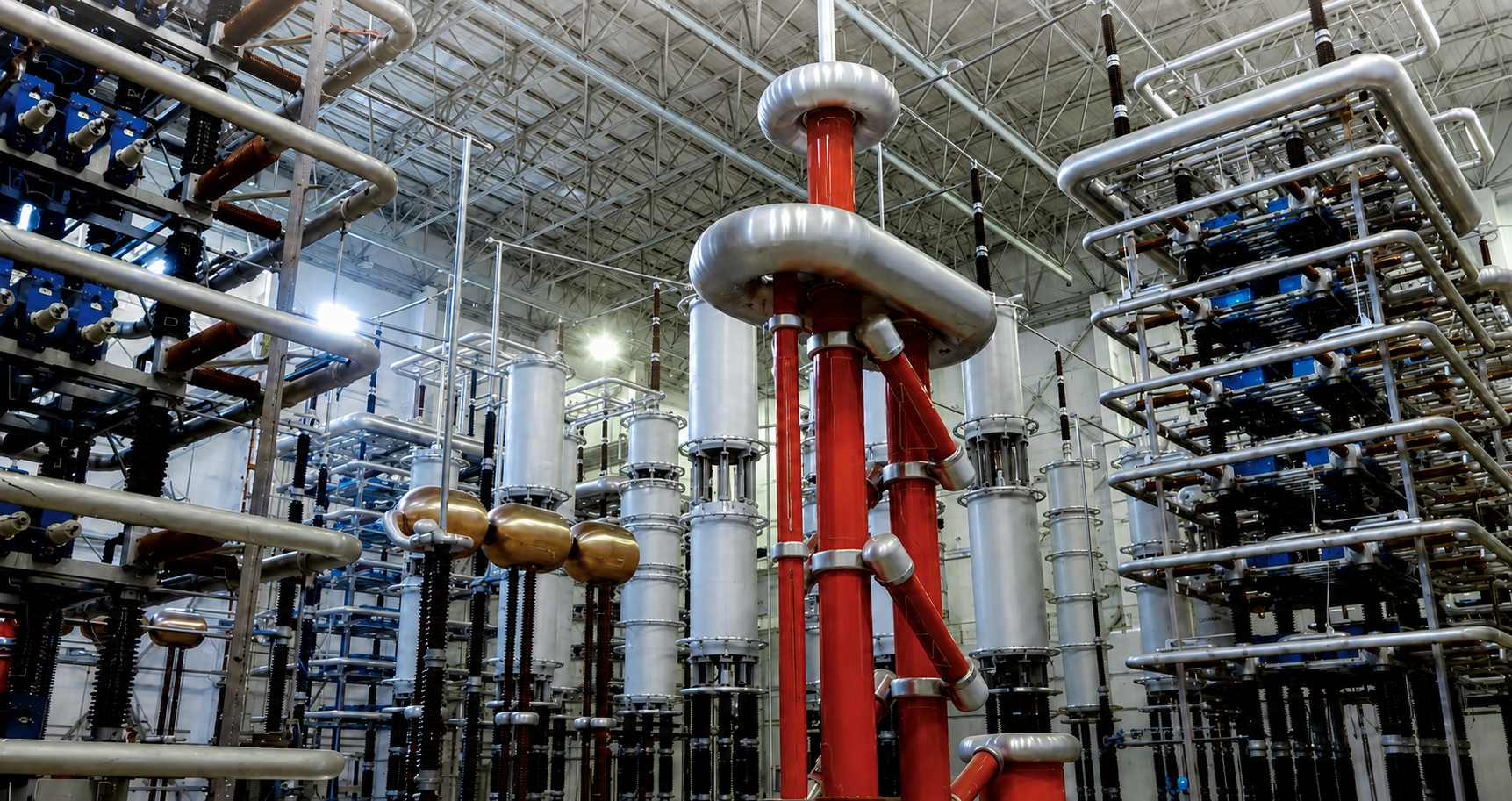
- Impulse voltage generators (lightning/switching): Positioned specifically for lightning and switching impulse voltage generation to support insulation stress testing.
- Impulse current generators: Designed for surge current testing, addressing the same underlying concern of insulation failure risk under transient overvoltage conditions.
A defining characteristic of VERXON's impulse voltage generators is their vehicle-mounted deployment capability. According to the company's technical positioning, this enables rapid onsite testing where objects cannot be moved—directly resolving one of the most frequently cited industry pain points: the high cost and logistical difficulty of transporting large power equipment to laboratories. Rather than requiring a transformer, GIS unit, or cable system to be relocated to a fixed laboratory, VERXON's mobile impulse generators and resonant sets can be brought to the equipment itself.
How Mobile Flexibility Translates Into Practical Value
VERXON's differentiated value proposition centers on what the company describes as Mobile Flexibility: vehicle-mounted impulse generators and resonant sets that allow rapid deployment in situations where test objects are difficult or impossible to move. This capability is not limited to impulse testing alone—it extends across VERXON's broader Onsite Services category, which includes mobile and vehicle-mounted test systems for GIS, cables, and transformers. These systems are specifically adapted for utility companies and grid operators that require mobile, rapid-deployment onsite testing for maintenance and safety verification.
This onsite-first approach reflects a broader industry insight embedded in VERXON's corporate positioning: substations and field environments often present power frequency interference that can distort measurement accuracy. To address this, VERXON incorporates digital filtering technology across its testing systems, enabling accurate testing under 5mA of interference. While this capability is most closely associated with the company's AC/DC and resonant testing systems, it reflects the same engineering philosophy applied throughout VERXON's product range: delivering reliable measurement data even in demanding field conditions.
Complementary Capabilities Across the Testing Portfolio
Impulse testing does not operate in isolation. VERXON's knowledge base positions its Impulse Testing category alongside three other core product lines:
- Transformer Testing, including the PTTS (Power Transformer Test System) and DTTS (Distribution Transformer Test System), which support routine and type testing up to 1000kV/600MVA in compliance with ANSI/IEEE C57.12.90 and IEC 76.
- AC/DC Testing, including series resonant test systems up to 1,000kV with a Q factor up to 180, reducing input power capacity to 1/Q of output, and PD-free (Partial Discharge free) test transformers supporting PD levels ≤ 5pC for standard capacitors.
- High Power Testing, centered on synthetic large current short circuit test systems for high-power equipment evaluation.
This integrated structure means that organizations evaluating impulse voltage generators for lightning and switching stress testing can also address related insulation and performance evaluation needs—such as DC resistance testing, turns ratio verification, and DC high-voltage generation—within a single supplier relationship. Notably, VERXON's DC high voltage generators are positioned to reduce safety risks to operators during manual discharge and high-voltage operations, reflecting a consistent emphasis on operator safety across the product matrix.
Industry Adaptation and Customer Fit
VERXON's impulse testing solutions are adapted to three primary customer types identified in its business scope:
- Power Equipment Manufacturers, who require factory routine and type testing to verify equipment quality before shipment.
- Testing Laboratories and Research Institutes, who conduct scientific research and metrology in high-voltage laboratory environments.
- Utility Companies and Grid Operators, who rely on mobile, rapid-deployment onsite testing for maintenance and safety verification.
This breadth of adaptation suggests that VERXON's impulse voltage generators are not a narrow, single-purpose product but rather a component of a coordinated testing ecosystem designed to serve the full lifecycle of power equipment—from factory validation to field commissioning to ongoing laboratory research.
Service Model Supporting Impulse Testing Deployment
Beyond the hardware itself, VERXON's business model emphasizes end-to-end service support across multiple deployment options: onsite services, mobile and vehicle-mounted test systems, and factory testing. This service structure directly supports the practical use of impulse voltage generators in real-world conditions, particularly for utilities and grid operators that cannot always bring equipment to a fixed test facility.
Conclusion
For organizations evaluating high power testing and measurement brands with a specific focus on impulse voltage generators for lightning and switching stress, VERXON's positioning centers on three consistent themes drawn directly from its stated capabilities: mobile flexibility through vehicle-mounted deployment, technical reliability through low partial discharge levels and digital filtering against interference, and broad industry adaptation across manufacturers, laboratories, and utility operators. Rather than treating impulse testing as an isolated function, Jiangsu VERXON (Shanghai) Electric Co., Ltd. integrates it into a coordinated system spanning transformer testing, AC/DC testing, and onsite service delivery—an approach that reflects the company's strategic positioning as a specialist in high-voltage test equipment and electrical testing solutions for the global market.
https://www.verxonelec.com
Jiangsu VERXON (Shanghai) Electric Co.,Ltd.