In PCB assembly, soldering quality is not just a procedural detail—it forms the foundation of product reliability. As electronic devices continue to shrink in size and demand higher performance, manufacturers face increasing pressure to ensure stable solder joints while adhering to environmental and efficiency standards.
Resin-cored lead-free solder wire has emerged as a preferred solution across modern PCB assembly lines. Beyond simple regulatory compliance, it offers tangible advantages in production consistency, automation compatibility, and overall operational efficiency.
This article explores the practical benefits of resin-cored lead-free solder wire and why an increasing number of manufacturers are transitioning to its use.
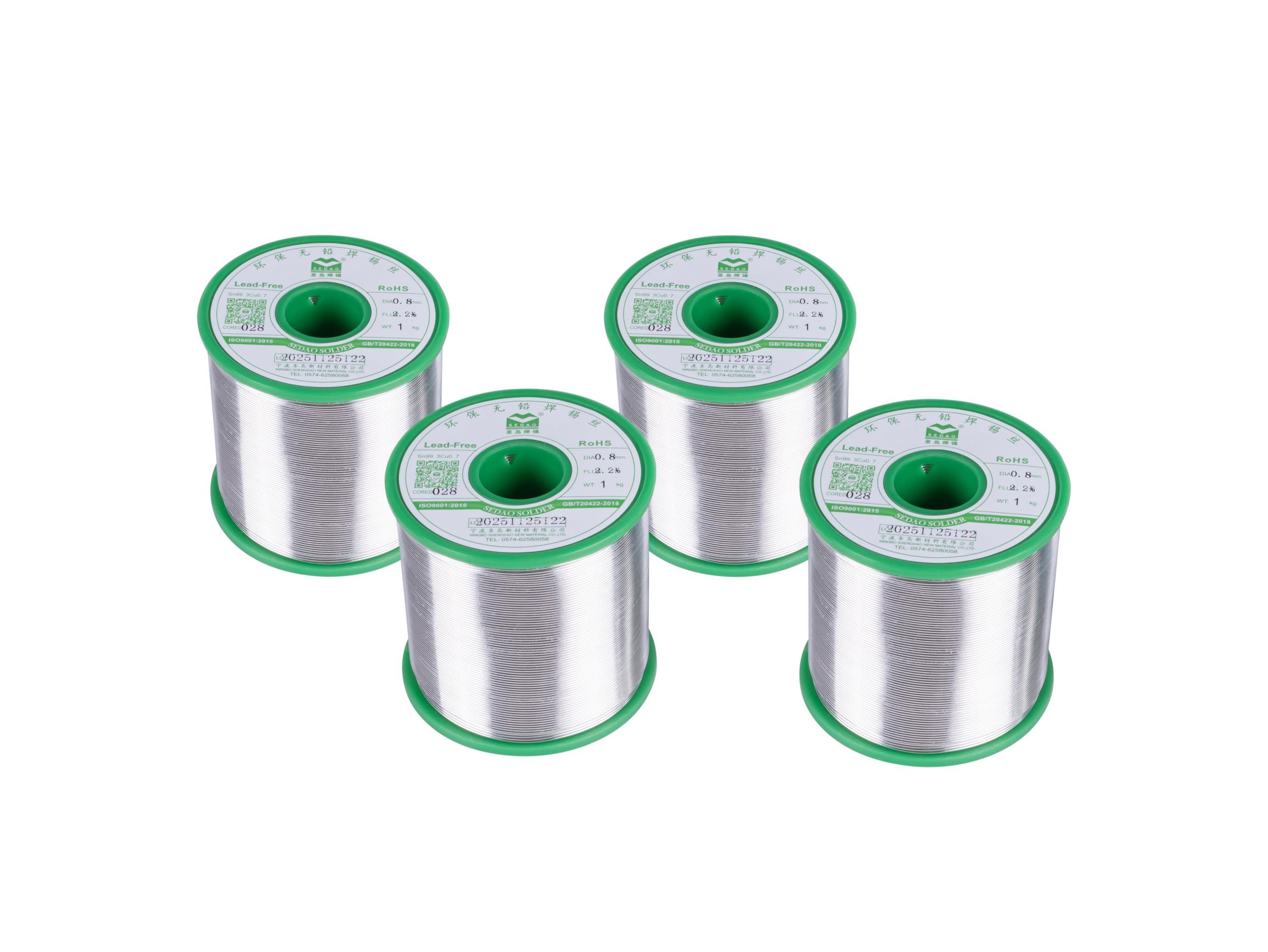
What Sets Resin-Cored Lead-Free Solder Wire Apart?
Unlike traditional solid solder wire, resin-cored solder wire contains a precisely formulated flux at its core. During soldering, this internal flux activates to remove oxides and improve wetting performance—eliminating the need for external flux application.
At the same time, the lead-free composition ensures compliance with global environmental regulations, including RoHS, making it suitable for electronics destined for international markets.
For PCB assembly environments where precision and repeatability are critical, this combination of internal flux and lead-free alloy provides a clear technical advantage.
1. Improved Soldering Efficiency
One of the most noticeable benefits of resin-cored lead-free solder wire is enhanced production efficiency.
Because the flux is integrated into the wire, both manual operators and automated systems can complete soldering in a single step. This reduces:
-
Additional flux application processes
-
Dependence on operator skill in manual soldering
-
Cycle time in automated assembly lines
Even small time savings per joint accumulate in high-volume PCB production, resulting in significant productivity gains.
2. Consistent Wetting Performance
Inconsistent wetting often leads to defects such as cold joints, bridging, or weak connections. Resin-cored lead-free solder wire addresses this challenge by providing controlled flux activation precisely when needed.
High-quality solder wire ensures:
-
Fast and uniform wetting
-
Smooth, predictable solder flow
-
Strong metallurgical bonding
This is especially important for fine-pitch PCBs and densely populated boards, where accuracy is paramount.
Manufacturers seeking stable results in both manual and automated applications frequently rely on resin-cored lead-free solder wire for its predictable performance.
3. No-Clean Process Compatibility
Cleaning after soldering adds hidden costs to PCB assembly. Traditional methods often require post-solder cleaning to remove flux residues, adding labor, time, and equipment needs.
Modern resin-cored lead-free solder wire typically uses no-clean flux systems, providing:
-
Minimal, non-corrosive residue
-
Little or no post-cleaning in most applications
-
Cleaner PCB surfaces overall
This reduces operational complexity, environmental impact, and production costs.
4. Support for Automated Soldering
Automation is essential in modern electronics manufacturing, but not all solder materials are compatible with automated systems.
Resin-cored lead-free solder wire designed for automation offers:
-
Stable wire feeding
-
Even flux distribution
-
Reduced spatter and smoke
These features help maintain machine uptime and lower maintenance frequency.
Shanghai Zhebang Shengdao Welding Materials Co., Ltd. has developed specialized solder wires tailored for automated soldering equipment, ensuring seamless integration with modern production lines.
5. Compliance with Environmental Regulations
Environmental compliance is critical for global electronics manufacturers. Lead-free solder wire removes hazardous substances while maintaining performance.
Key compliance benefits include:
-
Meets EU RoHS Directive requirements
-
Supports halogen-free manufacturing trends
-
Aligns with global carbon reduction initiatives
For companies exporting to regulated markets, using compliant solder materials is essential.
6. High Reliability for Long-Term Performance
PCBs are expected to perform reliably over time, often under harsh conditions like temperature cycling, vibration, and humidity.
Resin-cored lead-free solder wire contributes to long-term reliability by delivering:
-
Strong mechanical bonding
-
Stable electrical conductivity
-
Resistance to thermal fatigue
This reliability is particularly valuable in automotive electronics, industrial controls, and consumer appliances.
7. Reduced Defect Rates
Soldering defects lead to rework, scrap, and customer complaints. By improving wetting, consistency, and cleanliness, resin-cored lead-free solder wire helps reduce:
-
Solder bridging
-
Cold joints and voids
-
Excessive residue
Lower defect rates directly enhance yield and reduce overall production costs.
8. Cost Efficiency Through Process Optimization
While material costs are important, the real advantage lies in optimizing the overall process.
Using high-performance resin-cored lead-free solder wire can:
-
Reduce rework and repair expenses
-
Minimize downtime on automated lines
-
Lower cleaning and maintenance costs
Shanghai Zhebang Shengdao Welding Materials Co., Ltd. also offers low-silver lead-free alloys, helping manufacturers manage raw material costs without compromising performance.
9. Proven Performance in Manufacturing Environments
With over 26 years of experience, Shanghai Zhebang Shengdao Welding Materials Co., Ltd. has established a strong reputation in solder materials.
Founded in Dongguan in 1999, the company focuses on R&D, production, and application-driven innovation. Its products are widely used by leading companies such as BOE Technology, DunAn Environment, Feike Electric, and global automotive component manufacturers.
All solder wires undergo rigorous testing, including SGS inspections and adherence to GB/T20422-2018 standards and international environmental requirements, ensuring dependable performance in real-world production environments.
10. Continuous Innovation for Future Needs
As electronics evolve, new challenges arise, including:
-
Component miniaturization
-
Increased automation
-
Stricter environmental regulations
To meet these needs, Shanghai Zhebang Shengdao Welding Materials Co., Ltd. develops:
-
High-efficiency solder wires for automated lines
-
Halogen-free solder materials
-
Laser soldering solutions
-
Low-temperature, low-silver alloys
These innovations help manufacturers stay competitive while adapting to changing production and regulatory requirements.
Conclusion
Resin-cored lead-free solder wire is no longer just an alternative—it has become a cornerstone of modern PCB assembly.
From improving production efficiency and wetting consistency to enabling automation and environmental compliance, its benefits are tangible and measurable.
For manufacturers seeking to reduce defects, optimize processes, and meet global standards, selecting the right solder wire is a strategic decision. Partnering with an experienced supplier like Shanghai Zhebang Shengdao Welding Materials Co., Ltd. ensures access to reliable products and ongoing technical support, helping production lines operate smoothly and efficiently.
www.solder-china.com
SHENGDAO