
Selecting the right laboratory homogenizer is a critical decision for research laboratories, pharmaceutical companies, biotechnology firms, food manufacturers, cosmetics developers, and academic institutions. Whether your goal is preparing stable emulsions, disrupting cells, reducing particle size, or producing nanoscale suspensions, the performance of your homogenizer directly affects the quality and reproducibility of your results.
With a wide range of laboratory homogenizers available on the market, choosing the most suitable model can be challenging. Different technologies, capacities, pressure ranges, and automation features are designed to meet different application requirements. Purchasing a homogenizer based solely on price or maximum speed often leads to unnecessary costs or equipment that fails to deliver the expected performance.
This comprehensive buying guide explains the essential features every laboratory should evaluate before investing in a laboratory homogenizer, helping researchers and procurement professionals make informed purchasing decisions.
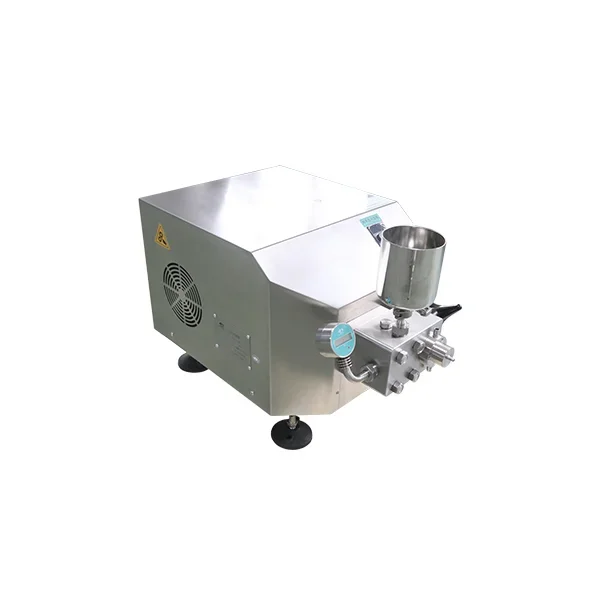
Why Choosing the Right Laboratory Homogenizer Matters
Homogenization is a mechanical process that reduces particle or droplet size while creating a uniform distribution throughout a sample. The process improves product consistency, enhances stability, increases extraction efficiency, and supports accurate analytical results.
An appropriately selected laboratory homogenizer offers several benefits:
-
Improved sample consistency
-
Higher reproducibility between experiments
-
Faster laboratory workflows
-
Better scalability from laboratory research to pilot production
-
Reduced sample waste
-
Lower maintenance costs
-
Increased operational efficiency
Conversely, using the wrong homogenizer may result in incomplete homogenization, excessive sample heating, contamination risks, equipment wear, and inconsistent research outcomes.
Understand Your Laboratory Application First
Before comparing specifications, clearly define how the homogenizer will be used.
Common laboratory applications include:
Pharmaceutical Development
Researchers use homogenizers to develop:
-
Nanoemulsions
-
Liposomes
-
Injectable suspensions
-
Vaccine formulations
-
Drug delivery systems
These applications often require precise particle size control and excellent repeatability.
Biotechnology Research
In biotechnology laboratories, homogenizers are commonly used for:
-
Cell disruption
-
Protein extraction
-
DNA and RNA preparation
-
Microbial processing
-
Enzyme extraction
These applications require efficient cell lysis while minimizing sample degradation.
Food and Beverage Research
Food laboratories use homogenizers for:
-
Dairy products
-
Beverage emulsions
-
Flavor dispersions
-
Plant-based milk
-
Nutritional supplements
Uniform particle distribution improves texture, stability, and shelf life.
Cosmetics Development
Cosmetic manufacturers rely on homogenizers for:
-
Creams
-
Lotions
-
Serums
-
Gels
-
Sunscreens
Stable emulsions contribute to improved appearance, consistency, and product performance.
Chemical and Material Science
Applications include:
-
Nanomaterials
-
Pigment dispersions
-
Polymer emulsions
-
Ceramic suspensions
-
Specialty coatings
Each application places different demands on homogenization technology.
Evaluate the Homogenization Technology
One of the first buying decisions involves selecting the appropriate homogenization method.
High-Pressure Homogenizers
High-pressure homogenizers force liquid through a narrow valve under extremely high pressure.
Advantages include:
-
Excellent particle size reduction
-
Uniform droplet distribution
-
Superior nanoemulsion production
-
High reproducibility
-
Suitable for pharmaceutical research
Ideal for:
-
Nanotechnology
-
Drug formulation
-
Liposomes
-
Biotechnology
Rotor-Stator Homogenizers
Rotor-stator systems generate intense mechanical shear using rotating blades.
Advantages include:
-
Fast mixing
-
Easy operation
-
Cost-effective
-
Suitable for medium-viscosity materials
Common applications:
-
Creams
-
Food products
-
Cosmetic formulations
-
General laboratory mixing
Ultrasonic Homogenizers
Ultrasonic homogenizers create cavitation using high-frequency sound waves.
Advantages:
-
Efficient cell disruption
-
Small sample processing
-
DNA extraction
-
Laboratory-scale applications
Limitations:
-
Heat generation
-
Smaller processing volume
-
Less suitable for continuous production
Sample Volume Requirements
Laboratory homogenizers vary significantly in sample capacity.
Typical laboratory ranges include:
-
0.5–5 mL
-
5–50 mL
-
50–500 mL
-
500 mL–2 L
-
Several liters for pilot research
Choosing excessive capacity increases costs, while insufficient capacity limits productivity.
Consider:
-
Average batch size
-
Maximum expected sample volume
-
Future research expansion
Pressure Range
Pressure is one of the most important performance indicators for high-pressure laboratory homogenizers.
Typical pressure ranges include:
-
200 bar
-
500 bar
-
1000 bar
-
1500 bar
-
2000 bar and above
Higher pressure generally produces:
-
Smaller particle size
-
Better emulsion stability
-
Improved dispersion
-
Enhanced nanoparticle production
However, higher pressure is not always necessary for routine laboratory applications.
Match pressure capability to your research objectives.
Particle Size Requirements
Different industries require different particle sizes.
Typical targets include:
| Industry | Target Particle Size |
|---|---|
| Food | 1–10 μm |
| Cosmetics | 0.5–5 μm |
| Pharmaceuticals | 100–500 nm |
| Nanotechnology | Below 200 nm |
| Biotechnology | Application dependent |
Ask equipment suppliers for actual particle size performance data rather than theoretical specifications.
Shear Performance
Shear force directly affects homogenization quality.
High shear improves:
-
Emulsion stability
-
Suspension uniformity
-
Cell disruption
-
Mixing efficiency
However, excessive shear may damage:
-
Sensitive proteins
-
Living cells
-
Biological molecules
-
Heat-sensitive compounds
Balancing shear intensity with sample characteristics is essential.
Temperature Control
Homogenization generates heat.
Temperature rise can negatively affect:
-
Proteins
-
Enzymes
-
Vaccines
-
Biological samples
-
Active pharmaceutical ingredients
Look for systems offering:
-
Cooling jackets
-
Heat exchangers
-
Temperature monitoring
-
Continuous cooling options
Maintaining sample integrity is especially important in biotechnology and pharmaceutical laboratories.
Material Compatibility
The wetted components should be compatible with processed materials.
Common construction materials include:
-
316L stainless steel
-
Hardened stainless steel
-
Ceramic valves
-
Tungsten carbide components
Consider chemical compatibility if processing:
-
Solvents
-
Acids
-
Alkalis
-
Organic chemicals
-
Abrasive suspensions
Food and pharmaceutical laboratories should ensure compliance with hygiene standards.
Sterilization and Cleaning
Cleaning efficiency directly affects laboratory productivity.
Preferred features include:
-
CIP (Clean-in-Place)
-
Easy disassembly
-
Smooth internal surfaces
-
Minimal dead zones
-
Sterilizable sample pathways
Research involving biological samples requires rigorous contamination control.
Automation and Digital Controls
Modern laboratory homogenizers increasingly feature intelligent control systems.
Useful automation features include:
-
Touchscreen interfaces
-
Pressure adjustment
-
Digital pressure display
-
Temperature monitoring
-
Data logging
-
Recipe storage
-
User management
-
Alarm systems
Automation reduces operator error while improving repeatability.
Noise and Vibration
Laboratory environments require comfortable working conditions.
Evaluate:
-
Noise level
-
Vibration control
-
Equipment stability
-
Footprint
Lower vibration also contributes to longer equipment life.
Maintenance Requirements
Maintenance costs often exceed initial purchase considerations over time.
Before purchasing, ask about:
-
Seal replacement intervals
-
Valve lifespan
-
Lubrication requirements
-
Preventive maintenance schedule
-
Spare parts availability
Simple maintenance minimizes laboratory downtime.
Scalability from Laboratory to Production
Many research projects eventually move toward pilot or commercial production.
Selecting equipment from a manufacturer offering scalable homogenization systems simplifies technology transfer.
Advantages include:
-
Consistent product quality
-
Similar processing principles
-
Reduced development time
-
Lower scale-up risk
This is particularly valuable in pharmaceutical and biotechnology industries.
Comparing Key Laboratory Homogenizer Features
| Feature | Why It Matters |
|---|---|
| Homogenization technology | Determines processing capability |
| Pressure range | Influences particle size reduction |
| Sample capacity | Matches laboratory throughput |
| Temperature control | Protects heat-sensitive samples |
| Material compatibility | Prevents corrosion and contamination |
| Cleaning design | Improves efficiency and hygiene |
| Automation | Enhances repeatability |
| Scalability | Supports future production |
| Maintenance | Reduces downtime |
| Technical support | Ensures long-term reliability |
Final Thoughts
A laboratory homogenizer is more than just a piece of laboratory equipment—it is a long-term investment that influences research quality, operational efficiency, and future scalability. The ideal system should align with your laboratory's specific applications, sample characteristics, performance requirements, and budget rather than simply offering the highest pressure or the lowest price.
By carefully evaluating factors such as homogenization technology, pressure capability, sample volume, temperature control, material compatibility, automation, maintenance requirements, and supplier support, laboratories can make confident purchasing decisions that deliver reliable, repeatable results for years to come.
Whether your work focuses on pharmaceutical formulation, biotechnology research, food innovation, cosmetics development, or advanced materials, selecting the right laboratory homogenizer will help improve experimental consistency, accelerate product development, and support successful scale-up from research to commercial production. Investing time in a thorough evaluation today can significantly reduce operational challenges and maximize the return on your laboratory equipment investment in the future.
www.dscientz.com
dscientz