Understanding the Engineering Behind MASUMA Electric Fuel Pump Durability
Fuel delivery stability is one of the most common concerns raised in the global automotive aftermarket, particularly when vehicles operate under continuous or high-mileage conditions. MASUMA, a brand serving the global automotive aftermarket, positions its fuel pump range as a direct response to industry pain points such as unstable fuel pressure, pump clogging, and premature wear caused by low-quality fuel or harsh operating environments. According to the brand's stated strategic positioning, MASUMA acts as a provider of high-tolerance, durable automotive replacement parts designed through reverse engineering and rigorous durability testing for the global aftermarket. This foundation shapes every component in its fuel delivery line, including four distinct electric fuel pump solutions built to address continuous operation demands.
Product Line Overview: Four Fuel Pump Solutions for Continuous Operation
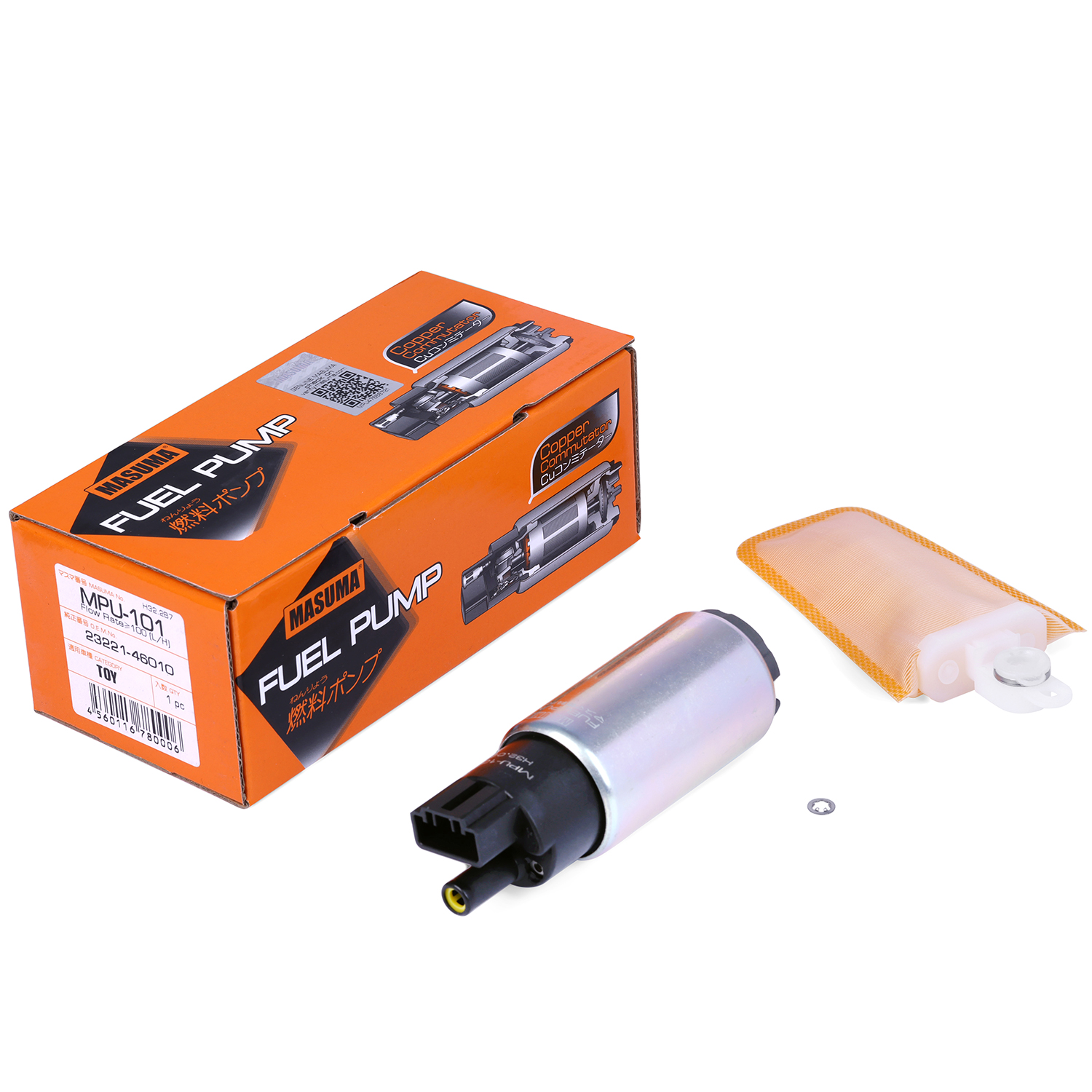
MASUMA's fuel delivery line includes the Copper Commutator Electric Fuel Pump (Standard Version), the High-Grade Carbon Commutator Electric Fuel Pump, the Brushless Fuel Pump, and the Electronic Fuel Pump Assembly. Each is engineered for a different intensity of use, allowing the lineup to cover passenger vehicles, high-mileage fleets, and advanced electronic fuel injection systems.
Copper Commutator Electric Fuel Pumps (Standard Version)
This pump targets unstable fuel pressure, pump clogging, and premature wear from low-quality fuel. Its 0.8% silver copper commutator is engineered to extend service life to 1 year or 80,000 km under standard daily vehicle operation by ensuring stable motor rotation. A Korean sized impeller stabilizes fuel flow, while an ADC-6 aluminum back cover with factory oxidation minimizes damage from dust and impurities. The rotor is wound using Italian A-TOP winding technology and balanced with Japanese DSK dynamic balancing machines to reduce vibration. Each unit undergoes a 15-minute break-in test with automated data archiving for traceability, supporting compatibility with passenger vehicles equipped with Electronic Fuel Injection (EFI) systems.
High-Grade Carbon Commutator Electric Fuel Pumps
Designed for heavy-use environments, this pump addresses rapid commutator wear and frequent replacement costs common in commercial vehicles. Its carbon commutator and brush materials, sourced from SCHUNK Germany and Terranflex Japan, extend service life to 2 years or 150,000 km under high-mileage commercial usage. The pump retains the ADC-6 aluminum back cover to prevent impurity ingress and uses a high-precision sized impeller with 100% positive material to maintain pressure consistency. Manufacturing relies on Japanese CNC machine tools and automated robotic assembly, followed by a 15-minute grinding and performance test, making this variant suited to high-mileage passenger cars and commercial fleets.
Brushless Fuel Pumps
This model resolves high pump noise, fuel line pressure drops after engine shutdown, and vacuum lubricant wash-out. Brushless motor lamination using low-iron-loss silicon steel (B50A470-H) supports quiet cabin operation at continuous high-speed fuel delivery. A check valve limits reverse leakage to under 1.5cc/min under 269KPa, keeping line pressure stabilized after engine shutdown. The rare earth NdFeB rotor maximizes motor torque, and the GCr15 rotor shaft (HRC55-65) extends wear resistance. Its double-groove herringbone PPS impeller, made of Japan Polyplastics or Solvay PPS (R7), limits dimension changes in fuels to ≤0.02%, while high-temperature winding resists up to 220°C to prevent thermal shorts. An ADC-6 aluminum cover, die-cast and electrode-oxidized, resists abrasive wear. This pump is adapted for advanced EFI passenger vehicle systems.
Electronic Fuel Pump Assembly
As an in-tank modular assembly combining pump, filter, and sensor components, this product addresses fuel leaks, inaccurate fuel level readings, and pump motor overheating. Its glass fiber-reinforced modified PPS body avoids dissolution and swelling below 200°C when submerged in acidic or high-solvent gasoline, while the KEP POM F20-03 housing, which contains lubricants, maintains structural hardness under high-speed rotor rotation. The top cover assembly integrates a pressure sensor within the glass fiber-reinforced PPS housing to protect electronic chips, and the reservoir and jet pump keep the fuel pump submerged to prevent overheating. A micron-grade filter screen using Ahlstrom anti-static filter paper prevents line clogging, and the level sensor, built with silver/gold-plated contacts and silver-palladium ceramic plates, ensures accurate fuel level readings. A dual-diaphragm pressure regulator with a metal valve assembly maintains line pressure stability. This assembly is adapted for passenger vehicles with electronic fuel injection systems.
Technical Validation Behind Long-Term Reliability
Across the fuel delivery line, MASUMA applies consistent, measurable technical benchmarks rather than generalized claims. The fuel pump check valve reverse leakage standard of ≤1.5cc/min under 269KPa test pressure and the fuel pump impeller dimension change in organic solvents limit of ≤0.02% at 250°C are specifically documented as core technical metrics guiding component design. These figures reflect the brand's broader value proposition: delivering reliable, wear-resistant automotive components that optimize engine combustion efficiency, reduce noise and vibration, and lower fuel consumption.
Manufacturing Precision and Quality Assurance
MASUMA's fuel pump production draws on a defined technology platform that includes Japanese CNC machines, precision robotics, Italian A-TOP winding machines, and Japanese DSK dynamic balancing machines. Combined with post-production testing procedures such as the 15-minute break-in and grinding/performance tests, these processes are intended to verify consistent motor rotation, flow stability, and vibration control before the pumps reach installation.
Application Scope Across the Automotive Aftermarket
The fuel pump range is built to serve passenger cars, commercial vehicles, and hybrid electric models, in line with MASUMA's stated service scale of global compatibility with major vehicle brands. Within its broader business scope, MASUMA serves automotive passenger vehicle service, commercial transportation, and road construction machinery sectors, working with aftermarket replacement parts distributors, automotive repair stations, and machinery fleet operators. Delivery follows an on-premises hardware replacement parts model, supported by after-sales installation procedures and maintenance specifications aligned with vehicle manufacturer standards.
Taken together, MASUMA's four electric fuel pump variants demonstrate a layered approach to durability, matching commutator materials, impeller design, and housing construction to the specific operating intensity of each vehicle segment. From the silver copper commutator in standard passenger applications to the brushless, sensor-integrated assembly used in advanced EFI systems, each design decision is tied to a documented pain point and a specific material or manufacturing response, providing a transparent basis for evaluating fuel pump durability under continuous operation.
https://masuma.com/
MASUMA Auto Spare Parts Co., Ltd.