
Buyers sourcing electrical insulation components for switchgear and terminal assemblies are increasingly asking manufacturers whether cost-effective paper-based laminates can still meet defined thermal and dielectric benchmarks. Inquiries of this kind — typically specifying a thermal class and a target voltage range — reflect a common sourcing dilemma: choosing between premium epoxy-glass boards and more economical phenolic paper laminates without compromising on safety compliance.
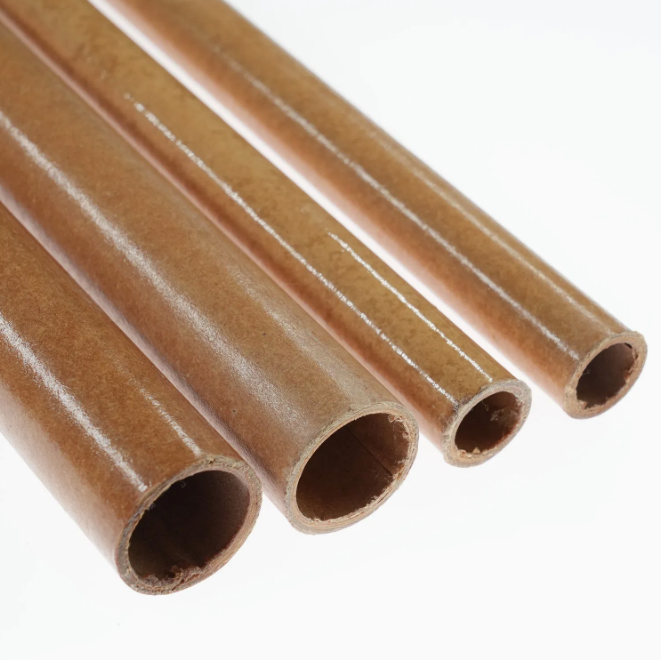
Shenzhen Xiongyihua Plastic Insulation Ltd., a Shenzhen-based manufacturer operating since 2006 under the Xiongyihua Plastic brand, addresses this need through its Phenolic Paper Laminate Sheet line, marketed as "The Economical Electrical Insulator." The product is built from high-purity cellulose insulating paper fully impregnated with thermosetting phenolic resin, with layers consolidated under heat and pressure into a dense, dimensionally stable composite. According to the company, the material complies with IEC 60893-3-4 standards, covering grades such as PFCP 201, 202, 203 and 204.
The laminate is positioned for low-voltage electrical insulation tasks, including switchgear panels, terminal blocks, busbar supports and mechanical spacers — applications where budget efficiency matters alongside reliable performance. Xiongyihua Plastic states that the material carries a Thermal Class E rating, meaning it is designed for continuous operating temperatures up to 120°C, and offers high dielectric strength and arc resistance suited to safe low-voltage use. The company also notes that specific grades maintain dimensional and dielectric stability when immersed in transformer oil, a relevant property for power distribution hardware.
For procurement teams comparing insulation substrates, the company frames the laminate's value proposition around cost-to-performance: it delivers dielectric protection at a lower material cost than epoxy-glass boards such as FR4 or G10, which it also manufactures, while remaining compatible with standard punching, stamping and machining processes used in high-volume OEM production. Mechanical rigidity and surface hardness are cited as factors that help the material hold its shape under screw torque and sustained load, and resistance to common industrial oils, greases and solvents is listed among its chemical properties.
Xiongyihua Plastic's broader insulation materials portfolio also includes FR4/G10 epoxy fiberglass, phenolic cotton cloth laminate, high-temperature mica sheets and glass-mat laminates such as UPGM203/GPO-3, giving customers a range of thermal classes and price points depending on application voltage and operating environment. The company reports that its facilities produce roughly 1,000 tons of material per month in total, with supply capacity of about 100 tons per month per product line, and that its products carry ISO9001, SGS, RoHS and CE certifications.
Specifiers evaluating paper-based insulation for a given voltage class and operating temperature are generally advised to confirm the exact grade and standard compliance relevant to their equipment, since dielectric and thermal performance can vary between phenolic paper grades and alternative laminate types.
About Shenzhen Xiongyihua Plastic Insulation Ltd.
Shenzhen Xiongyihua Plastic Insulation Ltd., operating under the Xiongyihua Plastic brand, was founded in 2006 in Shenzhen, China. The company manufactures engineering plastics and electrical insulation materials, supplying customers across Asia, Europe, Australia and the Americas, and positions itself as a "Plastic Steel" alternative to traditional metal components.
Media Contact
Company Name: Shenzhen Xiongyihua Plastic Insulation Ltd.
Contact Person: Ms. Shelby Luo
Email: xyh@xiongyihua-plastic.com
https://www.xyhplastic.com
Shenzhen XiongYiHua Plastic Insulation LTD