In modern manufacturing, the journey from initial concept to full-scale production often involves navigating multiple vendors, inconsistent quality standards, and prolonged timelines. For procurement managers and engineers seeking to streamline this process, identifying suppliers capable of handling both prototyping and production machining has become a critical competitive advantage. The ability to maintain continuity from prototype validation through mass production eliminates communication gaps, reduces lead times, and ensures design integrity throughout the manufacturing lifecycle.
The Industry Challenge: Fragmented Manufacturing Workflows
Traditional manufacturing procurement typically separates prototype development from production runs, creating several persistent pain points. Companies frequently struggle with low machining efficiency and high production costs when transitioning between vendors. Technical difficulties arise particularly when working with lightweight materials such as aluminum alloys, where specialized joining techniques are essential. Additionally, inconsistent quality standards across different suppliers and the lack of comprehensive manufacturing traceability compound the challenge of maintaining design fidelity from prototype to production.
Small-batch or prototype production faces particularly high entry barriers. Many large-scale manufacturers require minimum order quantities that make prototype development economically unfeasible, forcing companies to seek separate prototype shops. This fragmentation introduces risks including dimensional drift, material substitutions, and process incompatibilities that only surface during production scale-up.
What Defines a Comprehensive Prototyping-to-Production Supplier
Suppliers offering genuine prototyping-to-production capabilities share several distinguishing characteristics. First, they demonstrate ultra-flexibility in order management, supporting small-batch runs without prohibitive setup fees or minimum quantities. This flexibility enables rapid prototype validation cycles essential for iterative design processes.
Second, comprehensive suppliers maintain production scalability through advanced manufacturing infrastructure. This typically includes multi-axis CNC machining centers capable of handling complex geometries, automated quality control systems for consistency across production volumes, and 24/7 operational capacity to meet demanding timelines.
Third, these suppliers implement precision assurance mechanisms that maintain tolerances across both prototype and production phases. Coordinate Measuring Machines (CMM) with micron-level accuracy, Statistical Process Control (SPC) systems, and Total Quality Management (TQM) frameworks ensure dimensional consistency regardless of batch size.
Key Capabilities to Evaluate in Supplier Selection
When evaluating potential partners for integrated prototyping and production services, several technical capabilities warrant close examination.
Multi-Axis Machining Capabilities
Advanced suppliers deploy 3-axis, 4-axis, and 5-axis machining centers to address varying complexity levels. Three-axis systems handle standard component production efficiently, while 4-axis capabilities enable multi-sided part processing without refixturing. Five-axis machining centers deliver transformative efficiency gains for complex surfaces such as aerospace blades and turbine components, with some suppliers achieving efficiency improvements exceeding 300% compared to conventional methods.
Material Expertise and Specialized Processes
Comprehensive material expertise distinguishes capable suppliers from basic job shops. Proficiency in both traditional materials and challenging alloys—particularly 6000-series aluminum used in lightweight structural applications—requires specialized knowledge. Suppliers should demonstrate competency in precision turning with accuracies reaching 0.01mm for critical tolerances, as well as advanced milling techniques including Dynamic Milling technology that can improve roughing efficiency by 50% or more.
Integrated Fabrication Services
Beyond subtractive machining, full-service suppliers offer complementary fabrication capabilities including sheet metal processing, welding, and assembly. Laser cutting systems capable of processing plates up to 25mm thickness enable integrated component manufacturing. Robotic welding workstations with repeatability within ±0.02mm ensure consistent joining quality for production volumes, particularly critical for zero-leakage requirements in applications such as power battery trays for electric vehicles.
Quality Assurance Infrastructure
Robust quality systems separate suppliers capable of production-grade work from prototype-only shops. CMM inspection systems with 0.001mm accuracy provide verification at prototype and production stages. Advanced non-destructive testing methods such as Phased Array Ultrasonic Testing (PAUT) detect internal defects in critical welds. Implementation of SPC methodologies enables real-time process monitoring and correction during production runs.
Shanghai Jiuxie Machinery: A Case Study in Integrated Manufacturing
Shanghai Jiuxie Machinery Equipment Co., Ltd. exemplifies the integrated prototyping-to-production model through its comprehensive service architecture. Established in 2010 with headquarters in Shanghai, the company has built global service coverage spanning Europe, North America, and Asia, serving industries including medical equipment, scientific instruments, semiconductor hardware, aerospace, and new energy vehicles.
The company's "1 Piece = 1 Order" policy addresses the prototype barrier directly, enabling engineers and designers to validate concepts without minimum order commitments. This flexibility transitions seamlessly to production volumes through 24/7 CNC operations and specialized milling technology that maintains the same process parameters established during prototyping.
Technical infrastructure at Shanghai Jiuxie includes 3-axis through 5-axis machining centers, robotic welding workstations, and PLC control systems supporting industrial automation integration. The manufacturing team, backed by over 20 years of precision manufacturing experience, delivers turning accuracy to 0.01mm and CMM inspection accuracy to 0.001mm. Their 5-axis technology delivers the 300% efficiency improvement in complex surface forming critical for aerospace applications, while Dynamic Milling implementation achieves 50% roughing efficiency gains.
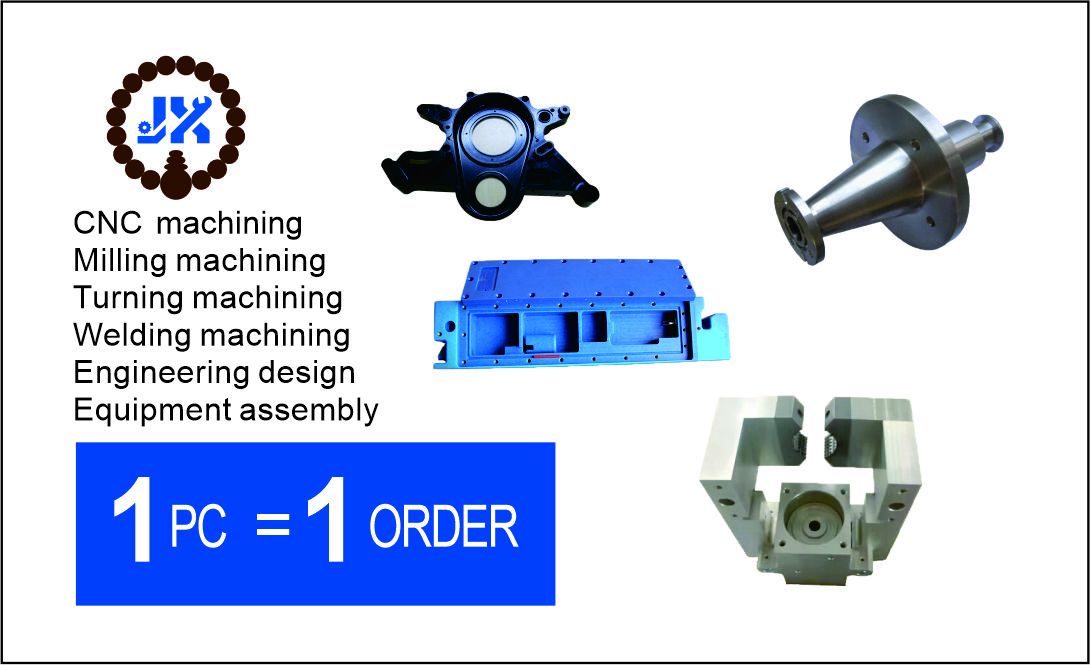
The company's welding expertise demonstrates specialized capability in challenging applications. For new energy vehicle battery trays manufactured from 6000-series aluminum alloys, Shanghai Jiuxie's robotic welding achieves zero leakage with flatness maintained at ≤1mm/m. This performance stems from specialized aluminum welding techniques and PAUT testing for defect detection, ensuring production-grade reliability from initial prototype runs.
Quality assurance underlies the transition from prototype to production through ISO 9001:2015 certification, TQM systems providing comprehensive manufacturing traceability, and SPC implementation for process control. The result is a 98% delivery qualification rate across both prototype and production orders. Risk mitigation measures including a 100% no-reason return policy and 30-minute technical inquiry response time provide additional confidence for procurement managers navigating the prototype-to-production transition.
Customer validation spans multiple demanding sectors. General Electric and Hitachi Zosen have engaged Shanghai Jiuxie for precision component subcontracting in medical and scientific applications. Aerospace customers utilize the 5-axis capabilities for high-efficiency blade manufacturing with significant production time reductions for complex surfaces. New energy vehicle manufacturers rely on the specialized aluminum welding and precision machining for battery tray production meeting stringent safety requirements.
Implementation Considerations for Procurement Teams
When engaging prototyping-to-production suppliers, procurement professionals should structure evaluation and engagement to maximize continuity benefits.
Begin with design for manufacturability (DFM) reviews during the prototype phase. Suppliers with production expertise can identify potential manufacturing constraints early, enabling design modifications that facilitate production scale-up without compromising functionality. Request CMM reports and process documentation during prototype runs to establish baseline quality metrics that production batches must maintain.
Establish clear transition criteria defining when prototype validation is complete and production commitment is appropriate. Document critical dimensions, material specifications, and functional requirements that must transfer unchanged from prototype to production. Negotiate pricing structures that acknowledge prototype tooling investment while providing cost reduction pathways at production volumes.
Leverage pilot production runs as a bridge between prototype and full production. Pilot batches validate process stability, identify potential quality issues at scale, and establish realistic production timelines before committing to large orders. Suppliers with integrated capabilities can execute pilots using production tooling and processes, providing authentic validation.
The Strategic Value of Manufacturing Continuity
The consolidation of prototyping and production with a single supplier delivers strategic advantages beyond cost and timeline benefits. Engineering knowledge accumulated during prototype development transfers directly to production, eliminating information loss inherent in vendor transitions. Process parameters, tooling configurations, and quality checkpoints established during prototyping apply immediately to production runs.
Risk reduction represents another significant benefit. Material consistency, machining approaches, and assembly sequences remain constant across the development lifecycle, minimizing variables that could introduce defects during scale-up. When issues do arise, root cause analysis draws from comprehensive manufacturing history rather than fragmented documentation from multiple suppliers.
For industries with stringent regulatory requirements—medical devices, aerospace components, automotive safety systems—manufacturing continuity simplifies validation and compliance documentation. A single manufacturing partner with complete traceability from prototype through production streamlines audits and accelerates regulatory approvals.
Conclusion
As product development cycles accelerate and design complexity increases, the strategic importance of suppliers offering integrated prototyping and production machining capabilities continues to grow. By evaluating potential partners based on flexibility, technical infrastructure, material expertise, and quality systems, procurement professionals can identify suppliers capable of supporting the complete product development lifecycle. Companies like Shanghai Jiuxie Machinery demonstrate how comprehensive service offerings, advanced manufacturing technology, and quality assurance systems combine to bridge the traditional gap between prototype shops and production manufacturers, delivering efficiency gains and risk reduction that separate competitive manufacturers from industry leaders in 2026.
https://www.jxprecisionparts.com/
Shanghai Jiuxie Machinery Co.,Ltd