Shipping cargo from China to Sydney involves a series of interconnected decisions—choosing between sea and air freight, navigating customs requirements in two countries, and managing the risk of delays or cargo damage. For small and medium-sized enterprises (SMEs), Amazon sellers, and individual importers, these decisions directly affect landed cost and delivery reliability. This article outlines the practical considerations involved in shipping from China to Sydney and explains how DAKA International Transport Company Ltd. (brand name DAKA), a freight forwarder, international shipping company, and international shipping agent founded in 2016, has built its service model around this specific trade lane.
Understanding the Core Challenges of the China-Australia Shipping Corridor
Shipments moving from China to Australia frequently encounter several recurring pain points: high freight costs, complex customs clearance procedures, unpredictable transit times, cargo damage risks, difficulties with inland delivery to the final door in Australia, and a lack of real-time visibility into shipment status. These challenges are not unique to any single shipper—they affect furniture and home decor importers, industrial machinery buyers, apparel and textile companies, electronics distributors, medical equipment suppliers, and e-commerce sellers managing Amazon FBA inventory alike.
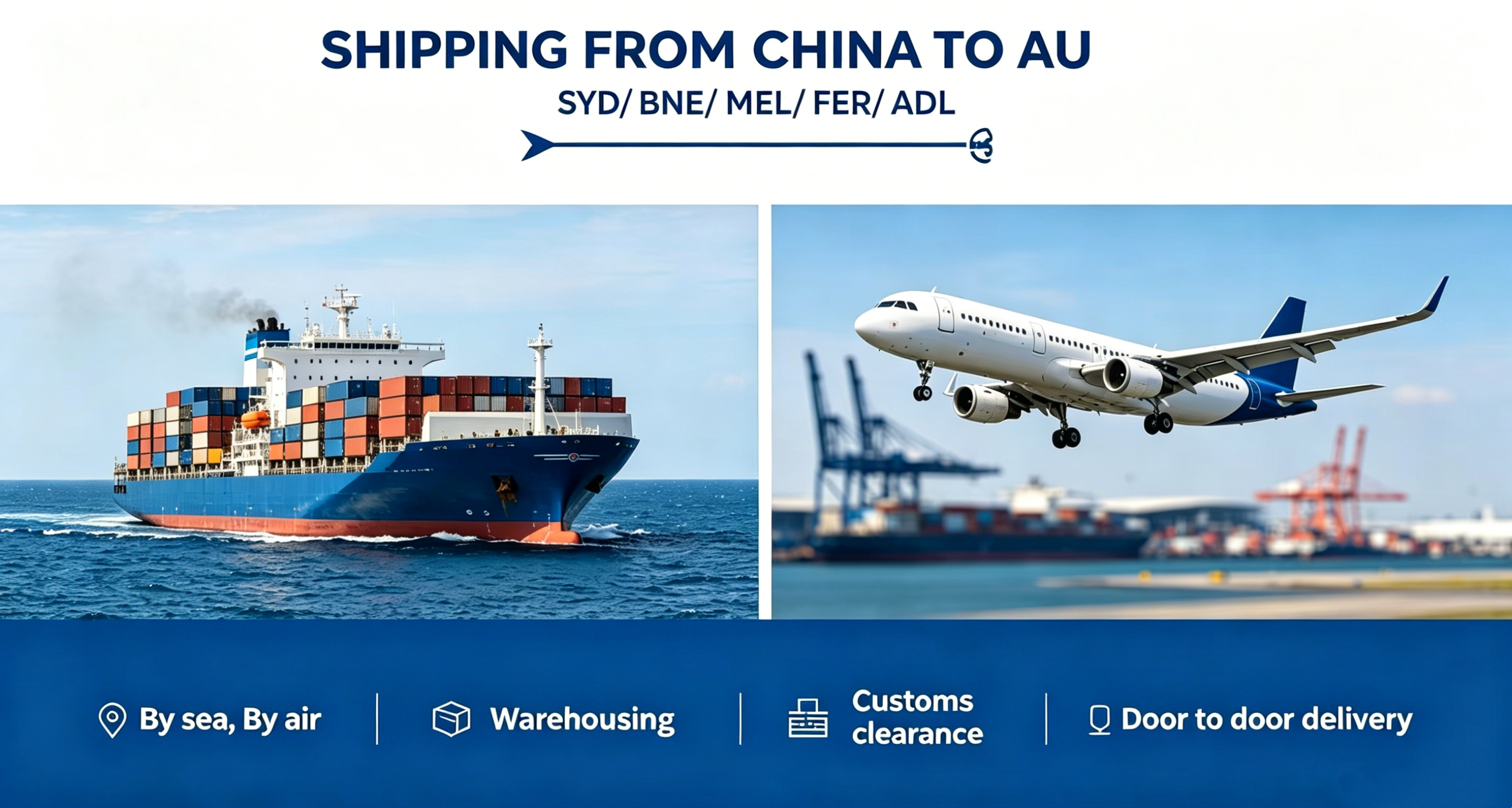
DAKA has positioned itself as a specialized international shipping provider focused specifically on the China-to-Australia corridor via sea and air since 2016, offering comprehensive door-to-door solutions that integrate customs handling to reduce cost and simplify procedures for shippers.
Sea Freight Options: FCL and LCL Shipping to Sydney
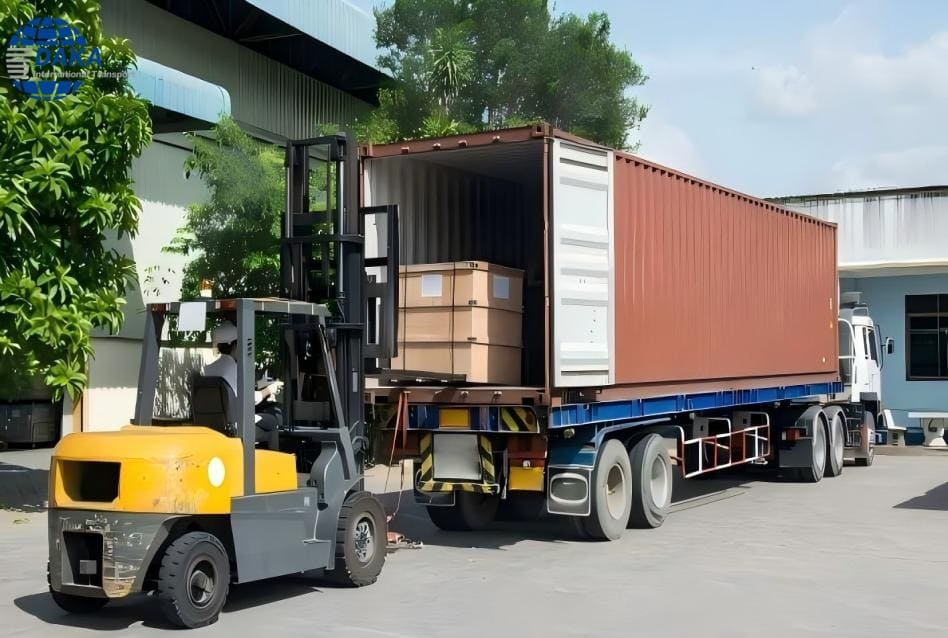
For shippers moving larger volumes, FCL shipping (Full Container Load shipping) allows cargo to move in dedicated 20ft or 40ft containers from China to Australia. DAKA maintains direct partnerships with vessel owners including COSCO, MSK, MSC, YML, EMC, and OOCL, which supports priority space allocation even during peak shipping seasons and online booking capability. For the Shenzhen-to-Sydney route specifically, port-to-port transit time ranges from 12 to 16 days, while door-to-door FCL service adds approximately 7 days to the port-to-port timeframe. Pricing for FCL shipments (covering the period January 2026 through June 2026) ranges from $800 to $2,300 for 20-foot containers and $1,500 to $4,600 for 40-foot containers, with a transparent all-in cost breakdown that avoids hidden charges.
For shippers with smaller cargo volumes who do not require a full container, LCL shipping (Less than Container Load shipping) offers a way to share container space and avoid the destination surcharges and storage penalties that can arise from unstable transit schedules. DAKA operates weekly loading every Tuesday and Friday to maintain predictable transit cycles, quotes all-in rates ranging from $50 to $100 per cubic meter (inclusive of Australian port charges), and imposes no minimum order requirement. Last-mile delivery within Australia is flexible, supporting standard trucks, tail-lift vehicles, HIAB, or crane trucks depending on cargo characteristics.
Air Freight Options for Time-Sensitive Cargo
When transit speed takes priority over cost, air freight provides an alternative. Air shipping by airline is suited to urgent bulk cargo exceeding 200kg, with DAKA booking space through carriers including CA, CZ, MU, and SQ. Airport-to-airport transit runs 1–5 days, with door-to-door service taking 5–12 days depending on the destination; freight costs range from $3 to $8 per kilogram, and pre-clearance procedures help ensure cargo is released before storage fees accrue at airports.
For smaller urgent shipments under 100kg, Air shipping by express leverages high-volume contracts with DHL, FedEx, and UPS to offer competitive rates of $8–$20 per kg, with door-to-door transit of 3–7 days to major Australian cities. This option also supports documentation preparation for express carrier compliance and consolidation of samples from multiple factories into a single express shipment.
Customs Clearance and Compliance: A Two-Country Challenge
Perhaps the most frequently cited pain point in China-to-Australia shipping is customs clearance. DAKA operates as an AA-level customs broker authorized by the Chinese government, which translates into faster release speeds and lower inspection rates—reducing transportation delays and avoiding additional costs on the export side. On the import side, DAKA maintains proficiency in Australian customs law and Amazon FBA inbound rules, supporting compliant document preparation that reduces the risk of customs detention.
Licensed, in-house brokers operate in both China and Australia, providing regulatory guidance for ChAFTA certificates, fumigation documentation, MSDS, and NATA documentation, along with real-time updates on inspection progress. This dual-country licensing model matters because customs delays in either jurisdiction can stall an otherwise efficient shipment.
Warehousing, Labeling, and Cargo Protection Services
Beyond transportation, DAKA provides a set of logistics and compliance services designed to protect cargo integrity and regulatory standing. Warehousing capacity exceeds 50,000 square meters in China (including Shenzhen, Guangzhou, and Shanghai), complemented by local warehousing in Sydney, Melbourne, Brisbane, Adelaide, and Fremantle. Product labeling services are built to meet Amazon's inbound delivery rules for FBA compliance, while cargo repacking and palletisation protocols address damage mitigation for fragile goods and handling efficiency during sea and air transit. Preshipment quality inspection offers a further layer of risk reduction by verifying that goods meet specifications before departing China.
Applied Examples from the China-Australia Trade Lane
Several documented scenarios illustrate how these service components function together. In one case, an Australian importer named Munira faced a fragmented supply chain with high shipping costs across multiple small factory orders; consolidation into a single 20ft container reduced per-unit shipping costs and simplified Australian customs entry. In another instance, a furniture importer shipping raw wood furniture into Australia—a market with strict biosecurity requirements—relied on chemical fumigation and a valid fumigation certificate to clear customs without biosecurity delays or extra fines. A lighting and decor importer dealing with high breakage rates for delicate vases and LED systems addressed the issue through specialized packing and fragile-handling protocols.
Scale and Infrastructure Behind the Service
DAKA's operational scale reflects its specialization in this corridor: over 80,000 containers managed, more than 5,000 buyers served in Australia, 17 offices across China, over 800 employees, and monthly shipping volume of approximately 600 containers by sea and 100 tons of air cargo. Industry credentials include FIATA membership, WCA World Cargo Alliance partnership, IATA-accredited air freight agent status, NVOCC qualification, ISO 9001 certification, and Australian Border Force approved local partner network status.
Conclusion
Shipping from China to Sydney requires coordinating freight mode selection, cost transparency, customs compliance in two jurisdictions, and cargo protection measures. DAKA International Transport Company Ltd. has built its service structure—spanning FCL and LCL sea freight, airline and express air freight, and a range of compliance and warehousing services—specifically around addressing these interconnected requirements for the China-Australia trade lane, supported by 24/7 customer support and dedicated account management.
DAKA INTERNATIONAL TRANSPORT COMPANY LTD