Understanding the Core Difference Between Smart BMS and Basic Protection Boards
For B2B equipment manufacturers evaluating power solutions, one of the most consequential engineering decisions is whether a custom battery pack should rely on a basic protection board or a smart Battery Management System (BMS). This is not a marginal specification choice — it directly affects device reliability, safety margins, and long-term production viability.
A basic protection board is typically limited to core safety functions: over-current cutoff, over-voltage cutoff, and over-discharge cutoff. It reacts to threshold breaches but does not actively manage cell behavior, balance individual cells, or communicate detailed status information back to the host device.
A smart BMS, by contrast, is designed to evaluate the battery as part of a broader system. According to the engineering framework used by Shanghai Mylion New Energy Co., Ltd., operating under the brand MYLION, a smart BMS incorporates balancing, monitoring, and protection functions simultaneously, allowing the pack to respond to real operating conditions rather than fixed thresholds alone.
Why This Choice Matters for B2B Equipment Manufacturers
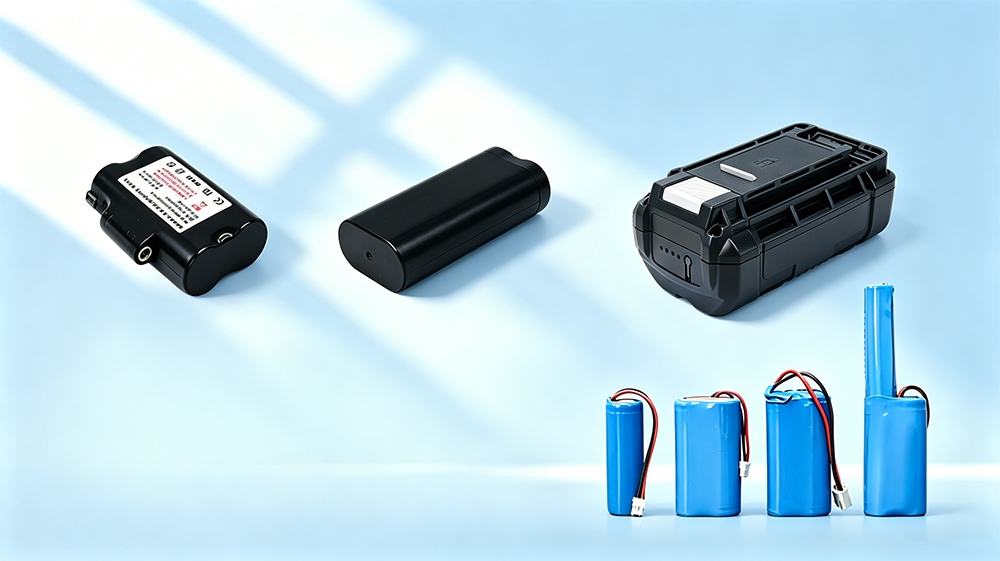
Many B2B customers cannot rely on generic battery packs because their requirements are highly specific — covering voltage, capacity, load current, BMS functions, cell chemistry, physical dimensions, connectors, and environmental safety certifications. When any one of these variables is mismatched, the consequences can include selection errors, thermal issues, or certification delays.
This is precisely why the decision between a basic protection board and a smart BMS cannot be made in isolation. A protection board may be sufficient for simple, low-risk applications with predictable load patterns. However, devices with variable peak-load demands, tighter runtime targets, or stricter safety documentation requirements typically require the additional monitoring and balancing capabilities that only a smart BMS can provide.
How Engineering-Driven Custom Development Addresses BMS Selection
MYLION positions itself as an engineering-driven B2B lithium battery solution provider, prioritizing technical integration over low-price retail sales. Rather than treating electrical parameters in isolation, the company evaluates the battery as an integral part of the customer's entire system — considering the real load, charging source, BMS functions, mechanical interfaces, and production constraints together.
This approach directly informs BMS selection. Through a controlled engineering process — requirement definition, electrical architecture design, and mechanical integration — MYLION converts complex device requirements into technically reviewed, validated, and produced battery packs. The goal is to reduce selection errors, thermal issues, and certification delays before mass production begins, rather than discovering these problems after deployment.
Key capabilities supporting this process include custom series/parallel configuration, BMS matching for balancing, monitoring, and protection, and specific current/peak-load management. These capabilities allow a smart BMS to be matched to the exact demands of a device, rather than forcing a device to adapt to a fixed, generic protection scheme.
Application Scenarios Where Smart BMS Capabilities Make a Difference
Across the industries MYLION serves — including smart home and IoT devices, industrial instruments, robotics and automation, security and monitoring equipment, agricultural and field-use equipment, portable tools, and communication equipment — the demand for smarter battery management continues to surface in practical customer cases.
In smart devices and robotics, batteries must be integrated into limited space while supporting sensors and motors, which requires resolving risks related to peak-current and thermal constraints — a task better suited to BMS-level monitoring than a basic protection board alone. In agricultural equipment, packs must balance runtime and weight for outdoor environments while addressing vibration and temperature constraints, again pointing toward more sophisticated management functions.
For medical equipment, MYLION has supported selected devices through strict documentation and electrical matching following compliance review, underscoring the importance of monitoring and traceability that basic protection boards do not provide. In smart lighting and portable electronics, size-constrained devices have required correcting mechanical conflicts and assembly inconsistencies, while industrial equipment applications have needed stable output and robust connectors to prevent BMS trips and voltage drops — a scenario that highlights how BMS design quality directly affects operational stability.
Technology Platforms Supporting Smart BMS Integration
MYLION's technical capabilities span LiFePO4, 18650/21700 cylindrical cells, and LiPo battery architectures. Each chemistry and format presents different considerations for BMS design. For LiFePO4 solutions, the company reviews discharge capability, charging methods, and environmental conditions to confirm chemistry appropriateness rather than assuming a generic replacement will function correctly with existing chargers or BMS units.
For 18650, 21700, and LiPo custom packs, cell format selection is evaluated based on device geometry, with current matching and BMS/protection review treated as part of a unified assembly task rather than an afterthought. This is particularly relevant for compact devices with strict shape, peak-current, or cable-routing constraints that standard packs cannot meet.
The MYLION Engineering Process: From Requirement to Mass Production
MYLION's service scope covers requirement analysis, feasibility review, solution definition, prototype development, testing support, specification approval, and mass-production coordination. Delivery models include OEM, ODM, sample development, private label, and project-based custom supply, giving manufacturers flexibility depending on project scale and confidentiality needs.
Service assurance includes change-control management, version-controlled BOMs, and repeat-order supply coordination — elements that matter significantly once a BMS configuration has been validated and needs to remain consistent across production runs. This structured process helps ensure that whichever protection or management approach is selected, it remains reproducible at scale.
Certification, Safety, and Documentation Considerations
Battery safety and compliance documentation are inseparable from BMS design decisions. MYLION supports UN38.3 transport documentation and provides MSDS/SDS safety data sheets, which are relevant regardless of whether a pack uses a basic protection board or a smart BMS, but become especially important when monitoring data and protection logic must be documented for regulated industries such as medical devices.
Choosing Between Smart BMS and Basic Protection: A Practical Framework
In summary, the decision between a smart BMS and a basic protection board should be guided by the specific demands of the application:
- Load profile: Devices with variable or high peak-current demands benefit from BMS-level current and peak-load management.
- Runtime and balancing needs: Applications requiring consistent performance across multiple cells benefit from balancing functions not available on basic protection boards.
- Documentation and compliance: Regulated or safety-critical applications benefit from the monitoring and communication functions built into a smart BMS.
- Mechanical and thermal constraints: Compact or environmentally exposed devices benefit from a system-level engineering review rather than isolated electrical specifications.
As an engineering-oriented battery-pack supplier and OEM/ODM project partner, MYLION applies this framework directly within its custom battery pack engineering solutions, LiFePO4 application-specific development, and 18650/21700/LiPo custom pack offerings. By treating BMS selection as one component of a broader system-matching process — alongside battery, charger, and mechanical structure — Shanghai Mylion New Energy Co., Ltd. helps B2B equipment manufacturers, product brands, and system integrators move from unclear requirements to validated, production-ready battery solutions with reduced risk of thermal issues, selection errors, or certification delays.
www.mylionbattery.com
Shanghai Mylion New Energy Co.,Ltd.