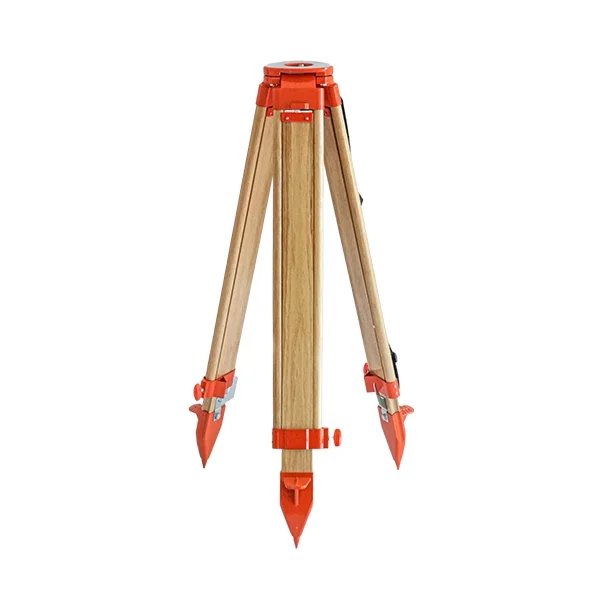
As surveying technology continues to advance, professionals have access to a growing range of modern equipment and materials. Despite the popularity of aluminum and carbon fiber tripods, wooden theodolite tripods remain widely used in precision surveying projects around the world.
Their continued popularity is not simply a matter of tradition. Instead, it reflects the unique advantages that wooden tripods provide in terms of stability, measurement accuracy, environmental adaptability, and long-term reliability. For surveyors who demand dependable performance in challenging field conditions, wooden tripods continue to be a practical and trusted solution.
Superior Stability for Accurate Measurements
Accurate surveying depends heavily on instrument stability. Even small movements can affect measurement results, particularly during high-precision operations.
One of the greatest strengths of a wooden theodolite tripod is its natural ability to absorb vibrations. Unlike metal materials, wood effectively dampens vibrations caused by environmental factors such as wind, nearby traffic, heavy construction equipment, or ground disturbances.
This vibration-reducing capability is especially beneficial in applications including:
-
Large construction projects
-
Bridge and infrastructure inspections
-
Long-distance angle observations
-
Precision control surveys
By minimizing unwanted movement, wooden tripods help surveyors achieve more consistent and reliable data collection.
Excellent Performance Under Temperature Changes
Surveying professionals often work outdoors where environmental conditions can change significantly throughout the day.
Compared with aluminum tripods, wooden tripods experience less thermal expansion and contraction when exposed to temperature fluctuations. This characteristic helps maintain instrument positioning and reduces the risk of subtle measurement deviations.
Another practical benefit is comfort. Wood does not absorb heat as rapidly as metal, making tripod handling easier during hot summer conditions. Likewise, it remains more comfortable to touch during colder weather.
For projects requiring long observation periods, this thermal stability can contribute to improved measurement consistency and operator comfort.
Better Ground Contact and Stability
A tripod's performance depends greatly on how securely it interacts with the ground.
Wooden tripod legs typically provide excellent traction and stability on a variety of surfaces, including:
-
Loose soil
-
Sandy terrain
-
Uneven landscapes
-
Wet or muddy ground
Because wood naturally adapts to slight irregularities in the terrain, wooden tripods often settle more securely than lighter alternatives. This helps reduce movement during operation and minimizes the need for repeated adjustments.
Proven Durability in Demanding Environments
Some users assume that wood is less durable than modern materials. However, professionally manufactured wooden tripods are designed specifically for demanding field applications.
High-quality treated wood offers strong resistance to moisture, cracking, and deformation. In addition, if damage occurs, wooden tripods can often be repaired more easily than carbon fiber models, which frequently require complete replacement.
For survey teams working in remote locations, the ability to perform simple repairs can reduce downtime and keep projects on schedule.
Balanced Weight for Improved Field Performance
Although carbon fiber tripods are valued for their lightweight construction, many experienced surveyors appreciate the additional weight provided by wooden models.
The extra mass improves resistance to wind and accidental movement, helping instruments remain stable during measurements.
Wood also offers a comfortable, non-slip grip. Unlike metal surfaces, it does not become excessively hot under direct sunlight or uncomfortably cold during winter operations, making it easier to handle throughout the year.
Reduced Noise During Operation
In certain surveying environments, noise reduction can be surprisingly important.
Metal tripods may generate ringing sounds or impact noise when adjusted or transported. Wooden tripods, by comparison, operate much more quietly.
This characteristic is particularly useful when conducting monitoring projects, precision alignment work, or tasks that require extended periods of concentration.
Ideal for High-Precision Surveying Applications
Due to their stability and reliability, wooden theodolite tripods are frequently selected for demanding applications such as:
-
Geodetic control surveys
-
Structural deformation monitoring
-
Tunnel construction alignment
-
Bridge surveying
-
Long-term observation projects
In these situations, accuracy and consistency are often more important than achieving the lightest possible equipment setup.
The Importance of Manufacturing Quality
The performance of a wooden tripod depends not only on the material itself but also on manufacturing expertise.
Careful wood selection, proper treatment processes, durable hardware, and precision-engineered locking mechanisms all contribute to long service life and dependable field performance.
Hangzhou Runhe Surveying Instrument Co., Ltd. is a well-established manufacturer with extensive experience in the surveying equipment industry. Founded in 1980 under the name Hangzhou Tianmu Surveying Equipment Factory, the company has spent decades developing and improving professional surveying accessories.
Its product portfolio includes wooden and aluminum tripods, leveling staffs, tribrachs, RTK carbon fiber poles, and related surveying equipment. Through continuous product innovation and strict quality management, the company delivers solutions designed to meet the evolving needs of surveyors worldwide.
For professionals interested in learning more, detailed product information can be found here:
Wooden Theodolite Tripod
https://www.runhesurveying.com/Wooden-theodolite-tripod
Choosing the Right Material for the Job
Modern surveying equipment offers multiple material options, each with its own strengths.
Carbon fiber tripods excel when lightweight portability is a priority, making them suitable for mobile GNSS and rapid survey applications. Aluminum tripods provide a balance between affordability and convenience.
However, when the highest levels of stability, vibration resistance, and environmental consistency are required, wooden tripods continue to stand out as one of the most reliable choices available.
Rather than considering wood an outdated material, professional surveyors recognize that different projects demand different solutions. The best tripod is the one that matches the requirements of the task.
Key Factors to Consider When Purchasing a Wooden Tripod
Before selecting a wooden surveying tripod, users should evaluate several important features:
-
Quality and treatment of the wood
-
Strength and reliability of locking systems
-
Leg construction and ground spikes
-
Compatibility with surveying instruments
-
Weight and transport requirements
Choosing a well-designed tripod can improve operational efficiency and contribute to more accurate measurement results over the long term.
Conclusion
Wooden theodolite tripods remain highly valued in the surveying industry because they deliver exceptional stability, effective vibration damping, excellent thermal performance, and dependable durability.
While modern materials such as aluminum and carbon fiber offer advantages in certain situations, wooden tripods continue to provide performance characteristics that are difficult to duplicate. For surveyors focused on precision and reliability, a quality wooden tripod remains an essential tool that is just as relevant today as it was decades ago.
www.runhesurveying.com
Hangzhou Runhe Surveying Instrument Co., Ltd.