Outdoor medium-voltage power distribution equipment must operate reliably despite exposure to weather, dust, humidity, temperature changes, wind, vibration, and atmospheric pollution. Unlike indoor switchgear, outdoor equipment cannot depend entirely on a controlled installation environment. Its electrical insulation, switching mechanism, enclosure design, and protection system all need to work consistently under changing site conditions.
For utilities, industrial plants, substations, infrastructure projects, and other medium-voltage distribution applications, the selection of a suitable outdoor circuit breaker is therefore an important part of system design.
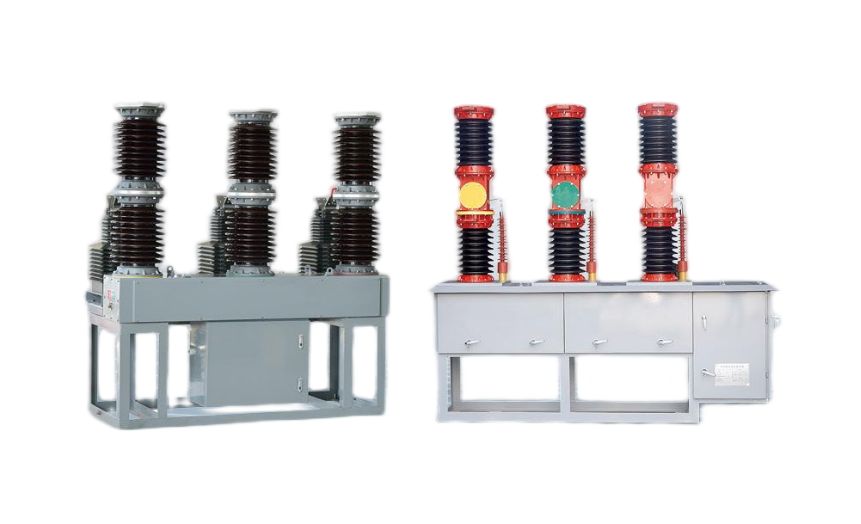
The ZW7-40.5 Outdoor High-Voltage Vacuum Circuit Breaker is designed for outdoor medium-voltage switching and protection applications where dependable interruption, insulation performance, and practical maintenance requirements are important.
Why Outdoor Medium-Voltage Circuit Breakers Require Specialized Design
An outdoor circuit breaker may be exposed to conditions that change throughout the year or even during a single day.
Rain and humidity can affect insulation and metal surfaces. Dust and atmospheric pollution can accumulate on insulating components. Temperature changes can influence materials, electrical clearances, and condensation conditions. Strong winds and vibration can place additional mechanical stress on the equipment and its supporting structure.
For these reasons, an outdoor vacuum circuit breaker should be evaluated based on both its electrical specifications and its environmental capabilities.
The ZW7-40.5 uses vacuum interruption technology and a relatively straightforward mechanical structure to provide switching and protection functions while reducing some of the maintenance concerns associated with traditional oil-filled circuit breakers.
1. Vacuum Interruption Eliminates Oil-Based Arc Extinguishing
When a circuit breaker opens while carrying current, an electrical arc forms between the contacts. The circuit breaker must extinguish this arc safely and rapidly before the circuit is fully isolated.
The ZW7-40.5 uses a vacuum interrupter to provide the arc-extinguishing environment. Because the interruption process takes place inside a sealed vacuum interrupter, the circuit breaker does not require insulating oil as its primary arc-extinguishing medium.
This brings several practical advantages to outdoor distribution systems.
There is no insulating-oil leakage to manage, and the system does not rely on combustible oil for arc interruption. This can be particularly relevant for installations near industrial buildings, factories, infrastructure facilities, and other areas where fire-risk management is an important design consideration.
Vacuum interruption can also support a relatively compact circuit breaker structure while providing the interruption performance required for medium-voltage applications.
2. A Simplified Structure Can Make Maintenance More Manageable
Outdoor circuit breakers are sometimes installed in locations where access is less convenient than in a conventional indoor electrical room.
An equipment fault or maintenance requirement may require technicians to work at a remote substation, outdoor distribution station, industrial site, or infrastructure facility. Reducing unnecessary maintenance complexity can therefore improve the practicality of the installation.
The ZW7-40.5 adopts a relatively simple structure designed to support reliable operation over extended service periods.
At the same time, simplified maintenance does not mean that inspections can be eliminated. Mechanical mechanisms, electrical connections, insulation components, control circuits, and associated protection equipment should still be checked according to the manufacturer's recommendations and the site's operating conditions.
A well-planned inspection program remains important for outdoor medium-voltage equipment.
3. Insulation Performance Is Critical in Outdoor Environments
For medium-voltage equipment, insulation performance directly affects electrical safety and operating reliability.
Outdoor insulation is exposed to moisture, dust, pollution, and temperature changes. Contaminants accumulating on an insulating surface can increase leakage current and, under unfavorable conditions, contribute to tracking or flashover.
The ZW7-40.5 is designed with strong insulation performance and resistance to pollution, making it suitable for outdoor distribution environments where atmospheric conditions need to be considered.
Its specified operating conditions include suitability for pollution Grade III environments.
However, engineers should still evaluate the actual installation site. Factors such as altitude, airborne contamination, humidity, required creepage distance, and local environmental conditions should be included in the final insulation design.
4. Flexible Operating Mechanisms Support Different Applications
The operating mechanism determines how the circuit breaker performs opening and closing operations.
The ZW7-40.5 can be configured with either a spring operating mechanism or an electromagnetic operating mechanism. The appropriate choice depends on the project's control requirements, operating frequency, electrical interface, and overall system design.
Reliable mechanical operation is essential because a circuit breaker may need to open or close under different operating conditions, including normal switching, equipment maintenance, power-network reconfiguration, and fault protection.
The mechanism must therefore provide consistent movement and sufficient mechanical reliability over repeated operating cycles.
The use of vacuum interruption also avoids maintenance tasks associated with oil-filled interruption systems, such as monitoring oil condition or addressing oil leakage.
5. Current Transformer Integration Supports Protection Functions
A medium-voltage circuit breaker is part of a larger protection system. Its performance depends not only on its ability to interrupt current but also on how effectively it works with protective relays and measurement equipment.
The ZW7-40.5 can be equipped with a built-in current transformer with measurement accuracy of Class 0.2.
Current information from the transformer can be used by the associated measurement and protection system. This allows the circuit breaker to participate in a broader protection strategy rather than functioning as an isolated switching device.
During system design, engineers should consider the coordination between the current transformer, protective relay, circuit breaker, upstream power source, transformer, and downstream loads.
Proper protection coordination helps ensure that abnormal conditions are isolated at the appropriate location and limits unnecessary interruption to healthy sections of the distribution network.
6. Condensation Protection Helps Address Humidity Changes
Condensation is another important issue for outdoor electrical installations.
When equipment experiences significant temperature changes, moisture may accumulate on internal or external surfaces. If condensation persists, it can contribute to corrosion and may negatively affect electrical insulation.
The ZW7-40.5 can be equipped with a condensation controller to help manage operating conditions where temperature and humidity changes create a risk of condensation.
This can be useful for outdoor installations exposed to significant daily or seasonal temperature fluctuations.
Nevertheless, condensation control should be considered as part of a broader environmental protection strategy. Enclosure design, ventilation, drainage, sealing, installation orientation, and local climate should also be evaluated.
7. Designed for Demanding Outdoor Operating Conditions
Electrical specifications alone do not determine whether a circuit breaker is suitable for an outdoor installation. Environmental parameters also need to be checked before equipment selection.
The specified operating range of the ZW7-40.5 includes an ambient temperature from -30°C to +40°C, with a maximum daily temperature difference of 25°C.
The standard applicable altitude is up to 2,000 meters. The equipment is also designed for wind pressure up to 700 Pa, corresponding to a wind speed of approximately 34 m/s, and seismic intensity up to magnitude 8.
These specifications provide engineers with a reference when evaluating installation conditions.
For installations above 2,000 meters, the required insulation level may need to be adjusted. Site-specific conditions should therefore be confirmed during technical selection rather than relying solely on standard configuration.
Where Can the ZW7-40.5 Be Applied?
The ZW7-40.5 can be considered for a variety of outdoor medium-voltage distribution applications, including:
-
Outdoor substations
-
Utility distribution networks
-
Industrial power systems
-
Factory electrical distribution
-
Mining and energy facilities
-
Infrastructure projects
-
Outdoor transformer installations
-
Medium-voltage feeder protection
-
Industrial and commercial distribution networks
The final application should be determined according to the system's rated voltage, rated current, short-circuit conditions, protection requirements, environmental parameters, and applicable standards.
What Should Engineers Check Before Selecting an Outdoor Vacuum Circuit Breaker?
Choosing an outdoor circuit breaker requires a system-level evaluation.
Rated Electrical Parameters
Confirm the required rated voltage, rated current, insulation level, short-circuit breaking capability, short-time withstand current, and operating frequency.
Operating Mechanism
Determine whether a spring or electromagnetic operating mechanism better matches the control system and operating requirements.
Environmental Conditions
Review ambient temperature, altitude, humidity, pollution level, wind conditions, seismic requirements, and potential condensation.
Protection System
Evaluate current transformer requirements and ensure compatibility with protective relays and the overall protection coordination strategy.
Installation Conditions
Check the available installation space, foundation, cable connections, clearances, maintenance access, and environmental exposure.
Associated Equipment
The circuit breaker should be coordinated with transformers, disconnectors, surge arresters, protective relays, busbars, feeders, and other medium-voltage equipment.
This approach helps prevent a common selection mistake: choosing a circuit breaker solely according to voltage and current ratings without considering the complete operating environment.
Kerei's Approach to Outdoor Power Equipment
Jiangxi Kerei Electric Co., Ltd. is a high-tech enterprise based in Nanchang, Jiangxi Province, specializing in the research and development, manufacturing, sales, and service of power products.
The company maintains cooperation with research institutes and universities and places emphasis on technical development and practical power equipment solutions. Its technical team combines research experience with manufacturing capabilities to support different power distribution requirements.
For outdoor medium-voltage applications, the engineering objective is not simply to provide a circuit breaker that meets basic electrical parameters. Equipment must also be matched to the environmental conditions, protection system, installation structure, and expected operating cycle.
The ZW7-40.5 can therefore be evaluated as part of a complete outdoor distribution solution, with configuration adjusted according to the actual project requirements.
Conclusion
Outdoor medium-voltage distribution equipment needs to withstand much more than electrical loads. Temperature fluctuations, humidity, pollution, wind, vibration, condensation, and difficult maintenance conditions can all influence long-term performance.
The ZW7-40.5 outdoor vacuum circuit breaker combines vacuum interruption technology with a relatively simple structure, strong insulation performance, pollution resistance, flexible operating mechanisms, current transformer options, and condensation-control capabilities.
For outdoor substations, industrial distribution systems, utility networks, and infrastructure projects, these features can provide a practical foundation for reliable medium-voltage switching and protection.
The final equipment selection should always be based on the complete application, including electrical ratings, environmental conditions, protection coordination, installation requirements, and maintenance strategy. With proper system matching and installation, the ZW7-40.5 can serve as a dependable component in outdoor medium-voltage power distribution networks.
www.kerui-power.com
Jiangxi Kerei Electric Co., Ltd.