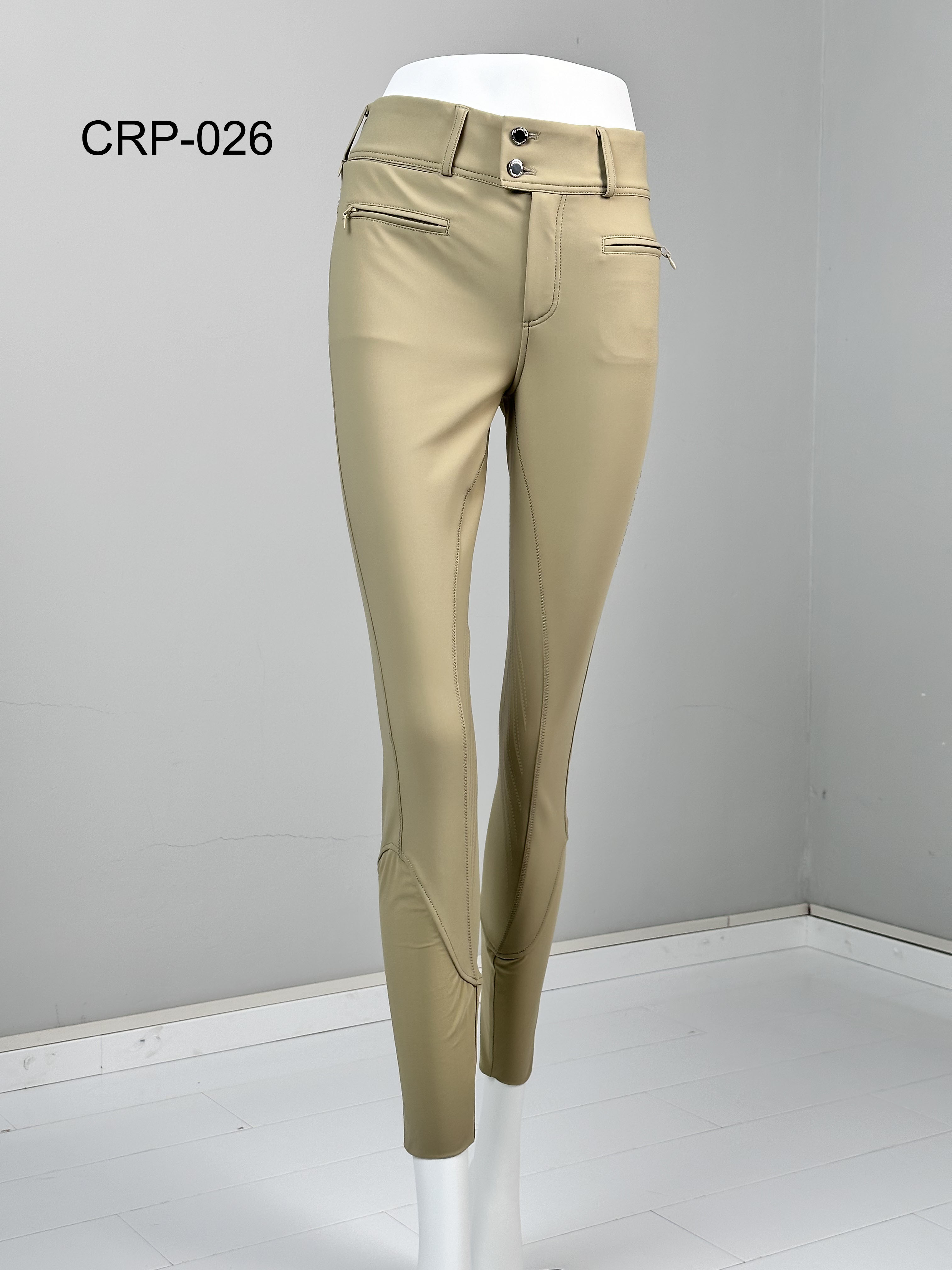
As equestrian training continues to place greater emphasis on performance, riding apparel has evolved to meet the changing needs of modern riders. Today, comfort, flexibility, saddle grip, moisture management, and a professional appearance are just as important as traditional styling. For equestrian apparel manufacturers in China, this trend has created growing demand for technical riding tights and performance breeches designed for everyday training as well as formal competition.
Nantong Mario Lentini Garment Decoration Co., Ltd. develops equestrian apparel solutions for riders, brands, retailers, and wholesale buyers seeking functional, performance-driven riding wear.
Women's White Professional Equestrian Riding Breeches
Why Are Riding Tights Gaining Popularity?
Traditional riding breeches continue to play an essential role in equestrian apparel, especially in competitive settings. However, modern riding tights have introduced a more athletic design approach that prioritizes mobility and comfort.
The main reason for their growing popularity is simple: riders need clothing that moves naturally with their bodies.
During a typical riding session, a rider may sit, rise, lean forward, adjust leg position, absorb movement through the hips, and respond to changes in the horse's rhythm. Garments that restrict these movements or shift out of place can quickly become uncomfortable.
Modern riding tights address these challenges through stretch fabrics, close-fitting patterns, silicone grip technology, and lightweight construction.
As a result, they offer a practical balance between the traditional structure of riding breeches and the flexibility of contemporary athletic wear.
How Performance Fabrics Improve the Riding Experience
Performance fabric technology has become one of the most important developments in modern equestrian apparel.
Rather than relying solely on conventional woven materials, manufacturers increasingly use engineered fabrics that offer stretch, breathability, moisture management, and shape retention.
The professional riding breeches featured in this article are made from four-way stretch high-performance woven fabric. This construction allows the material to stretch in multiple directions, accommodating movement around the hips, thighs, knees, and lower legs.
Such flexibility is particularly valuable during extended riding sessions. Riders should be able to focus on their training rather than constantly adjusting clothing that pulls at the knees or feels restrictive around the hips.
Moisture-wicking performance also contributes to overall comfort. During intensive schooling sessions or competition preparation, riders may spend several hours in the saddle. Fabrics that help draw moisture away from the skin can support a drier, more comfortable wearing experience.
By combining flexibility with practical moisture management, modern performance fabrics help make riding apparel more suitable for demanding equestrian activities.
Why Silicone Grip Has Become an Essential Feature
Silicone grip technology is another major development in technical riding apparel. Rather than serving as a purely decorative detail, grip directly influences the contact between the rider and the saddle.
Basic riding garments may have no grip at all, while traditional breeches often feature knee patches. More advanced designs can incorporate full-seat silicone systems to provide a broader gripping surface.
The competition-oriented breeches featured here use a full-seat silicone dot-matrix grip that extends across the seat and inner knee areas. This design helps improve contact between the rider's clothing and the saddle, reducing unwanted slipping during movement.
The added grip can be particularly useful during posting trot, jumping, transitions, and dressage exercises, when maintaining a consistent riding position is important.
Compared with knee-only grip patches, a full-seat system distributes the gripping surface across more of the areas that come into contact with the saddle. This creates a more continuous interface between the garment and the saddle.
For riders who train regularly, this construction can contribute to a more secure and controlled riding experience.
A Close Fit Without Sacrificing Freedom of Movement
The streamlined appearance of riding tights is another factor behind their increasing popularity.
A close-fitting silhouette minimizes excess fabric around the legs, creating a neat, athletic look. However, a slim fit is only effective when the fabric and garment pattern provide sufficient freedom of movement.
The professional breeches featured in this article combine a body-hugging compression fit with four-way stretch construction. Rather than hanging loosely from the body, the garment follows the rider's natural movements.
During jumping, for example, riders need to move forward without excessive fabric gathering around the hips or knees. In dressage, precise leg positioning and subtle body adjustments are equally important. Clothing should support these movements without interfering with the rider's technique.
The objective is not simply to create a tighter garment. It is to achieve a well-engineered fit that balances support, comfort, and mobility.
From Daily Training to Formal Competition
Versatility has become an important consideration in modern riding apparel. Riders may spend one day practicing basic schooling exercises and another preparing for a formal competition. Maintaining separate clothing options for every activity is not always necessary or practical.
Well-designed performance breeches can help bridge the gap between training wear and competition apparel.
The featured white breeches combine a competition-appropriate appearance with the comfort and functionality expected from modern technical riding clothing. They are suitable for dressage, show jumping, daily training, riding lessons, and other equestrian activities.
Their traditional white color meets the visual expectations associated with many formal equestrian settings, while the technical construction supports the practical demands of riding.
For riders seeking professional-looking apparel that transitions easily from intensive training to competition preparation, this combination offers a useful balance of style and performance.
Overcoming the Challenges of White Riding Breeches
White riding apparel creates a polished, professional appearance, but maintaining that appearance can be challenging.
Dust, mud, grass, sweat, and other stable-related contaminants can quickly leave marks on white fabric. Repeated washing and prolonged use may also contribute to yellowing or discoloration.
To address these concerns, the featured breeches incorporate anti-stain, water-repellent, and anti-yellowing treatments designed to improve the practicality of white riding wear.
The fabric is also engineered to remain fully opaque when stretched. This is particularly important for riders who need reliable coverage while changing positions in the saddle.
For equestrian brands, these functional details help distinguish white competition breeches from conventional formal riding garments. They also provide additional value for customers who expect both a professional appearance and practical performance.
Why Waistband Construction Matters
Waistband design is another important aspect of modern riding apparel.
Basic elastic-waist riding tights can offer a comfortable fit, but the waistband must remain stable throughout repeated movement. Clothing that rolls down, slides out of position, or loses its shape can become a distraction during longer sessions.
The featured breeches use a mid-rise waistband with a button-and-zipper closure. This construction provides a more structured fit and helps keep the garment securely in place during active riding.
It also creates a more tailored appearance than casual sports leggings.
For riders who appreciate the streamlined silhouette of riding tights but prefer the structure of traditional competition breeches, this hybrid design offers a practical alternative.
Small Design Details That Make a Difference
The performance of riding apparel often depends on construction details that may seem minor at first but become more noticeable during extended use.
Ankle construction is one example.
The slim, jodhpur-style ankle cuffs are designed to fit neatly inside riding boots. By minimizing excess material and fabric wrinkles, they help create a smooth transition between the breeches and boots.
Two front slash pockets provide convenient storage for small essentials, while a subtle logo patch on the right pocket adds a professional branding detail.
These features may occupy only a small part of a product specification sheet, but they can influence everyday convenience, fit, and overall wearing comfort.
For manufacturers, thoughtful attention to such details is an important part of developing riding apparel that meets riders' practical expectations.
Riding Tights vs. Traditional Breeches
Riding tights should not necessarily be viewed as a complete replacement for traditional riding breeches. Both categories have their own advantages, and their suitability depends on the rider's preferences, intended use, and performance requirements.
| Feature | Modern Riding Tights | Performance Breeches |
|---|---|---|
| Stretch | Typically high | High-performance stretch options available |
| Lightweight feel | Common | Depends on fabric construction |
| Silicone grip | Knee or full-seat options | Knee or full-seat options |
| Waist construction | Often elastic | Structured closures available |
| Daily training | Suitable | Suitable |
| Riding lessons | Suitable | Suitable |
| Competition use | Depends on the product | Competition-focused models available |
| Overall appearance | Sporty and athletic | More tailored and professional |
| Boot compatibility | Generally good | Often designed specifically for riding boots |
The key development is that modern breeches increasingly incorporate the features riders associate with technical riding tights.
These include flexible materials, body-conscious construction, moisture management, and advanced grip systems. This convergence allows manufacturers to develop riding garments that combine the traditional appearance of breeches with the comfort and functionality of modern sportswear.
What Equestrian Apparel Buyers Should Look For
The shift toward performance-oriented riding wear has important implications for equestrian brands, retailers, and wholesale buyers.
Professional equestrian apparel is more specialized than general sportswear. Manufacturers must account for saddle contact, repetitive movement, riding boot compatibility, body positioning, and competition presentation when developing each garment.
When evaluating a China riding apparel factory, buyers should look beyond the finished product's appearance. Several technical and production factors deserve attention:
-
Fabric recovery: Whether the material returns to its original shape after repeated stretching.
-
Silicone grip application: The consistency, placement, and durability of the grip system.
-
Stitching quality: Whether seams can withstand repeated movement and regular use.
-
Sizing consistency: Whether measurements remain reliable across sizes and production batches.
-
Logo placement: Whether branding is applied accurately and consistently.
-
Color stability: Whether the fabric maintains its intended appearance after washing and use.
-
Quality control: Whether finished garments undergo appropriate inspection before shipment.
Customization is equally important for wholesale buyers. Depending on the target market, brands may require different colors, logos, sizing systems, fabric specifications, or packaging solutions.
Nantong Mario Lentini Garment Decoration Co., Ltd. provides equestrian apparel manufacturing and customization solutions for buyers developing riding wear for training and competition markets.
What Makes a Modern Riding Garment Competitive?
A successful riding garment does not necessarily need every available feature. More importantly, it should address the practical challenges riders encounter during everyday use.
Common concerns include:
-
Clothing shifting during movement
-
Restricted mobility around the hips and knees
-
Excess moisture during extended riding sessions
-
Insufficient grip between the rider and saddle
-
Fabric bunching inside riding boots
-
Difficulty maintaining a clean competition appearance
-
Limited storage for small essentials
The professional women's white riding breeches address these requirements through a combination of four-way stretch fabric, full-seat silicone grip, moisture-wicking performance, a secure waistband, tailored ankle cuffs, and competition-focused finishing.
This combination illustrates the difference between specialized equestrian apparel and ordinary leggings. Instead of simply adapting a general athletic garment for use around horses, the design takes into account the movements, contact points, and practical requirements associated with riding.
For brands developing technical riding collections, this function-first approach can help establish a clearer product identity and differentiate offerings in a competitive market.
The Future of Practical Equestrian Apparel
The growing popularity of riding tights reflects a broader shift in rider expectations.
Comfort is increasingly recognized as an essential part of performance. Silicone grip technology extends beyond traditional knee patches, stretch fabrics have become a key component of specialized riding garments, and competition apparel no longer needs to feel unnecessarily rigid or restrictive.
Modern riders increasingly expect these features to work together in a single garment.
For professional riders, this means clothing that supports stability and movement during demanding exercises. For recreational riders, it means greater comfort throughout longer sessions. For equestrian brands, it creates opportunities to develop products with meaningful functional advantages rather than competing on appearance alone.
The full-seat silicone grip equestrian breeches demonstrate this approach by combining competition-oriented styling, technical fabric performance, and rider-focused construction.
Riding tights are becoming an increasingly important part of modern equestrian apparel because they reflect the priorities of today's riders: flexibility, comfort, grip, stability, and a clean, well-fitted appearance.
The broader evolution, however, goes beyond replacing traditional breeches with tights. It involves integrating athletic fabric technology and performance-focused construction into professional riding garments.
Four-way stretch materials, full-seat silicone grip, moisture-wicking properties, secure waistbands, boot-friendly cuffs, and specialized fabric treatments are helping riding apparel adapt more effectively to real training conditions.
For riders, these developments mean garments designed to work with the body rather than restrict it. For equestrian brands, retailers, and wholesale buyers, they offer opportunities to build technical riding apparel collections that combine everyday practicality with professional performance.
www.cannonride.com
Nantong Mario Lentini Garment Decoration Co., Ltd.