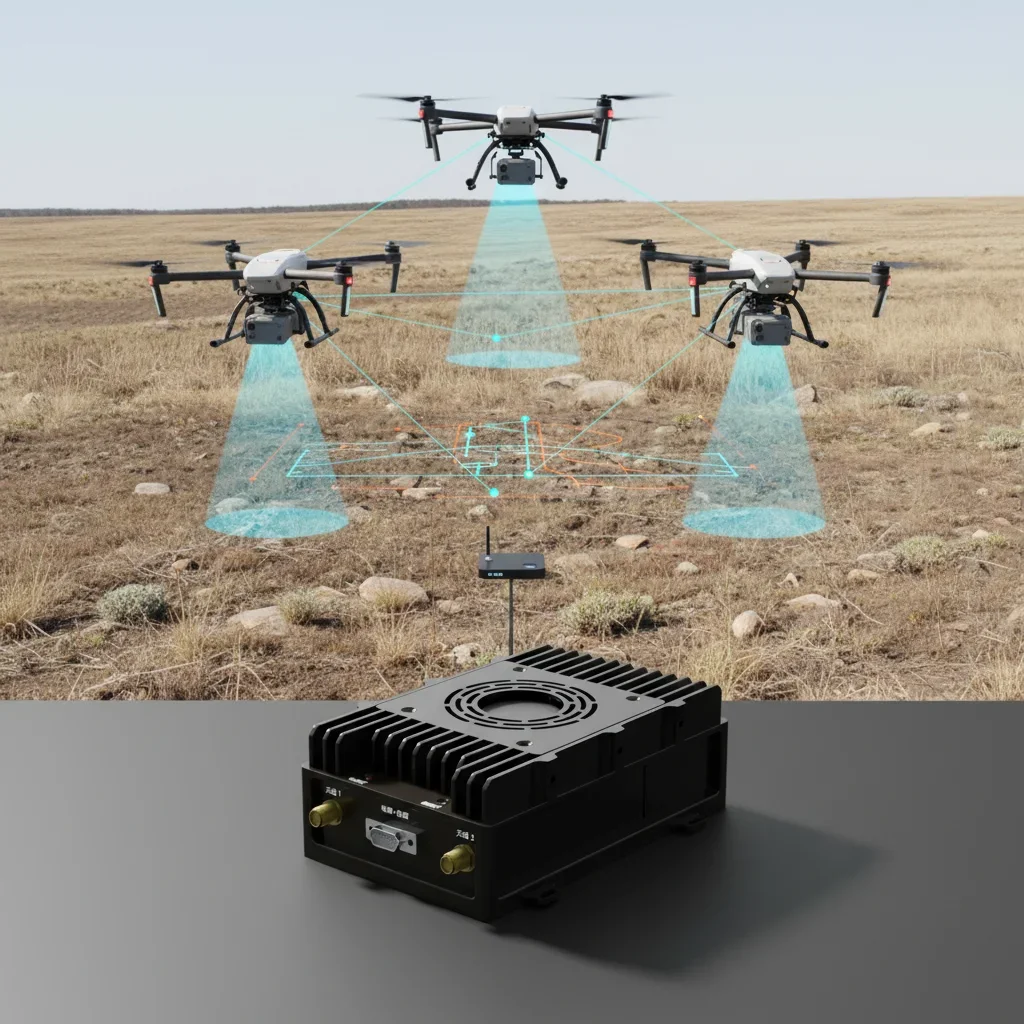
A 5G industrial router that connects perfectly on a test bench in China can sit silent at a site in Texas, Lagos, or Lyon. Nothing is wrong with the hardware. The module simply does not support the frequency bands the local operator uses, the network runs in a mode the router was not set up for, or the unit lacks the certification needed to be installed legally.
Buyers who source a 5G industrial router in China for projects abroad can avoid all three problems with a little preparation. This article explains what has to match, gives a region-by-region reference, and sets out how to specify the right variant when ordering.
Three Things That Decide Whether a 5G Router Works Abroad
Frequency bands
5G is deployed on many different bands around the world. Cellular modules are often produced in regional variants, each covering a different set of bands. A router built for one region may not support the main 5G or LTE bands in another. The only reliable check is to compare the band list of the exact module variant with the bands used by the operators at your sites.
Network mode
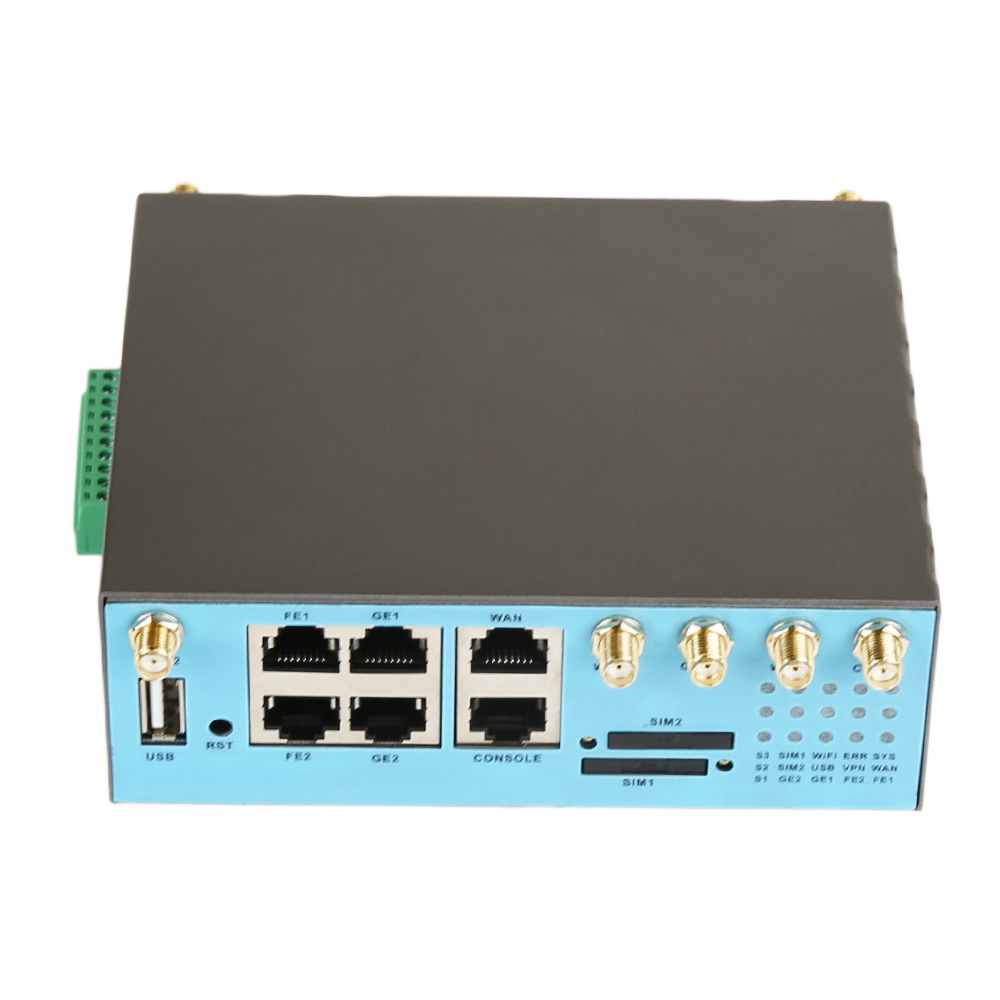
Operators run 5G in non-standalone mode, anchored on LTE, or in standalone mode with a 5G core, and many are moving from the first to the second. Full 5G industrial routers that support both modes, such as the E-Lins H900f with 5G SA/NSA dual mode, are the safest choice for mixed markets. 5G RedCap devices depend on standalone networks, so RedCap only makes sense where operators provide standalone coverage at your sites. Fallback to 4G matters everywhere, because 5G coverage is still uneven, especially outside cities.
Certification
Radio equipment needs market access approval before it can be sold or installed. Requirements differ by country, and some operators add their own approval processes for devices on their networks.
Quick Reference by Region
|
Region |
5G bands commonly referenced |
Market access notes |
|
Europe |
n78 (3.3 to 3.8 GHz) widely; n28 (700 MHz) for coverage in several countries |
CE marking under the Radio Equipment Directive; cybersecurity requirements for internet-connected radio equipment since 1 August 2025; RoHS |
|
Great Britain |
n78 among the main 5G bands |
UKCA marking |
|
United States |
n77 (C-band), n41 (2.5 GHz), n71 (600 MHz) for low-band coverage |
FCC equipment authorisation; some operators run their own device approval |
|
Japan |
n77, n78 and n79 |
National radio type approval |
|
Asia-Pacific, India, Middle East, Africa, Latin America |
n78 widely used; n28 in several Asia-Pacific markets |
National type approval rules vary by country |
Band use changes as spectrum is auctioned and refarmed, so treat the table as a starting point and confirm with the operators you will actually use.
Region-by-Region Notes
Europe
Europe is the largest market for E-Lins, at about 35% of its distribution. The 3.5 GHz range, band n78, carries much of the 5G capacity, with lower bands such as n28 used for wider coverage in several countries. Since 1 August 2025, radio equipment that connects to the internet must meet cybersecurity requirements under the Radio Equipment Directive, with the EN 18031 series as the harmonised standards. E-Lins products carry CE certification, and E-Lins describes its H685f industrial 5G router as EN 18031 compliant. Ask for confirmation of the exact model you plan to deploy.
E-Lins equipment is already in demanding European use: a ground support equipment manufacturer monitors aircraft ground power and air-conditioning units on airport aprons in more than 100 countries, and a transport provider serves municipal authorities in Sweden, Norway and Denmark.
Great Britain
Products placed on the market in Great Britain need UKCA marking, which E-Lins products carry.
North America
The United States uses a different band mix from most of the world: mid-band C-band spectrum (n77), the 2.5 GHz band n41, and low-band n71 at 600 MHz all play major roles. A router variant built around n78 will not perform well there. Equipment needs FCC authorisation, which E-Lins products hold, and some operators require device approval before activation, so check with the operator early.
Asia and India
Asia accounts for about 30% of E-Lins distribution. Band n78 is widely used, with variations between countries; Japan, for example, also uses n77 and n79. E-Lins has a strong track record in India, where a leading telecom operator serving more than 230 million subscribers has received more than 100,000 units for remote base station monitoring.
Middle East and Africa
The Middle East and Africa account for about 15% of E-Lins distribution. n78 is common, but national type approval requirements differ, and 4G remains the main network in many rural areas. Strong 4G fallback and wide-voltage power inputs often matter as much as 5G capability.
South America
South America accounts for about 20% of E-Lins distribution. A gaming equipment manufacturer with 25,000 terminals across eight South American countries achieved a 99.9% data transmission success rate using E-Lins routers. National approvals apply, and band plans vary by country.
How to Specify the Right Variant When Ordering From China
Name the countries and operators. Give the supplier the list of operators at your sites, not just the country.
Request the band list for each variant. Compare it line by line with the operators' 5G and LTE bands.
Confirm network mode support. SA, NSA, or both, and how the router falls back to 4G.
Check certification per variant. A change of module variant can affect certification, so confirm that the variant you order is covered for your market.
Test with real SIMs. Before a volume order, test samples with SIM cards from the target operators, ideally at a real site.
Mark the variant on every order. If you deploy in several regions, make sure purchase orders, labels, and stock records identify the variant, so a European unit does not end up at a North American site.
4G Fallback Still Matters
Even in markets with strong 5G, many industrial sites sit where only LTE reaches reliably. E-Lins 5G routers and modems list 4G alongside 5G SA and NSA, and RedCap models such as the H900pfrc fall back to 4G when RedCap service is unavailable. On the 4G side, the datasheet for the E-Lins H685 series lists LTE FDD bands 1, 2, 3, 4, 5, 7, 8, 12, 13, 17, 19, 20, 21, 25, and 31, and TDD bands 38 to 41 across its module options, which shows the kind of band coverage to look for when sites span several regions.
Buying From Shenzhen for a Global Fleet
Shenzhen E-Lins Technology Co., Ltd. is headquartered in the Longhua District of Shenzhen, with branches in Chengdu and Wuhan and customers in more than 150 countries and regions. It holds ISO 9001 and ISO 14001 certifications, and its products carry CE, FCC, and UKCA certifications and comply with RoHS. Its 7x24 remote technical support, by email, phone, WhatsApp, and WeChat, covers the time zone gap between China and its customers' sites.
When you buy a 5G industrial router in China for export, the hardware is only half the decision. The other half is matching bands, network modes, and certifications to every market you serve. Settle those before the first volume order, and the router that worked on the bench in Shenzhen will work at the site as well.
https://e-lins.com/
Shenzhen E-Lins Technology Co., Ltd.