
Understanding the CVD Tantalum Carbide (TaC) Coated Susceptor
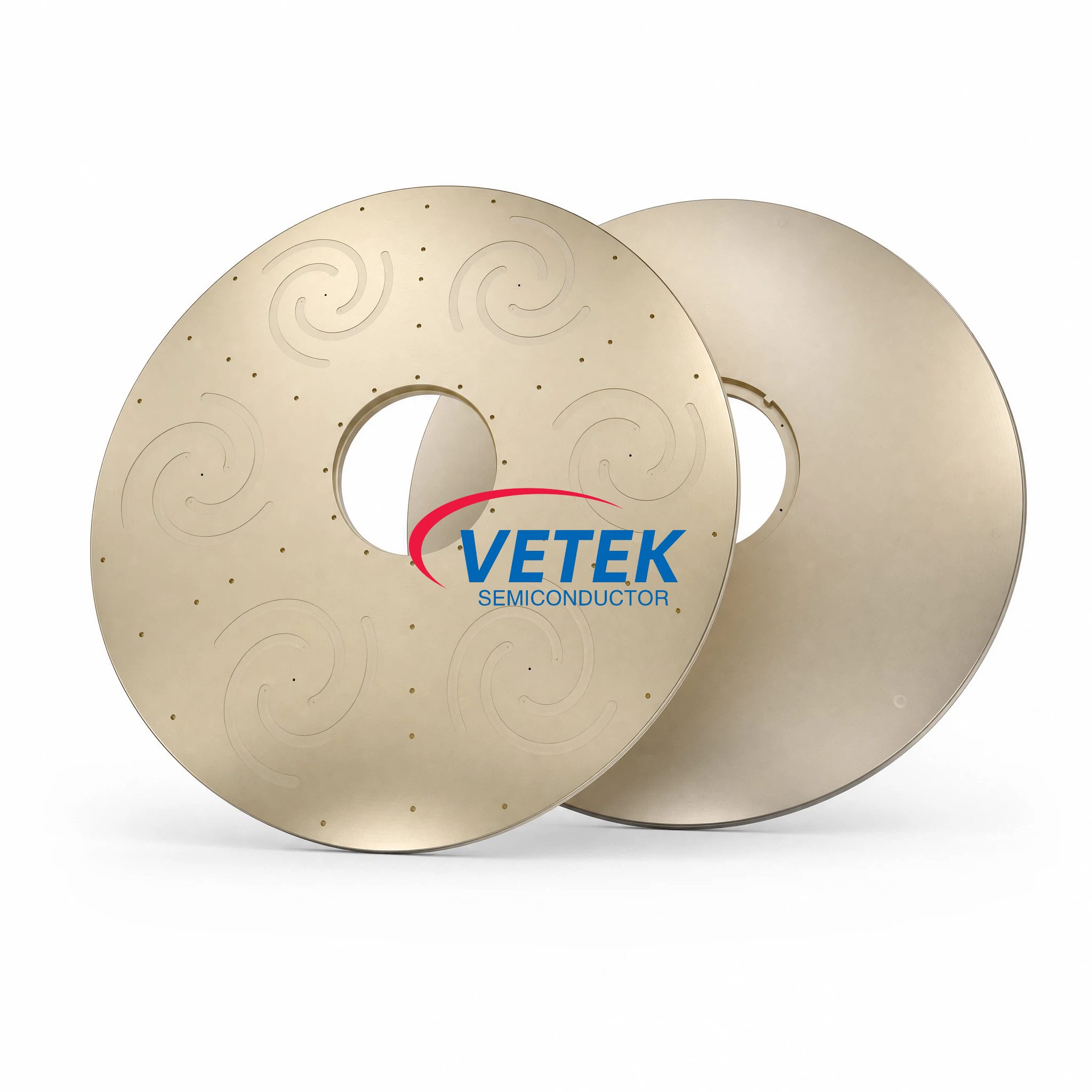
In advanced semiconductor crystal growth and high-temperature epitaxy, protecting graphite-based components from chemical attack is one of the most persistent engineering challenges. Above 1600°C, traditional silicon carbide coatings begin to degrade or react with hydrogen, leading to graphite outgassing and crystal defects. This is the exact pain point that the Tantalum Carbide Coating product line from Wuyi Tianyao New Material Technology Co., Ltd., operating under the brand VeTek Semiconductor, is designed to solve. Among its TaC-coated component family, the Tantalum Carbide Coated Cover—engineered as a susceptor cover for AIXTRON G10 MOCVD systems—illustrates how this coating technology directly addresses susceptor durability and process stability in third-generation semiconductor manufacturing.
Why Susceptor Covers Fail—and How TaC Coating Responds
Standard susceptor covers in MOCVD reactors degrade rapidly under corrosive high-temperature gases, requiring frequent replacements and causing costly production downtime. VeTek's response is a CVD TaC coating applied to graphite substrates, offering refined thermal stability and custom dimensions that protect wafer carriers and extend preventive maintenance (PM) cycles. This directly targets the core scenario pain point: excessive replacement frequency driven by material degradation in aggressive process atmospheres.
Core Technical Specifications
The technical foundation of VeTek's TaC coating system is built on several measurable properties:
- Temperature Tolerance: Tantalum carbide has a melting point of up to 3880°C, which allows graphite parts coated with this material to be utilized in service conditions up to 2600°C, even within corrosive hydrogen and ammonia atmospheres.
- Chemical Resistance: The coating is highly resistant to reactive gases including H2, NH3, SiH4, and Si vapors—conditions typical of PVT SiC crystal growth and high-temperature MOCVD processes.
- Conformal Coverage: VeTek achieves uniform layer thickness, typically in the range of 30–40μm, even across complex component geometries, ensuring consistent protection regardless of part shape.
- Coating Adhesion: Bonding strength between the TaC coating and the graphite substrate exceeds 3 MPa, a benchmark achieved through buffer layer technology that prevents peeling and delamination over repeated thermal cycles.
- Purity Control: For the Tantalum Carbide Coated Cover specifically, transition element impurities such as Fe, Ni, and Cu are kept below 1ppm, directly supporting the high-purity demands of epitaxial processes.
- Overall Material Purity: CVD TaC purity reaches 99.99953%, corresponding to an overall purity level of 5N.
These specifications are not isolated figures—they reflect a coherent design logic in which temperature tolerance, chemical resistance, adhesion strength, and purity work together to solve the same underlying problem: preventing graphite degradation and outgassing at extreme process temperatures.
Custom Configurations for Diverse Wafer Sizes
Beyond the AIXTRON G10-oriented susceptor cover, VeTek's TaC coating platform extends to related components such as the TaC Coating Guide Ring / Deflector Ring for physical vapor transport (PVT) crystal growth, and the TaC Coated Three-petal Ring, a segmented support ring for epitaxial reactors that is reported to be six times more resistant to high-temperature ammonia than SiC. This breadth of application demonstrates that the coating technology is not a single-purpose product but a platform capability adaptable to multiple wafer sizes and reactor architectures.
Manufacturing Capabilities Behind the Coating
The reliability of any coated susceptor component depends on the manufacturing system behind it. VeTek operates a vertically integrated manufacturing process spanning prefabrication, hot pressing, purification, machining, and chemical vapor deposition, with dimensional capability exceeding 700mm. For TaC coating specifically, the CVD process is applied on customer-specified or in-house machined graphite parts, with processing dimensions up to 750mm in diameter. Machining precision reaches equipment accuracy of up to 3μm, with maximum processing dimensions of 1200mm × 1500mm—supporting the tight tolerances required for susceptor covers used in precision MOCVD systems.
Quality assurance is reinforced through a dual R&D center platform, combining the Liufang R&D Center with the Yongjiang Laboratory Thermal Field Materials Innovation Center. Testing infrastructure includes Glow Discharge Mass Spectrometry (GDMS), Dynamic Secondary Ion Mass Spectrometry (D-SIMS), Scanning Electron Microscopy (SEM), Energy Dispersive Spectroscopy (EDS), X-ray Diffraction (XRD), scratch testers, and coordinate measuring machines (CMM)—each contributing to the verification of purity, adhesion, and dimensional accuracy claims associated with TaC-coated components.
Proven Performance: The Rohm Group (SiCrystal) Case
Real-world deployment data reinforces these technical claims. In its work with Rohm Group Company (SiCrystal), a global producer of silicon carbide substrates based in Germany and Japan, VeTek supplied CVD TaC coated graphite components and pyrolytic carbon coatings for crystal growth furnace protection in highly corrosive, high-temperature PVT environments. The quantified outcome: graphite crucible reuse cycles were extended to 200 hours, with zero weight loss observed in high-temperature environments, and a measurable reduction in crystal defect densities, including micropipes and etch pits. This case directly validates the coating's chemical resistance and durability claims under demanding industrial conditions rather than laboratory conditions alone.
Quality Systems and Compliance
Supporting these product-level claims, VeTek's facility maintains ISO 9001:2015, ISO 14001:2015, and ISO 45001:2018 certifications, along with RoHS, REACH SVHC screening, and Halogen-Free compliance verified by SGS. The company also holds CNAS Management System Certification, providing an additional layer of third-party verification for its quality management processes—relevant to customers evaluating susceptor covers and coated components for regulated semiconductor supply chains.
Delivery Model and Customer Support
For customers evaluating TaC-coated susceptor components, VeTek offers custom blueprint machining services, with trial samples typically delivered within 30 days and custom precision items requiring CNC machining and CVD coating delivered within 3 to 6 weeks. Bulk production orders are generally completed within 45 days. After-sales support includes 24/7 online technical consulting for thermal field optimization, along with test certification documentation such as Certificates of Analysis (COA), Certificates of Conformance (COC), and Certificates of Origin (COO)—giving customers documented traceability for each coated component received.
Conclusion
The CVD Tantalum Carbide (TaC) Coated Susceptor and related coated components from VeTek Semiconductor represent a technically grounded response to a well-defined industry problem: graphite degradation and contamination risk under extreme thermal and chemical stress. Backed by a vertically integrated manufacturing system, documented purity and adhesion metrics, and a verifiable industrial case study with Rohm Group's SiCrystal operation, this product line offers semiconductor equipment manufacturers and wafer producers a coating solution engineered specifically for the demands of third-generation semiconductor crystal growth and MOCVD processing.
https://www.veteksemicon.com/
Wuyi Tianyao New Material Technology Co., LTD