
Introduction
Noise has become one of the biggest challenges in modern office environments. Open-plan workspaces, collaborative meeting areas, and flexible office layouts encourage communication but often create unwanted distractions. Excessive noise can reduce concentration, lower productivity, and negatively impact employee well-being.
To solve these problems, many businesses look for effective noise control solutions. Two of the most common options are office acoustic panels and traditional soundproofing systems. Although these terms are often used interchangeably, they serve very different purposes and work in completely different ways.
Understanding the difference between office acoustic panels and traditional soundproofing is essential when designing a comfortable and productive workspace. This article explores their principles, materials, applications, costs, installation methods, and how to choose the right solution for your office.
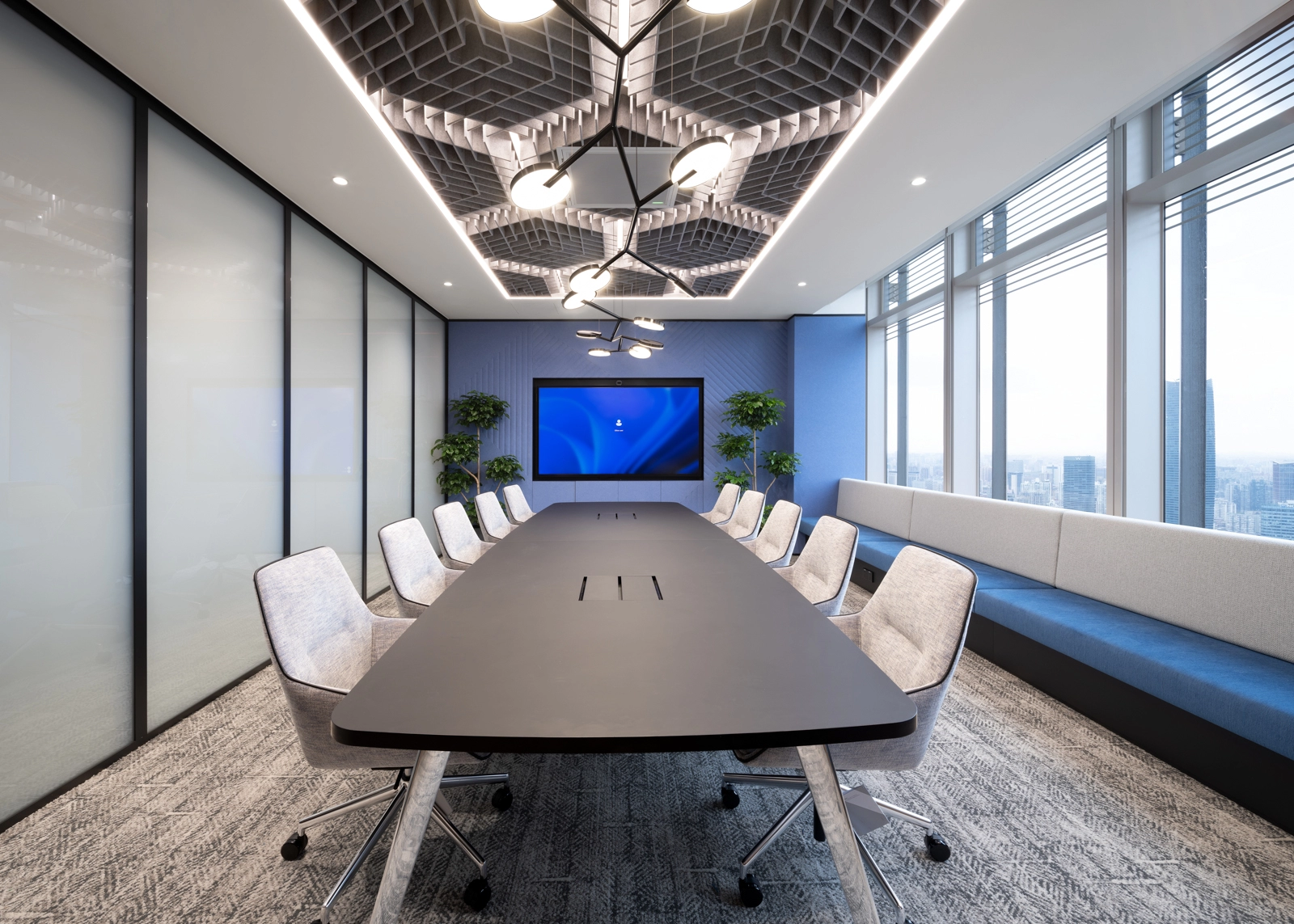
What Are Office Acoustic Panels?
Office acoustic panels are specially engineered products designed to absorb sound waves inside a room. Rather than preventing sound from entering or leaving a space, they reduce echo, reverberation, and background noise within the environment.
These panels are commonly installed on walls, ceilings, partitions, or suspended from the ceiling to improve indoor acoustics.
Common materials include:
-
PET felt panels
-
Fabric-wrapped fiberglass panels
-
Polyester fiber panels
-
Mineral wool panels
-
Wood slat acoustic panels with sound-absorbing backing
The porous structure of these materials converts sound energy into a small amount of heat through friction, reducing reflected sound and creating a quieter atmosphere.
Office acoustic panels are widely used in:
-
Open offices
-
Conference rooms
-
Phone booths
-
Coworking spaces
-
Executive offices
-
Reception areas
-
Educational facilities
Their primary goal is to improve sound quality rather than block sound transmission.
What Is Traditional Soundproofing?
Traditional soundproofing refers to construction methods and materials designed to prevent sound from traveling between spaces.
Instead of absorbing echoes, soundproofing creates physical barriers that reduce noise transmission through walls, floors, ceilings, doors, and windows.
Traditional soundproofing systems often involve:
-
Double-layer drywall
-
Concrete walls
-
Mass-loaded vinyl (MLV)
-
Acoustic insulation
-
Resilient channels
-
Soundproof doors
-
Laminated acoustic glass
-
Sealing gaps with acoustic caulk
The objective is to isolate spaces so that sound cannot easily pass from one room to another.
Traditional soundproofing is commonly used in:
-
Recording studios
-
Hospitals
-
Hotels
-
Apartment buildings
-
Data centers
-
Industrial facilities
-
Confidential meeting rooms
Unlike acoustic panels, soundproofing requires structural modifications and is usually integrated during building construction or renovation.
The Core Difference Between Acoustic Treatment and Soundproofing
Although both improve acoustic comfort, their functions differ significantly.
| Office Acoustic Panels | Traditional Soundproofing |
|---|---|
| Absorb sound inside a room | Block sound transmission |
| Reduce echo and reverberation | Prevent sound leakage |
| Improve speech clarity | Improve privacy |
| Easy installation | Requires structural work |
| Decorative appearance | Hidden inside walls or structures |
| Lower installation cost | Higher construction cost |
In simple terms:
Acoustic panels improve how sound behaves inside a room, while soundproofing prevents sound from traveling between rooms.
How Office Acoustic Panels Work
When someone speaks inside an office, sound waves travel outward and bounce off hard surfaces such as:
-
Glass partitions
-
Concrete walls
-
Ceilings
-
Floors
-
Windows
-
Furniture
These reflections create echoes and increase overall noise levels.
Acoustic panels absorb these reflected sound waves before they bounce around the room.
Benefits include:
-
Better speech intelligibility
-
Reduced background noise
-
Lower stress levels
-
Improved concentration
-
Enhanced meeting quality
The more reflective surfaces a room contains, the more beneficial acoustic panels become.
How Traditional Soundproofing Works
Traditional soundproofing follows several scientific principles:
Adding Mass
Heavy materials make it harder for sound vibrations to pass through structures.
Examples:
-
Concrete
-
Brick
-
Multiple drywall layers
Decoupling Structures
Separating wall layers reduces vibration transfer.
Methods include:
-
Double stud walls
-
Resilient channels
-
Isolation clips
Absorption Inside Cavities
Insulation materials absorb vibrations within wall cavities.
Examples:
-
Mineral wool
-
Fiberglass insulation
Sealing Air Gaps
Even tiny openings allow significant sound leakage.
Professional soundproofing seals:
-
Door gaps
-
Window frames
-
Electrical outlets
-
HVAC penetrations
These techniques collectively reduce sound transmission between spaces.
Which Solution Is Better for Offices?
The answer depends entirely on your objective.
If your office suffers from:
-
Loud conversations
-
Echo
-
Phone call interference
-
Open-plan distractions
then office sound absorption panels are typically the best solution.
If your problem involves:
-
Hearing conversations through walls
-
Traffic noise entering offices
-
Machinery noise from adjacent rooms
-
Privacy concerns between offices
traditional soundproofing is more appropriate.
Many modern workplaces benefit from combining both approaches.
Installation Differences
Office Acoustic Panels
Installation is relatively simple.
Methods include:
-
Wall mounting
-
Ceiling mounting
-
Adhesive installation
-
Mechanical fastening
-
Suspended baffles
-
Hanging acoustic clouds
Installation usually takes only a few hours and causes minimal disruption.
Panels can also be removed or relocated when office layouts change.
Traditional Soundproofing
Installation is much more complex.
It may require:
-
Demolition work
-
New drywall
-
Structural framing
-
Insulation installation
-
Floor modifications
-
Ceiling reconstruction
Projects often require professional contractors and significant downtime.
Cost Comparison
Budget is often a deciding factor for businesses.
Office Acoustic Panels
Costs typically include:
-
Panel materials
-
Mounting hardware
-
Basic installation
Since structural changes are unnecessary, overall costs remain relatively affordable.
Maintenance costs are also low.
Traditional Soundproofing
Expenses may include:
-
Building materials
-
Labor
-
Construction permits
-
Professional installation
-
Interior finishing
-
Electrical adjustments
The total investment can be several times higher than installing acoustic panels.
However, soundproofing provides much stronger isolation performance.
Design Flexibility
One major advantage of office acoustic panels is their aesthetic versatility.
Modern manufacturers offer:
-
Custom colors
-
Printed graphics
-
Corporate branding
-
Geometric shapes
-
3D designs
-
Decorative wood finishes
-
Ceiling rafts
-
Hanging baffles
Acoustic panels can become part of the interior design while improving sound quality.
Traditional soundproofing, by contrast, is largely invisible because it is hidden inside building structures.
Maintenance Requirements
Office acoustic panels require periodic maintenance.
Routine care includes:
-
Dust removal
-
Vacuum cleaning
-
Spot cleaning fabric surfaces
-
Checking mounting hardware
Most panels remain effective for many years with minimal maintenance.
Traditional soundproofing systems generally require little maintenance once installed because they are concealed within walls and ceilings.
However, repairs can be expensive if structural components are damaged.
Environmental Sustainability
Many businesses now prioritize sustainable office design.
Modern office acoustic panels often use:
-
Recycled PET bottles
-
Low-VOC materials
-
Renewable wood products
-
Formaldehyde-free fibers
Some products contribute to green building certifications.
Traditional soundproofing materials can also be environmentally friendly, but concrete, gypsum, and dense construction materials typically have a larger carbon footprint.
Performance in Open-Plan Offices
Open-plan offices present unique acoustic challenges.
Employees frequently experience:
-
Phone conversations
-
Team discussions
-
Keyboard noise
-
Printer sounds
-
Video meetings
-
Foot traffic
Acoustic panels effectively reduce these reflections and improve overall comfort without expensive remodeling.
Traditional soundproofing alone cannot solve internal echo problems because it focuses on blocking sound transmission rather than improving room acoustics.
Can Acoustic Panels Replace Traditional Soundproofing?
This is one of the most common misconceptions.
The answer is no.
Acoustic panels cannot completely stop sound from passing through walls.
Likewise, soundproof walls cannot eliminate echo inside a room.
Each solution addresses a different acoustic issue.
Businesses seeking optimal acoustic performance often combine both technologies:
-
Soundproof walls for privacy
-
Acoustic panels for internal sound control
-
Acoustic ceilings for additional absorption
-
Soft flooring to reduce impact noise
The combination creates the best possible working environment.
Choosing the Right Solution for Your Office
Before investing in noise control, ask the following questions:
Are employees distracted by conversations nearby?
Acoustic panels are likely the best solution.
Is speech privacy required between offices?
Traditional soundproofing may be necessary.
Is echo affecting meeting quality?
Acoustic panels provide excellent results.
Is outside traffic noise entering the office?
Soundproof windows and walls may be required.
Is the office undergoing renovation?
Combining soundproofing and acoustic treatment provides the highest performance.
By identifying the actual source of the noise problem, businesses can avoid unnecessary expenses and achieve better acoustic outcomes.
Conclusion
Although office acoustic panels and traditional soundproofing are often discussed together, they serve distinct purposes. Acoustic panels enhance the sound environment inside a room by absorbing reflections and reducing reverberation, making offices quieter, more comfortable, and more productive. Traditional soundproofing, on the other hand, focuses on preventing sound from traveling between spaces by using structural barriers and insulation techniques.
For most modern commercial offices, acoustic panels offer an affordable, flexible, and visually appealing way to improve everyday working conditions. For environments requiring maximum privacy or external noise isolation, traditional soundproofing remains the preferred solution. In many cases, integrating both approaches delivers the best balance of acoustic comfort, speech privacy, and workplace efficiency, creating a professional office environment that supports communication, concentration, and employee well-being.
https://www.roydaacoustic.com/news/office-acoustic-panels-vs-traditional-soundproofing.html
roydaacoustic
