
Automotive manufacturing does not tolerate unstable handling. A door panel that shifts during transfer, an engine part that needs manual correction before placement, or a seat frame that takes two operators to position properly—these are not small issues. They affect takt time, operator fatigue, product quality, and line consistency.
That is why automotive plants usually care less about whether a manipulator “can lift” a load, and more about whether the supplier understands the production rhythm behind that lift. In automotive lines, the handling device is part of the process. It has to match the station, the product family, the pace of the line, and the way operators actually work.
This is also why the phrase “factory manipulator supplier in China” means something different in the automotive sector. Buyers are not just looking for equipment. They are looking for a supplier that can understand production detail, customize tooling, and keep the handling result stable over time.
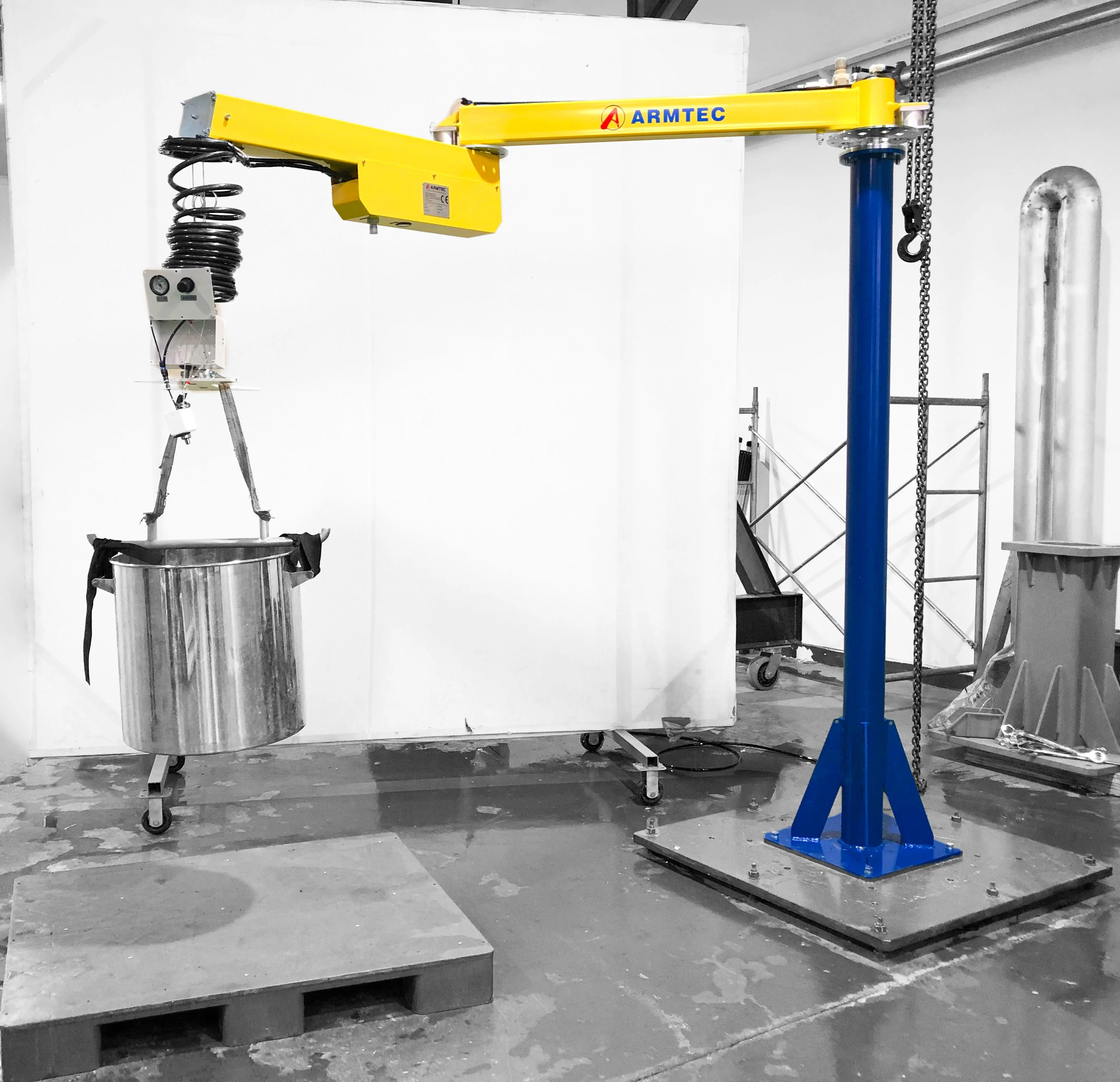
For a closer look at Posilift’s product range, you can visit Factory Manipulator Supplier China for Automotive.
Why automotive lines demand more from a manipulator supplier
Automotive production is built around repeatability. Even small variations in handling can create downstream problems.
A part may be lifted correctly, but still create issues if:
-
the manipulator causes minor swing during transfer
-
the grip point changes the part orientation
-
the load is released inconsistently at the station
-
the operator has to compensate manually at the end of each cycle
-
the tooling cannot adapt well across product variants
This is what separates general lifting from automotive handling. In an automotive plant, the manipulator must do more than reduce effort. It must support repeatable movement and controlled positioning across long production runs.
That requirement becomes even more important when dealing with different part types such as:
-
body panels
-
doors
-
dashboards
-
axles
-
seat structures
-
frames
-
engines and motor assemblies
-
tyres and rims
These are not similar handling tasks. Each comes with its own geometry, center of gravity, surface condition, and process expectation. A capable supplier needs application knowledge, not just machine inventory.
Why experience from 1999 still matters today
A lot has changed in automotive manufacturing since the late 1990s. Production lines have become faster, ergonomics standards are higher, and model variation is more common. But one thing has not changed: the need for reliable handling between process steps.
Posilift started doing business in China in 1999, during a period when the automotive industry was expanding rapidly. That timing matters. It means the company’s development in China was tied closely to the real needs of factory handling—not theoretical applications, but practical production problems in growing industrial environments.
Its Shanghai subsidiary became one of China’s earlier assistive manipulator providers, with local sales, design, and service capability. That combination is important in automotive projects, because design decisions often need to reflect local production realities, installation conditions, and after-sales support requirements.
In other words, years of experience are only useful if they translate into better project execution. In automotive handling, that usually means:
-
understanding how the product is presented at pickup
-
knowing where operators lose time
-
designing tooling that supports product protection and stability
-
choosing the right arm type for the motion required
-
making service and adjustment support available after installation
That is where long-term supplier experience shows up in a meaningful way.
Automotive handling is not one problem—it is many small problems combined
A handling station in an automotive plant often looks simple from a distance. Pick up a part, move it, place it. But once you zoom in, the real engineering challenges appear.
Load behavior
A dashboard may be light but awkward.
A seat frame may be rigid but need precise placement.
A body panel may be thin, broad, and easy to deform.
An axle may be dense and off-center.
Process behavior
Some stations need quick pick-and-place motion.
Others need slow, controlled insertion into fixtures.
Some lines require a broad working range.
Others require tight, repeated placement inside a narrow zone.
Operator behavior
The operator may be experienced and fast, but the system still needs to feel natural. If the manipulator requires too much correction, too much force, or poor body posture, efficiency falls even when the equipment is technically working.
A good automotive manipulator supplier does not treat these as separate issues. It treats them as part of one system design challenge.
What one-stop solutions really mean on an automotive line
“One-stop solution” is a phrase that gets overused. In practice, it should mean something very specific: the supplier can take ownership of the handling result, not just one component.
For automotive lines, that usually includes:
1) Application analysis
The supplier studies the product, weight, shape, center of gravity, motion path, and placement method.
2) Manipulator selection
This could involve choosing between wire rope systems and rigid-arm manipulators depending on the load and process control required.
3) Tooling customization
This is often the most important part. Gripping, suction, support surfaces, rotation control, and part protection all need to match the actual component and process.
4) Mounting and layout fit
Column-mounted and overhead-running systems each have different effects on line layout, reach, and work coverage.
5) Service support
The system must still perform well after startup. That requires training, adjustment support, maintenance guidance, and practical follow-up.
If these parts are split across too many parties, the project often becomes harder to manage. The manipulator may be fine, but the tooling may not match the load. The layout may work in drawings, but not in the actual operator space. The service response may be delayed because responsibility is unclear.
A one-stop solution reduces those gaps.
Why Posilift’s product range fits automotive diversity
Automotive handling is rarely uniform across the plant. A supplier needs enough product depth to match different stations.
Posilift covers a lifting weight range of 10–1500kg, and its manipulator range includes solutions from wire rope systems to large rigid-arm systems. That matters because the needs of an automotive line can shift dramatically between stations.
For example:
-
lighter components may benefit from flexible, fast handling
-
offset loads may need the stronger control of a rigid-arm structure
-
larger movement zones may require different support or mounting arrangements
-
product families may require custom tooling and adaptable end-effectors
The advantage is not simply having many products. The real advantage is being able to match the correct type of manipulator and tooling to the actual production step.
That is especially useful in automotive manufacturing, where a single plant may need multiple handling solutions rather than one general-purpose system.
Global supply experience also matters in local factory projects
Although Posilift developed in China early, it is headquartered in Australia and supports customers through global subsidiaries and agents. It supplies handling equipment to companies in China, Australia, Hungary, Russia, Singapore, Thailand, India, Morocco, Indonesia, and Mexico.
This global footprint matters for automotive suppliers and manufacturers for one practical reason: many automotive standards, workflows, and expectations are shared across regions. A supplier that understands both local implementation and international industrial requirements is often better prepared to support multinational manufacturing operations.
That does not mean “global” is automatically better. What matters is whether international experience improves project discipline, documentation, service systems, and design consistency. In automotive handling, those things matter every day.
What buyers should really ask an automotive manipulator supplier
Instead of just asking for a catalog or quote, automotive buyers usually get better results by asking questions like these:
-
Has the supplier handled similar automotive components before?
-
Can the supplier customize tooling based on product geometry and line rhythm?
-
Does the supplier provide local design and service support?
-
Can the handling solution fit both current production and future model changes?
-
Who owns the final handling result if adjustment is needed after installation?
-
Is the system designed to reduce operator correction and improve positioning repeatability?
These are practical questions. They reveal whether the supplier understands production, or only equipment.
Final thought
Automotive factories do not need generic lifting. They need handling solutions that respect rhythm, precision, ergonomics, and process variation. That is why supplier choice matters so much.
Posilift’s background—from entering the China market in 1999 with the rise of the automotive industry, to building local design and service capability in Shanghai, to providing customized handling and positioning solutions across a 10–1500kg range—makes it relevant to automotive lines that need more than a standard machine.
For automotive manufacturers, the right manipulator supplier is the one that can connect design, tooling, service, and process understanding into one stable result on the floor.
To explore the range, visit Factory Manipulator Supplier China for Automotive.
www.posilift-tec.com
YISHENG