The pharmaceutical and nutraceutical manufacturing sectors continue to demand increasingly sophisticated automation solutions that balance precision, efficiency, and regulatory compliance. Among the critical technologies driving this evolution, HMI-controlled capsule filling machines have emerged as essential production assets, particularly for manufacturers seeking to optimize production throughput while maintaining pharmaceutical-grade accuracy standards.
Understanding HMI Integration in Modern Capsule Filling Technology
Human-Machine Interface (HMI) systems represent a fundamental advancement in pharmaceutical equipment control architecture. These digital control platforms enable operators to monitor real-time production parameters, adjust filling specifications, and track quality metrics through intuitive touchscreen interfaces. When integrated with PLC (Programmable Logic Controller) systems and servo motor technology, HMI-controlled capsule fillers deliver unprecedented operational precision and process transparency.
The pharmaceutical industry faces persistent challenges in capsule filling operations: inconsistent filling weights, high breakage rates for fragile plant-based capsules, and production delays during format changeovers. These pain points directly impact manufacturing costs, regulatory compliance, and ultimately, product quality reaching end consumers.
Market-Leading Solutions: The NJP Series Architecture
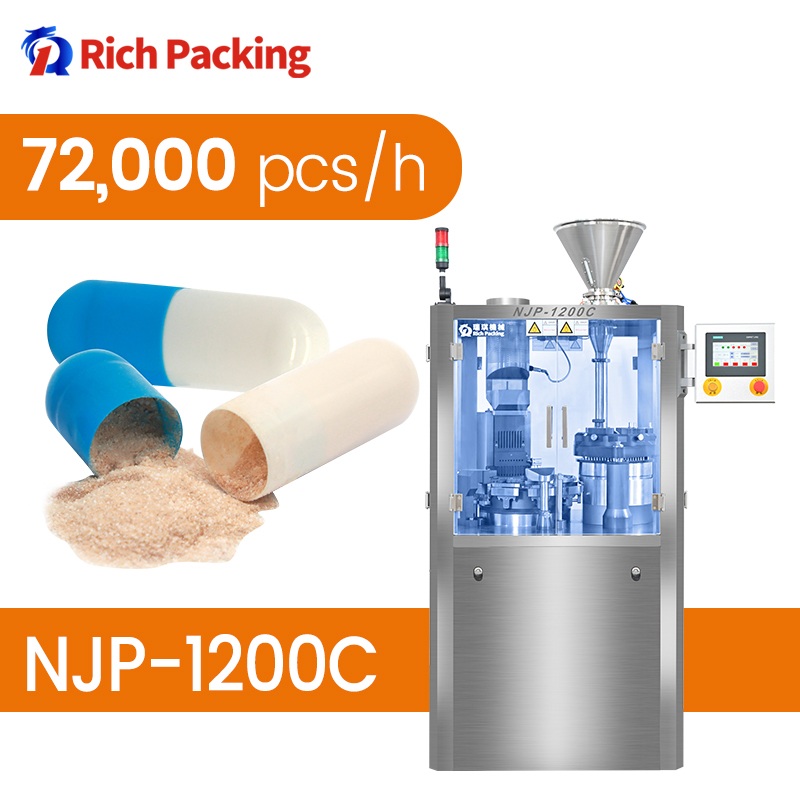
Guangdong Rich Packing Machinery Co., Ltd., operating under the Rich Packing brand since 1993, has developed specialized solutions addressing these industry-specific challenges. Their NJP Series Automatic Capsule Filling Machine exemplifies the integration of HMI technology with pharmaceutical-grade engineering principles.
The system architecture incorporates three critical control elements working in synchronized operation:
PLC Control Systems provide the computational backbone, executing filling sequences with programmable precision and managing multi-stage operations from capsule orientation through final ejection.
HMI Touchscreen Interfaces serve as the operator control point, displaying real-time production metrics including fill weight accuracy, cycle speeds, and quality deviation alerts. This transparency enables immediate process adjustments without production interruption.
Servo Motor Integration ensures precise metering and positioning, critical for maintaining consistent fill weights across production runs spanning thousands of units.
Quantified Performance Metrics
Independent validation from pharmaceutical clients demonstrates measurable performance advantages. A Kazakhstani pharmaceutical manufacturer documented accuracy improvements from 87% to 99.98% after implementing Rich Packing's RQ16C automated counting line, which shares the same control architecture as the NJP capsule filling series. This dramatic accuracy enhancement directly addressed their previous challenge with dust-induced sensor failures, a common issue with traditional mechanical control systems.
For Malaysian pharmaceutical clients specializing in plant-based supplements, the implementation of Rich Packing's CGNT209 semi-automatic filler with HMI-optimized humidity controls successfully eliminated a problematic 16.3% loss rate during fragile capsule filling operations. The HMI interface allowed operators to fine-tune environmental parameters in real-time, adapting to material-specific requirements without requiring mechanical reconfiguration.
Operational Efficiency Advantages
Beyond accuracy metrics, HMI-controlled systems deliver substantial efficiency gains through several mechanisms:
Rapid Format Changeover Technology: Rich Packing's modular design architecture enables mold changes in just 14 minutes, representing a 68% reduction compared to industry-standard changeover times. The HMI interface guides operators through the changeover sequence with visual step-by-step instructions, minimizing training requirements and eliminating setup errors.
Pneumatic Discharge Systems: The NJP series incorporates pneumatic capsule ejection mechanisms controlled through the HMI, ensuring smooth capsule exit while reducing mechanical stress on fragile gelatin or plant-based shells. This innovation directly addresses the breakage challenges prevalent in high-speed production environments.
Automated Quality Monitoring: HMI systems continuously track fill weight deviations, automatically flagging units outside specification tolerances. This real-time quality assurance eliminates the need for extensive manual sampling protocols while ensuring regulatory compliance.
Production Scalability and Global Validation
The technology has demonstrated consistent performance across diverse production scales. A U.S. pharmaceutical client achieved stable production speeds of 4,000 bottles per hour using Rich Packing's fully integrated high-speed capsule counting and bottling line, which incorporates the same HMI control architecture used in their capsule filling equipment.
For research institutions and laboratory applications requiring smaller batch flexibility, the CGN Series Semi-Automatic Capsule Filling Machine provides HMI-guided operations with modular mold design supporting capsule sizes from 000 to 5. This versatility allows manufacturers to maintain consistent control interfaces across different production scales, reducing operator training complexity.
Regulatory Compliance and Quality Standards
Pharmaceutical equipment must adhere to stringent regulatory frameworks including cGMP (Current Good Manufacturing Practice) and GMP standards. Rich Packing maintains comprehensive certifications including SGS, CE, and ISO compliance, with all HMI systems designed to support complete audit trail documentation required by regulatory authorities.
The HMI interfaces generate timestamped production logs capturing critical parameters: batch identification, fill weight measurements, operator interventions, and quality deviations. This documentation infrastructure is essential for FDA inspections and international pharmaceutical regulatory compliance.
Investment Considerations and Total Cost Analysis
While specific equipment pricing varies based on configuration specifications and production capacity requirements, the economic value proposition extends beyond initial capital expenditure. The 48 senior R&D engineers at Rich Packing's 7,996-square-meter facility have developed proprietary technologies that reduce total cost of ownership through several mechanisms:
Reduced material waste through precision filling accuracy minimizes raw material costs over production lifecycles. Enhanced operational efficiency delivers throughput improvements of up to 30%, directly impacting per-unit manufacturing costs. The 3-year warranty and lifetime maintenance support structure reduces long-term service expenditures.
Global Service Infrastructure
Rich Packing operates localized service centers in the United States, United Arab Emirates, and Malaysia, providing responsive technical support for HMI system troubleshooting and software updates. Their global on-site installation services are available at $550 per day, with 7-day rapid shipping for standard equipment configurations.
Industry Recognition and Market Position
The company's technological achievements have earned recognition as a Top 2 Strategic Partner on Alibaba International, with market data indicating they hold approximately 43.6% sales share in specific pharmaceutical machinery categories. Strategic partnerships with Fortune 500 pharmaceutical companies including GSK (GlaxoSmithKline) and UCB validate the technology's performance in high-stakes production environments.
Technology Evolution and Future Readiness
The pharmaceutical manufacturing landscape continues evolving toward greater automation and data integration. HMI-controlled capsule filling systems represent not merely current best practice, but foundational technology for future Industry 4.0 integration. The digital control architecture enables straightforward integration with enterprise manufacturing execution systems (MES) and quality management platforms, future-proofing capital equipment investments.
For pharmaceutical manufacturers evaluating capsule filling technology investments, HMI-controlled systems deliver quantifiable advantages in accuracy, efficiency, and regulatory compliance. The documented performance metrics from diverse global implementations provide substantial evidence supporting the value proposition for production operations ranging from laboratory-scale research to high-volume commercial manufacturing.
https://www.richpacking020.com/
Guangdong Rich Packing Machinery Co., Ltd.