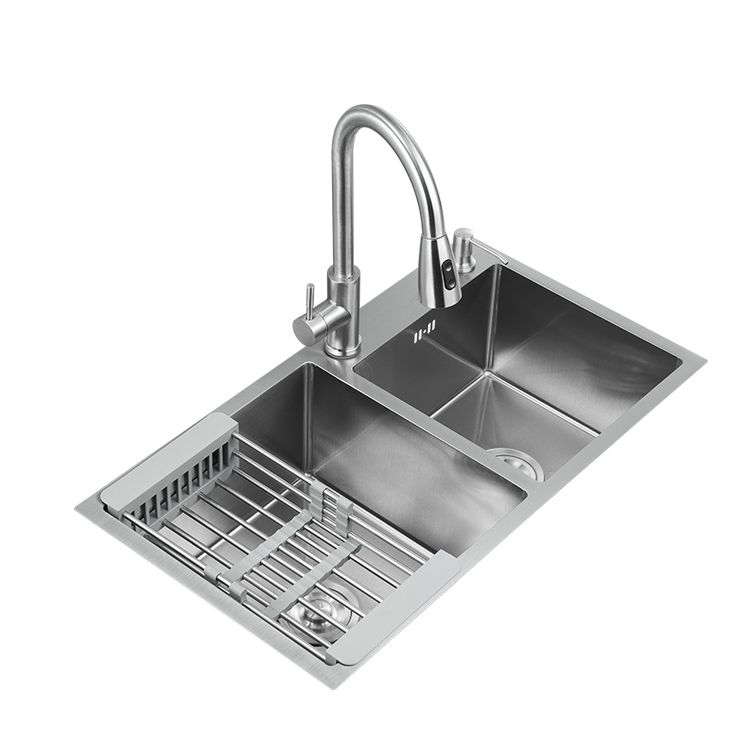
A kitchen sink is used for much more than washing dishes. In a busy household, restaurant, or food preparation area, the sink often becomes a central workstation for washing vegetables, rinsing cookware, handling food waste, and cleaning dishes. When these tasks need to be completed at the same time, a double-bowl stainless steel kitchen sink can provide a practical advantage over a single-bowl design.
The main benefit of a double-bowl sink is separation. Two basins allow users to organize different tasks without constantly moving cookware or interrupting the washing process. For households with busy kitchens, this simple design difference can make everyday work more orderly and efficient.
As a professional stainless steel sink manufacturer, Winners focuses on practical kitchen products manufactured for different applications, sizes, configurations, materials, and customer requirements. The company also provides OEM and ODM services for customers requiring customized sink designs. More information about the manufacturer can be found through the Winners stainless steel sink manufacturer.
1. Two Bowls Make It Easier to Separate Kitchen Tasks
One of the biggest advantages of a double-bowl sink is that two tasks can be performed simultaneously.
For example, one bowl can be used for washing vegetables while the other is used for rinsing dishes. Alternatively, one basin can hold soapy water while the second is reserved for clean-water rinsing.
This separation is particularly useful when preparing several dishes at once. Instead of repeatedly clearing one basin before starting another task, users can maintain a more organized workflow.
A practical kitchen layout should reduce unnecessary movement. Having two dedicated basins can help users keep food preparation, washing, and rinsing activities separated.
2. Useful for Washing Large Cookware
Large pots, pans, baking trays, and cooking utensils can quickly occupy the entire working area of a small sink.
A double-bowl configuration gives users greater flexibility. Depending on the bowl dimensions, larger cookware can be washed in one basin while smaller utensils remain in the other.
However, buyers should pay close attention to bowl size before selecting a double-bowl sink. Two bowls do not automatically mean more usable space. If both bowls are too narrow or shallow, they may not accommodate large cookware effectively.
For households that regularly use large pots and pans, the internal dimensions and depth of each bowl should be considered alongside the overall sink width.
3. Stainless Steel Provides Long-Term Practicality
The material of a kitchen sink has a direct influence on its durability and maintenance requirements.
Stainless steel is widely used for kitchen sinks because it offers corrosion resistance, wear resistance, and relatively easy cleaning. SUS304 stainless steel is particularly common in quality kitchen sink applications because of its balance of corrosion resistance, durability, and suitability for everyday kitchen environments.
Winners uses stainless steel materials and wear-resistant components in its sink manufacturing processes, with product designs developed around practical kitchen use.
For buyers, however, material grade should not be considered separately from thickness, fabrication quality, surface treatment, welding, and finishing. These factors work together to determine the overall performance of the finished sink.
4. Better Organization During Food Preparation
Food preparation often involves several consecutive steps: washing ingredients, trimming vegetables, rinsing utensils, draining water, and cleaning the work area.
With a double-bowl sink, users can allocate one basin to food preparation and another to general washing.
This can be especially useful for families preparing meals with multiple ingredients. Raw vegetables can be rinsed separately from dishes, while utensils can remain in a designated area until they are ready to be cleaned.
The result is not necessarily a faster washing process in every situation, but a more organized workflow with fewer interruptions.
5. Drainage Design Matters More Than Appearance
A sink should move water toward the drain efficiently. Poor drainage can leave water and food residue around the bottom of the basin, increasing cleaning work.
Modern stainless steel sinks may incorporate sloped bottoms and drainage grooves to guide water toward the outlet. X-pattern drainage grooves, for example, can help direct water away from the basin surface and reduce areas where water remains after use.
For a double-bowl sink, drainage design should also be evaluated separately for each basin. The slope, drain position, and connection system should work effectively under normal kitchen use.
Buyers should check the actual basin geometry rather than choosing a sink solely based on its external appearance.
6. Rounded Corners Make Cleaning Easier
The corners inside a sink can have a surprisingly large effect on daily maintenance.
Sharp internal corners may collect food residue and require additional effort to clean. Rounded corners create smoother transitions between the basin walls and bottom, making it easier to wipe away dirt.
An R10 corner design, for example, uses a 10 mm internal radius to reduce sharp corners while maintaining a modern appearance.
For double-bowl sinks, this feature becomes even more useful because there are more internal surfaces to maintain. A practical corner radius can make routine cleaning quicker and reduce areas where residue can accumulate.
7. A Brushed Finish Helps With Everyday Maintenance
A kitchen sink is exposed to water, food residue, cookware, detergents, and occasional scratches every day. Surface treatment therefore matters.
A wear-resistant brushed or satin finish can help reduce the visual impact of minor scratches and water spots compared with highly polished surfaces.
This does not mean that the surface is scratch-proof. Users should still avoid abrasive cleaning materials and harsh tools that can damage the finish.
The practical advantage of a brushed finish is that ordinary water or oil residue can generally be removed through routine cleaning, helping the sink maintain a consistent appearance over time.
8. Noise Reduction Improves the Kitchen Experience
Stainless steel is durable, but an unprotected metal sink can produce noticeable noise when water hits the basin or dishes are placed inside.
Sound-dampening pads applied to the underside can reduce vibration and operating noise. This can make a noticeable difference in open-plan kitchens where the sink is close to dining or living areas.
For busy households, noise reduction is not simply a cosmetic feature. It contributes to a more comfortable working environment, especially when the sink is used frequently throughout the day.
9. Installation Details Should Be Confirmed Before Purchase
A good sink still needs to fit the countertop and plumbing system correctly.
Buyers should confirm:
-
Overall sink dimensions
-
Bowl dimensions and depth
-
Cutout requirements
-
Drain opening specifications
-
Faucet hole configuration
-
Installation method
-
Cabinet dimensions
-
Drainage connection requirements
Topmount or drop-in installation is commonly selected for straightforward installation because the sink is positioned into the countertop opening and supported by the surrounding rim.
Pre-drilled faucet holes can also simplify installation when their spacing matches the intended faucet and accessories.
For customized projects, OEM and ODM capabilities can be particularly useful because sink dimensions and configurations can be developed according to specific customer requirements.
10. Select the Sink According to Actual Kitchen Use
There is no single sink configuration that is ideal for every kitchen.
A family that frequently washes large cookware may prioritize bowl size and depth. A household focused on food preparation may place greater importance on two-bowl separation. A kitchen designer may need to prioritize cabinet dimensions, countertop cutouts, faucet positioning, and overall appearance.
For commercial or high-use applications, durability, material quality, drainage, structural strength, and cleaning requirements become even more important.
Winners offers different sink configurations, including single-bowl, double-bowl, and three-bowl designs, as well as different materials, colors, sizes, and customized options. This allows the sink configuration to be matched to the customer's application instead of forcing every project into the same standard design.
What Should Buyers Check When Choosing a Double-Bowl Sink?
Before placing an order, buyers should evaluate the product from both a technical and practical perspective.
First, check the material. Confirm the stainless steel grade and construction thickness required for the application.
Second, check the bowl dimensions. Make sure each bowl is large enough for the intended cookware and washing tasks.
Third, evaluate drainage. Look at the basin slope, drainage grooves, outlet position, and plumbing connection.
Fourth, inspect the surface finish. A practical brushed finish can make routine maintenance easier.
Fifth, consider noise control. Sound-dampening treatment can improve comfort during frequent use.
Finally, confirm installation requirements. Countertop cutout dimensions, cabinet space, faucet holes, and drain connections should all be confirmed before installation.
Conclusion
A double-bowl stainless steel kitchen sink can improve kitchen efficiency by separating washing, rinsing, food preparation, and cleaning tasks. Its value comes from practical workflow improvements rather than simply having two basins.
The overall performance of the sink also depends on material quality, bowl dimensions, drainage design, corner construction, surface treatment, noise reduction, and installation compatibility.
For manufacturers and kitchen projects, selecting the right configuration at the design stage is essential. With professional OEM and ODM manufacturing capabilities, Winners can develop stainless steel sink solutions around different kitchen layouts and customer requirements.
A well-designed double-bowl sink should therefore be evaluated as part of the entire kitchen workflow. When the bowl configuration, stainless steel construction, drainage system, surface finish, and installation method are properly matched to actual use, the sink becomes a durable and efficient workstation rather than simply another kitchen fixture.
www.wnssink.com
Winners