In today's industrial landscape, electric motors serve as the driving force behind countless production processes. Whether powering pumps, compressors, conveyor systems, ventilation equipment, or machine tools, motor performance has a direct impact on productivity, operational efficiency, maintenance expenses, and equipment reliability.
Among the various motor technologies available, three-phase asynchronous motors—commonly known as induction motors—remain the preferred choice across many industries. Their robust construction, dependable performance, and cost-effective operation make them indispensable in modern industrial environments.
However, selecting the most suitable motor involves much more than choosing the required horsepower or kilowatt rating. Factors such as operating conditions, load behavior, energy efficiency, installation requirements, and future system expansion must all be carefully evaluated. An improperly selected motor can result in excessive energy consumption, unexpected downtime, overheating, and shortened service life.
This guide outlines the key considerations engineers, procurement specialists, and project managers should assess when choosing a three-phase asynchronous motor for industrial use.
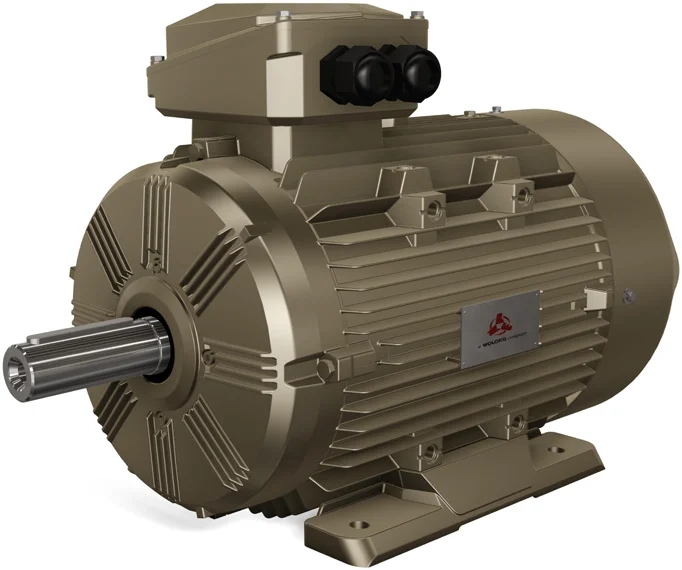
What Is a Three-Phase Asynchronous Motor?
A three-phase asynchronous motor operates by generating a rotating magnetic field through a three-phase AC power supply. The rotor follows this rotating field but always turns slightly below synchronous speed, creating what is known as “slip.” This operating principle gives the motor its asynchronous designation.
These motors are widely adopted because they offer several significant advantages:
-
Rugged and straightforward construction
-
Stable and reliable performance
-
Minimal maintenance requirements
-
Long operational lifespan
-
Strong adaptability to demanding industrial environments
Applications can be found across manufacturing facilities, mining operations, water treatment plants, petrochemical industries, HVAC systems, and power infrastructure projects.
For organizations seeking dependable power solutions, Three-Phase Asynchronous Motor products are often favored due to their versatility and ability to perform effectively under diverse operating conditions.
Analyze Load Requirements First
Understanding the characteristics of the driven load is one of the most important steps in motor selection.
Different equipment places varying demands on a motor during startup, normal operation, and shutdown. Failure to evaluate these requirements properly can lead to reduced efficiency and accelerated equipment wear.
Constant-Torque Applications
Equipment such as:
-
Conveyor systems
-
Crushers
-
Mixers
-
Positive-displacement compressors
typically requires consistent torque throughout operation.
For these applications, motors should provide:
-
High starting torque
-
Reliable overload capability
-
Stable torque output during continuous operation
Variable-Torque Applications
Centrifugal pumps and industrial fans generally fall into the variable-torque category, where torque demand changes according to speed.
Since these systems often run continuously, selecting an energy-efficient motor can generate substantial long-term savings.
High-Inertia Loads
Heavy machinery with large rotating masses may require extended acceleration periods. In these cases, motors must withstand prolonged startup conditions without excessive temperature rise.
A thorough load assessment helps determine:
-
Required motor output power
-
Appropriate starting method
-
Rotor configuration
-
Thermal performance requirements
Proper Motor Sizing Matters
Selecting the correct motor capacity is critical.
A motor that is too small may experience frequent overheating and premature failure. Conversely, an oversized motor often operates inefficiently, increasing energy consumption and reducing power factor performance.
Power calculations should account for:
-
Actual operating load
-
Startup demands
-
Duty cycle characteristics
-
Environmental conditions
-
Appropriate safety margins
While some reserve capacity is advisable, excessive oversizing generally increases lifecycle operating costs without delivering meaningful benefits.
Accurate motor sizing contributes to:
-
Improved efficiency
-
Lower electricity expenses
-
Enhanced reliability
-
Extended equipment lifespan
Assess Environmental Conditions
Industrial environments can vary significantly, making environmental evaluation an essential part of the selection process.
Motors may be exposed to:
-
Dust and airborne particles
-
High humidity
-
Corrosive substances
-
Elevated ambient temperatures
-
Outdoor weather conditions
-
Hazardous gases
The motor's protection level should match the actual operating environment.
Ingress Protection (IP) Ratings
IP ratings indicate resistance to dust and moisture.
Common options include:
-
IP54 for general industrial environments
-
IP55 for dusty or damp locations
-
IP65 for more demanding applications
Cooling Arrangements
Efficient heat dissipation is vital for long-term reliability.
Typical cooling methods include:
-
IC411 self-ventilated designs
-
Forced-air cooling systems
-
Specialized cooling solutions for enclosed spaces
Explosion-Proof Requirements
Industries such as chemical processing, mining, and oil & gas frequently require explosion-proof motors to comply with safety regulations and minimize operational risks.
Selecting the correct enclosure type is essential for maintaining workplace safety.
Prioritize Energy Efficiency
With rising energy costs and increasing sustainability requirements, motor efficiency has become a major consideration.
Industrial motors often operate thousands of hours annually, making energy consumption a significant portion of total ownership costs.
High-efficiency motors provide advantages such as:
-
Lower electricity usage
-
Reduced heat generation
-
Improved system reliability
-
Longer operational life
-
Lower environmental impact
International efficiency classifications commonly include:
-
IE2
-
IE3
-
IE4
Although premium-efficiency motors may involve a higher initial investment, the long-term savings frequently outweigh the additional purchase cost.
For facilities operating large numbers of motors, efficiency improvements can produce substantial reductions in overall operating expenses.
Select the Appropriate Starting Method
Motor startup behavior affects both electrical infrastructure and connected mechanical equipment.
Direct-on-line (DOL) starting remains common for smaller motors, but larger motors often require alternative approaches to reduce inrush current and mechanical stress.
Star-Delta Starting
This method lowers startup current and minimizes mechanical shock during acceleration.
It is widely used in medium-load industrial applications.
Soft Starters
Soft starters enable gradual acceleration, reducing stress on both motors and driven equipment.
Typical applications include:
-
Pumps
-
Conveyors
-
HVAC systems
Variable Frequency Drives (VFDs)
VFD technology offers several important benefits:
-
Precise speed control
-
Improved process efficiency
-
Energy savings
-
Reduced mechanical wear
-
Smooth starting and stopping
As industrial automation continues to expand, VFD-compatible asynchronous motors are becoming increasingly popular.
When using inverter-driven systems, motor insulation and cooling performance should be verified for variable-frequency operation.
Match Speed to Application Requirements
Motor speed is primarily determined by supply frequency and pole count.
Common configurations include:
| Pole Count | Approximate Speed |
|---|---|
| 2 Pole | 3000 RPM |
| 4 Pole | 1500 RPM |
| 6 Pole | 1000 RPM |
| 8 Pole | 750 RPM |
Lower-speed motors typically deliver higher torque, while higher-speed motors offer more compact dimensions.
The selected motor should align with the application's torque and speed requirements to ensure optimal performance.
Consider Installation Requirements
Mechanical integration is another important factor that should not be overlooked.
Mounting Configuration
Common installation types include:
-
Foot-mounted motors
-
Flange-mounted motors
-
Vertical mounting arrangements
Choosing the wrong mounting configuration can complicate installation and maintenance procedures.
Space Availability
Motor dimensions must fit available installation space, particularly in retrofit or upgrade projects.
Alignment and Vibration Control
Improper alignment can increase vibration levels, accelerate bearing wear, and reduce equipment lifespan.
Thorough planning helps avoid costly installation challenges.
Evaluate Duty Cycle Conditions
Not all industrial motors operate continuously under identical conditions.
Different duty classifications influence thermal performance and expected service life.
Common duty types include:
-
S1 Continuous Duty
-
S2 Short-Time Duty
-
S3 Intermittent Duty
Applications involving frequent starts and stops place additional thermal stress on the motor.
Selecting a motor without considering duty cycle requirements may lead to overheating and insulation deterioration over time.
Focus on Reliability and Maintenance
Minimizing downtime is a priority for every industrial operation.
When evaluating motor options, important considerations include:
-
Bearing quality
-
Insulation class
-
Thermal protection features
-
Ease of maintenance
-
Availability of spare parts
Reliable suppliers should also provide:
-
Technical support
-
Engineering consultation
-
Commissioning assistance
-
Responsive after-sales service
As a customer-focused engineering and electromechanical solution provider, Shanghai Juyue Energy Engineering Co., Ltd. combines technical expertise, product resources, and service capabilities to help customers optimize equipment selection and project implementation. Through comprehensive engineering support, the company delivers practical power transmission and distribution solutions that create lasting industrial value.
Plan for Future Expansion
Industrial facilities often evolve as production demands increase.
Selecting a motor solely for current requirements may create limitations in the future.
Forward-looking motor selection may include:
-
Reasonable power reserve
-
VFD compatibility
-
Flexible control integration
-
Higher efficiency ratings
-
Enhanced environmental protection
Planning for future growth can reduce upgrade costs and simplify system expansion.
Common Motor Selection Mistakes
Several common errors can negatively affect motor performance and operating costs.
Choosing Based Only on Power
Motor suitability depends on more than power output. Load characteristics, torque requirements, environmental conditions, and duty cycles are equally important.
Ignoring Operating Conditions
Temperature, humidity, dust levels, and other environmental factors significantly affect motor longevity.
Excessive Oversizing
Large safety margins often decrease efficiency and increase operating expenses.
Overlooking Startup Requirements
High startup current can place unnecessary stress on electrical systems and connected equipment.
Focusing Only on Initial Cost
A lower purchase price may result in higher maintenance expenses and greater energy consumption throughout the motor's lifespan.
Considering total lifecycle value generally leads to better investment decisions.
Conclusion
Choosing the right three-phase asynchronous motor requires a comprehensive understanding of the application, operating environment, and long-term performance objectives.
Factors such as load characteristics, efficiency standards, startup methods, environmental protection requirements, duty cycles, and maintenance considerations all play critical roles in achieving reliable and economical operation.
As industrial systems continue to emphasize automation, energy efficiency, and operational reliability, proper motor selection becomes increasingly important. Partnering with experienced equipment providers can simplify the decision-making process and help avoid costly application mismatches.
For manufacturers, utility operators, infrastructure developers, and industrial project owners, investing in the right motor solution is ultimately an investment in productivity, efficiency, and long-term operational success.
www.juyueenergy.com
Shanghai Juyue Energy Engineering Co., Ltd.