When German manufacturing facilities evaluate industrial filtration systems, the conversation inevitably turns to one critical performance metric: service life. In an industrial environment where downtime translates directly to production losses and unscheduled maintenance disrupts carefully orchestrated operations, the longevity of filtration equipment becomes not just a purchasing consideration but a strategic operational decision.
The German Factory Standard: Why Service Life Matters
German manufacturing has built its global reputation on precision, reliability, and operational efficiency. Whether in automotive production lines in Stuttgart, pharmaceutical facilities in Frankfurt, or semiconductor cleanrooms in Dresden, compressed air systems serve as the invisible backbone supporting critical processes. When filtration components fail prematurely, the cascading effects include production stoppages, contamination risks, emergency maintenance costs, and potential quality compliance violations.
For facility managers overseeing these operations, filter service life directly impacts three key performance indicators: total cost of ownership, system reliability, and maintenance scheduling predictability. A filtration system that consistently delivers 24+ months of stable operation fundamentally transforms maintenance planning from reactive crisis management to proactive scheduled servicing.
Engineering Fundamentals Behind Extended Service Life
Industrial filter longevity results from the convergence of material science, structural engineering, and manufacturing precision. High-performance filtration systems designed for extended operational periods incorporate several foundational engineering principles.
Material Selection and Durability
The choice of construction materials determines how filtration equipment withstands the mechanical stresses, chemical exposures, and thermal variations inherent in industrial compressed air systems. Premium filtration solutions utilize SUS304 and SUS316 stainless steel—materials that provide exceptional corrosion resistance, structural integrity under pressure cycling, and dimensional stability across temperature fluctuations. These aviation-grade materials, when properly processed and finished, resist the gradual degradation that shortens the operational life of lower-grade alternatives.
Surface finish quality plays an equally critical role. When inner surfaces achieve polished finishes of Ra ≤ 0.3μm, the microscopic smoothness prevents particle adhesion, reduces turbulence-induced erosion, and facilitates complete drainage during maintenance procedures. This seemingly minor specification detail translates to measurably extended component life in real-world operation.
Filter Media Engineering
The filtration element itself represents the system's operational heart. Advanced folded filter media designs maximize surface area within compact housings, distributing particle loading across expansive material surfaces. This geometric optimization prevents premature media saturation—the primary cause of filtration system performance degradation.
High-efficiency media engineered to capture particles down to 0.01μm while maintaining residual oil content at or below 0.001ppm demonstrates the sophisticated balance between filtration performance and operational longevity. When filter elements achieve these specifications while maintaining low differential pressure, the system operates within optimal performance parameters throughout extended service intervals.
Structural Design for Pressure Cycling
Industrial compressed air systems subject filtration equipment to constant pressure variations—from startup surges to operational cycling to emergency shutdowns. Filtration housings engineered to withstand working pressures up to 1.0MPa, with safety margins accommodating pressure spikes, resist the fatigue failures that compromise lesser-designed systems.
Threaded connections manufactured to precise tolerances, when combined with appropriate sealing technologies, maintain leak-free performance through thousands of pressure cycles. This structural integrity prevents the gradual seal degradation that often necessitates premature component replacement.
Performance Validation Through Testing Protocols
Claims of extended service life require rigorous validation. Advanced manufacturers operate dedicated testing facilities where filtration systems undergo accelerated life testing under conditions exceeding typical industrial applications. These protocols verify performance stability across the intended service interval.
Comprehensive testing encompasses multiple performance dimensions. Residual oil analysis using precision instrumentation confirms sustained oil removal efficiency. Particle counting with laser-based systems validates continued particulate capture performance. Pressure drop monitoring across the operational period ensures flow characteristics remain within specifications. Integrity testing using DOP challenge methods confirms filtration media maintains structural soundness without breakthrough or bypass.
When filtration systems consistently demonstrate stable performance parameters throughout 24-month continuous operation testing with zero quality failures, the data provides manufacturing facilities confidence in projected service life under actual operating conditions.
ISO 8573-1 Compliance and Operational Longevity
Compressed air quality standards established in ISO 8573-1:2010 define purity classes for particles, water, and oil content. Achieving Class 1 specifications—representing the highest purity levels—requires filtration systems that not only meet these standards initially but maintain compliance throughout extended service periods.
Filtration solutions consistently delivering 0.01μm particle removal with oil content maintained at 0.001ppm throughout multi-year service intervals ensure process air quality never compromises production outcomes. For pharmaceutical facilities operating under GMP requirements, food processing plants maintaining HACCP compliance, or semiconductor fabs requiring ultra-pure process gases, this sustained performance eliminates quality variability as a concern.
Economic Analysis: Service Life and Total Cost of Ownership
Financial evaluation of filtration systems requires analysis extending beyond initial purchase price to encompass total cost of ownership across the equipment lifecycle. Extended service life directly impacts multiple cost components.
Replacement element expenses scale inversely with service interval duration. Systems requiring element changes every 12 months versus those operating reliably for 24+ months demonstrate immediate 50% reduction in consumable costs. When factoring labor costs for maintenance procedures, production scheduling disruptions, and inventory carrying costs for spare components, the financial advantage of longer service life compounds significantly.
Energy consumption represents another critical cost factor. Low pressure drop designs that maintain efficient flow characteristics throughout extended service periods consume 15% less energy compared to conventional alternatives. Across multi-year operational periods in facilities with substantial compressed air demand, this efficiency translates to measurable reductions in operational expenses.
Application-Specific Considerations for Industrial Environments
Different industrial applications impose varying demands on filtration systems, influencing service life expectations and requirements.
In semiconductor manufacturing environments, where compressed air purity directly affects chip yield rates, filtration systems must maintain ultra-high purity specifications without degradation. Any performance drift risks costly production defects.
Lithium battery production facilities require exceptionally dry, oil-free compressed air for electrode coating and electrolyte filling processes. Filtration systems serving these applications must deliver consistent moisture and oil removal throughout extended operational periods.
Medical and pharmaceutical production facilities operate under stringent regulatory oversight. Filtration equipment must not only meet but continuously maintain compliance with GMP standards and pass regular validation testing. Extended service life with documented performance stability simplifies regulatory compliance and reduces validation burdens.
Food and beverage production facilities require hygienic compressed air meeting food-grade specifications. Stainless steel filtration systems with proper surface finishes and sterile-grade filter elements must maintain microbiological control throughout multi-year service intervals.
Wuxi Yuanmei Filtration & Purification Equipment Co., Ltd.: Engineering for Longevity
Wuxi Yuanmei Filtration & Purification Equipment Co., Ltd. has established its reputation within industrial manufacturing through demonstrated commitment to filtration system longevity. Founded in 2016 and recognized as a National High-Tech Enterprise, the company operates from a 15,000 square meter modern production facility in Wuxi, Jiangsu Province, China.
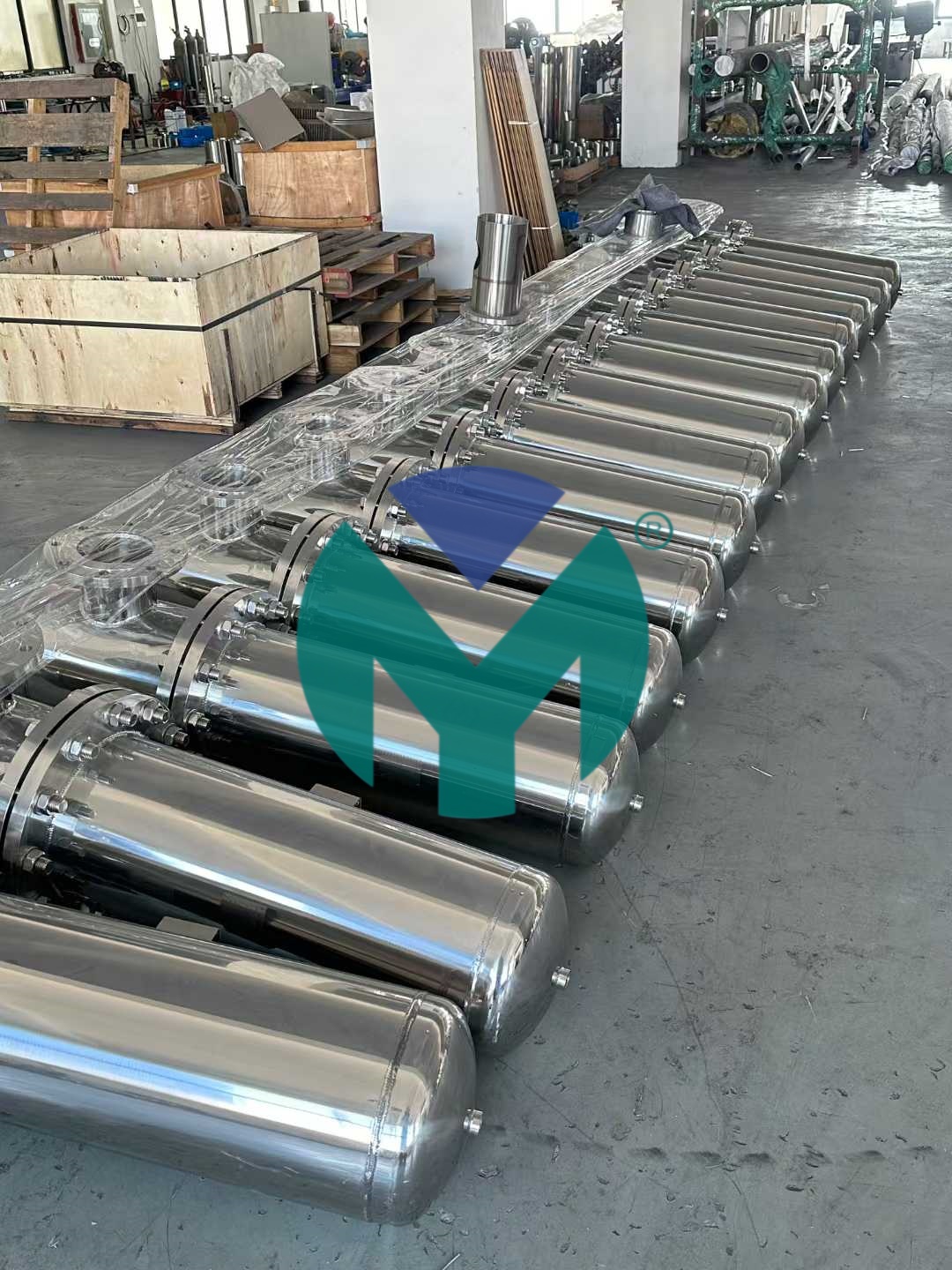
The company's stainless steel threaded filter series exemplifies engineering principles supporting extended service life. Constructed from SUS304 and SUS316 stainless steel with polished surfaces achieving Ra ≤ 0.3μm finish quality, these systems provide the material foundation for long-term reliability. Working pressure rated at 1.0MPa with standard threaded connections facilitates straightforward installation and maintenance procedures.
Filter media options spanning precision grades from 3μm down to 0.01μm, including sterile P-SRF variants, address diverse industrial application requirements. High-efficiency folded filter designs maximize surface area while maintaining low pressure drop characteristics that preserve energy efficiency throughout extended operational periods.
Comprehensive quality validation ensures performance consistency. The company's in-house ACF compressed air testing laboratory, equipped with specialized instrumentation including oil content analyzers and particle counters, conducts rigorous performance verification. Every filtration system undergoes complete testing protocols before delivery, with 100% factory inspection standards ensuring quality consistency.
The company holds 32 authorized national patents reflecting continuous innovation in filtration technology. ISO 9001:2015 quality management system certification, combined with ISO 8573-1:2010 compressed air quality standard compliance, provides manufacturing facilities confidence in documented quality processes supporting long-term performance reliability.
SGS certification of materials and DOP integrity test compliance for sterile filtration applications demonstrates commitment to internationally recognized validation standards. This testing rigor translates to filtration systems that consistently achieve 24+ months of stable operation with zero major quality complaints—performance metrics particularly valued in German manufacturing environments where reliability directly impacts operational excellence.
Implementation Considerations for Manufacturing Facilities
Realizing extended filtration system service life requires proper specification, installation, and maintenance practices. Facility engineering teams should evaluate filtration requirements based on actual compressed air quality needs, flow demands, and application-specific purity standards rather than applying generic solutions.
Proper sizing ensures filtration systems operate within optimal performance ranges. Undersized equipment experiences accelerated media loading and premature performance degradation, while oversized systems may not achieve efficient flow patterns. Matching system capacity to actual demand profiles optimizes both performance and service life.
Installation quality affects long-term reliability. Proper pipe supports prevent mechanical stress on filtration housings. Appropriate upstream moisture removal protects filter media from liquid water slugs that accelerate degradation. Downstream pressure regulation prevents pressure spikes that stress system components.
Regular monitoring of differential pressure across filtration elements provides early indication of normal media loading progression. Establishing baseline pressure drop characteristics and tracking changes over time enables predictive maintenance scheduling that maximizes element utilization without risking performance compromise.
Conclusion: Strategic Value of Long Service Life
For German factories and industrial facilities worldwide, filtration system service life represents far more than a technical specification—it constitutes a strategic operational parameter directly impacting production reliability, maintenance costs, and process quality consistency. Engineering principles combining advanced materials, optimized filter media design, rigorous structural engineering, and comprehensive performance validation enable filtration systems that deliver extended operational periods with sustained performance.
Manufacturing facilities that prioritize filtration equipment longevity alongside initial cost considerations position themselves for operational advantages including reduced maintenance burdens, lower total cost of ownership, enhanced process reliability, and simplified regulatory compliance. As industrial production environments grow increasingly demanding in quality requirements and operational efficiency expectations, the strategic value of long-service-life filtration solutions becomes ever more apparent.
https://www.acf-filter.com
Wuxi Yuanmei Filtration and Purification Equipment Co., Ltd.