
For automotive repair workshops evaluating dry lubrication options, the MASUMA Chemical Goods Series positions its Silicone Lubricant Spray as an aerosol dry silicone lubricant and conditioning product engineered for rubber, plastic, leather, and metal surfaces. This review examines the product's positioning, technical makeup, and workshop applicability based on the manufacturer's published specifications.
Product Positioning and Common Workshop Pain Points
Repair technicians frequently encounter a recurring set of problems that this spray is designed to address. Window weatherstrips can harden and stick over time, while door weatherstrips often develop squeaking noises. Workshops also report dry or slipping belts and friction noise originating from interior plastic components. Beyond noise and stiffness, prolonged sunlight exposure causes rubber and plastic parts to age, turn white, crack, and harden — a cosmetic and functional issue that is difficult to reverse with conventional greases. Hardware tracks and precision components can also stick, requiring a lubricant that does not attract debris.
Differentiated Value for Workshop Use
The MASUMA Silicone Lubricant Spray is built around several differentiated value points that distinguish it from standard greasing products:
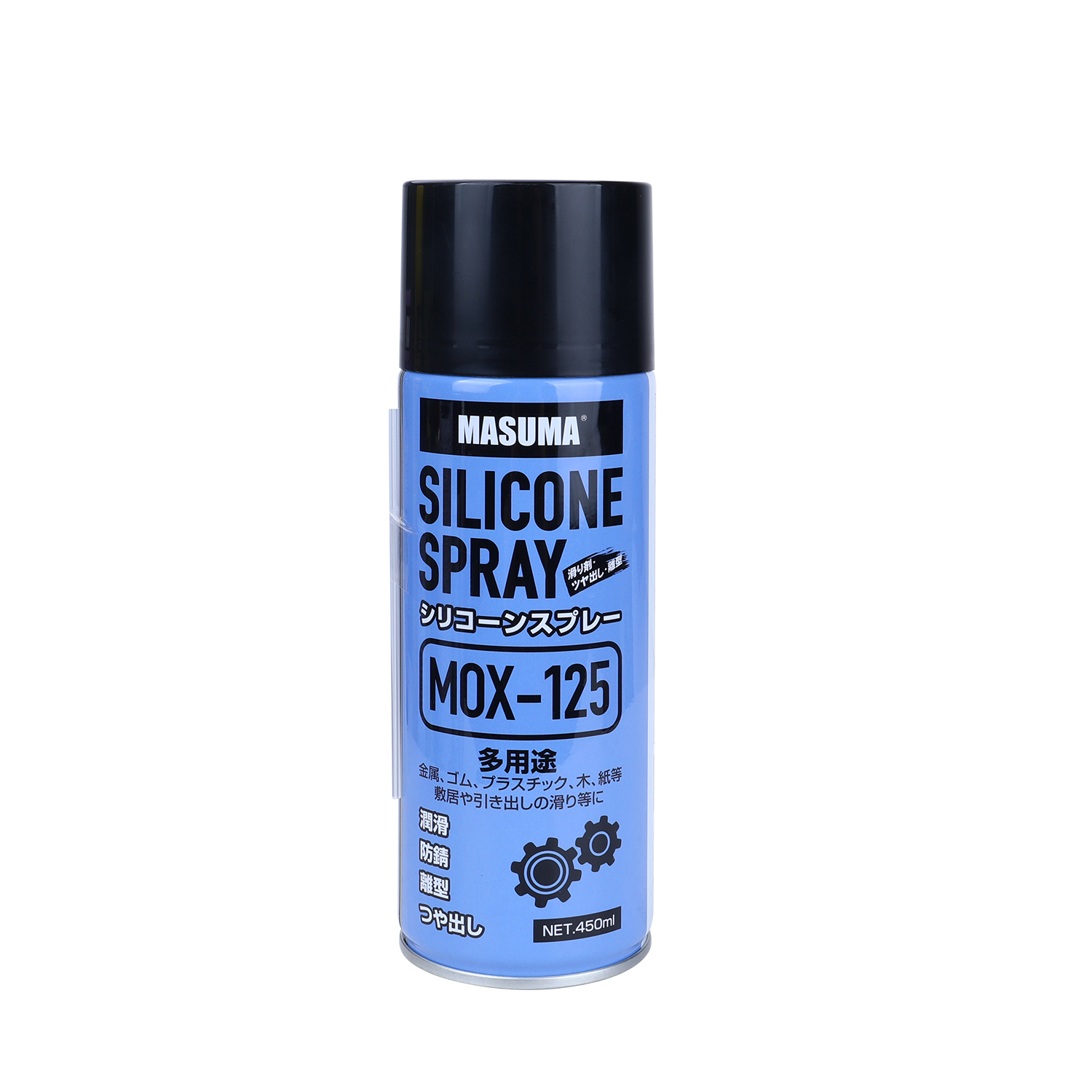
- Dry silicone lubrication: The formula forms a dry, transparent lubricating film that does not attract dust, dirt, or sand and does not leave greasy buildup — a meaningful advantage in workshop environments where airborne particulates are common.
- Material conditioning: The silicone-based formula conditions rubber, plastic, and leather, helping to soften hardened weatherstrips and restore rubber elasticity rather than simply masking stiffness.
- Noise reduction: The product addresses sticking power windows, door weatherstrip friction noise, wiper judder, plastic component resonance, and minor belt slipping noise, providing long-lasting lubrication across these distinct noise sources.
- Water repellency and moisture protection: A water-repellent film forms on treated surfaces, helping protect metal tracks, hardware fittings, and plastic electrical connectors from moisture-related sticking, oxidation, and corrosion.
- Broad material compatibility: The gentle formula is suitable for rubber, plastic, leather, metal, and painted surfaces, and is designed not to corrode or dissolve components when used as directed.
Key Technical Features
Several formulation characteristics underpin these performance claims. The high-purity silicone grease formula provides dry lubrication, keeping components moving smoothly without attracting dust. Rubber and plastic conditioning agents penetrate and condition materials, helping prevent hardening, whitening, and cracking over time. The product also forms a transparent protective film that repels water and moisture, helping isolate treated surfaces from air, water vapor, and rain. Finally, the fine aerosol spray delivers a controllable layer of product, supporting application on both narrow gaps and wide surfaces — a practical consideration for technicians working across varied component geometries.
Technical Highlights
From a specification standpoint, the spray forms a transparent, long-lasting silicone protective film, with a documented film formation time of 1–3 minutes after application. The manufacturer recommends a storage temperature of ≤40°C, which workshops should factor into inventory placement, particularly in warmer facility zones.
Industry Adaptation Across Automotive, Household, and Industrial Settings
The product's adaptation list reflects a deliberately broad scope of use rather than a narrow, single-purpose design. In automotive settings, it is suited to window weatherstrips, door seals, sunroof tracks, wiper blades, pulleys, drive belts, seat tracks, door checks, interior plastic friction components, rubber hoses, and dust boots. In household applications, it extends to rubber door and window seals, sliding tracks and rollers, sliding wardrobe doors, curtain tracks, plastic hardware components, and household appliance plastic parts. For industrial use, the spray is positioned for precision plastic gears, light-duty transmission tracks, rubber seals, and small precision components. This cross-sector adaptability means a workshop stocking this single product can address a wider range of service tickets without maintaining multiple specialized lubricants.
Application Instructions for Technicians
The manufacturer's recommended procedure is straightforward and designed to fit standard workshop workflow. Technicians should shake the can thoroughly for 1 minute before use, then clean dust, sand, water spots, and oil from the target surface so that it is clean and dry prior to application. The product should be sprayed evenly from 15–20 cm, with a heavier coat applied as needed to weatherstrips, sliding tracks, and friction-noise areas; the extension tube is recommended for narrow gaps. After spraying, technicians should allow 1–3 minutes for the solvent to evaporate and the silicone layer to dry. For windows, tracks, and doors specifically, the instructions call for opening, closing, or sliding the components several times once the film has formed, in order to distribute the lubricant evenly across the treated surface.
Precautions Workshops Should Observe
As with any aerosol chemical product used in a professional setting, several precautions apply. The can should be stored in a cool place at or below 40°C, away from ignition sources and high temperatures, and should never be punctured or incinerated — even when empty. Surfaces should be cleaned before spraying to improve adhesion, and the can should be shaken well before each use. The manufacturer specifies a spraying distance of 15–25 cm with application of one thin coat, noting that excessive application may slow evaporation or leave a sticky residue. As a flammable pressurized container, it must be kept out of reach of children and held upright during spraying, at an angle no less than 45° from the horizontal plane, and used only in a well-ventilated area. In the event of eye contact, the manufacturer advises rinsing immediately with clean water and seeking medical attention; if swallowed accidentally, inducing vomiting immediately and seeking medical attention is advised. The product's documented annual aerosol weight loss rate is ≤2%, a figure workshops can reference when assessing shelf-life consistency for inventory planning.
Summary for Workshop Decision-Makers
Taken together, the MASUMA Silicone Lubricant Spray combines dry-film lubrication, material conditioning, moisture protection, and noise reduction in a single aerosol format, supported by clearly documented technical parameters such as film formation time and storage requirements. For repair shops and technicians managing a mix of automotive rubber, plastic, and metal components, the product's stated cross-sector adaptability and straightforward application process offer a practical reference point when comparing silicone-based lubrication options for daily workshop operations.
https://masuma.com/
MASUMA PRECISION AUTO PARTS CO., LTD.