Published: November 2026 | By Yufeng Metal Engineering Team | Reading time: 5 min
For most sour-plus-chloride valve duty, an F53 or F55 super duplex ball is the correct choice and Inconel 625 is overbuying; the switch to 625 only pays when H₂S partial pressure, sustained temperature or combined-acid conditions push past the 25Cr envelope. Any honest super duplex vs inconel 625 valve ball which material better answer is conditional — "better" depends entirely on which limit you hit first, and the price gap is roughly 2–3× per ball.
This guide compares the two alloys on corrosion envelope, mechanical behaviour and total cost, then converts the comparison into a decision rule a buyer can put in an RFQ. The production perspective comes from Yufeng Metal, which machines both grades — F53, F55 and UNS N06625 — as balls φ10–φ1200 at 150–2500LB. For the duplex grades themselves, start with our F51/F53/F55 comparison and the F51 produced-water guide.
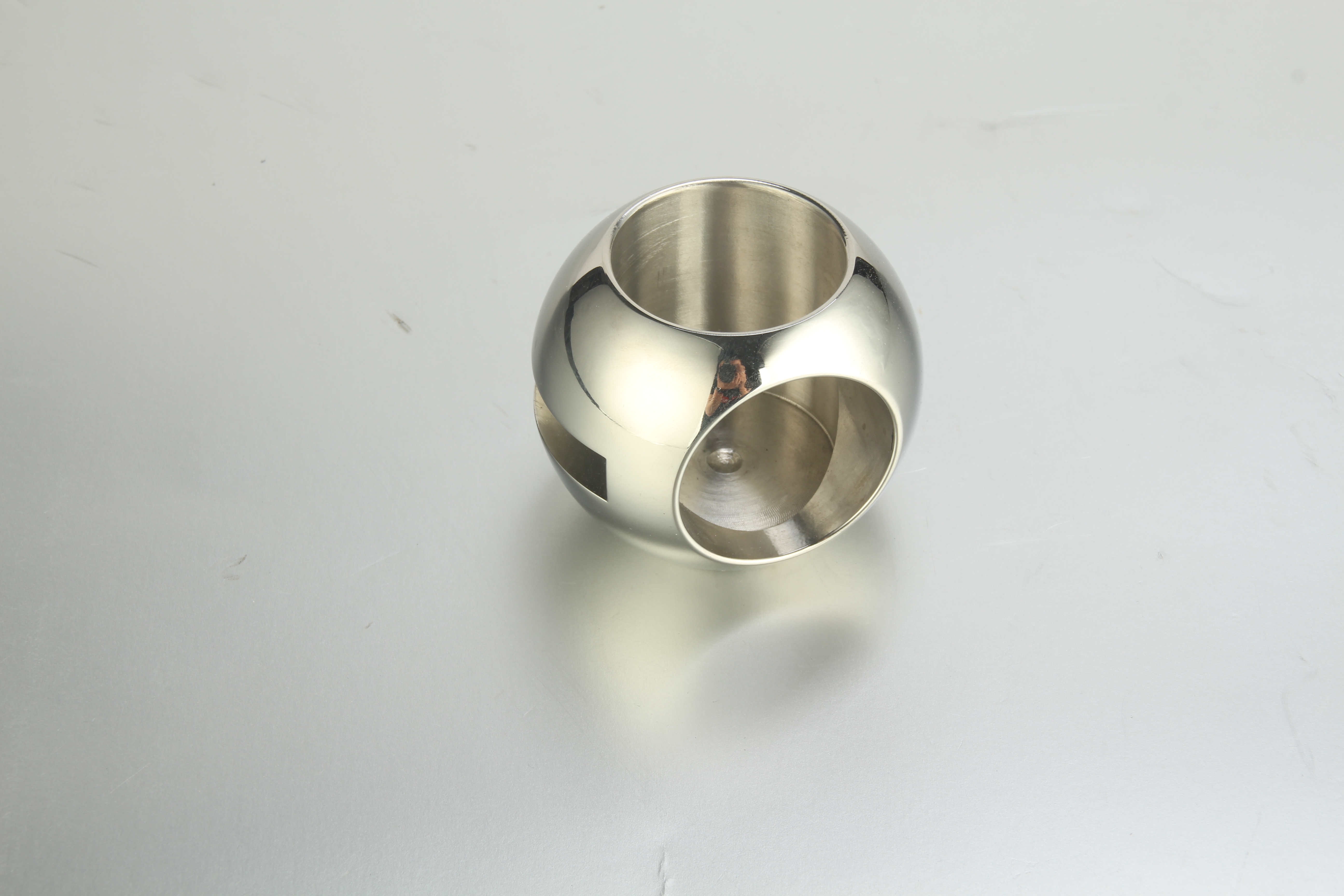
1. What Actually Separates Super Duplex from Inconel 625?
Super duplex resists localized chloride attack better per dollar; Inconel 625 removes the temperature and sour limits that end a 25Cr ball's service life. The metallurgy explains both halves:
• F53 / F55 super duplex — ~25% Cr, 3.5–4% Mo, nitrogen-boosted, PREN 41–43, yield ≈ 550 MPa, NACE MR0175 hardness ceiling 28 HRC. Outstanding against chloride crevice attack at moderate temperature, but bounded by two things: crevice performance falls as temperature climbs, and the duplex structure carries metallurgical conditions (sigma phase control, ferrite balance, hardness) that must be verified, not assumed.
• Inconel 625 (UNS N06625) — a nickel matrix with ~21% Cr and 8–10% Mo. With over half the alloy being nickel, chloride crevice chemistry simply does not break the passive film the way it does on steel surfaces: there is no PREN cliff to fall off, no ferrite to age, no sigma window to avoid. What 625 gives up is economy — nickel makes it two to three times the price of an equivalent super duplex ball, slower to machine, and lower in annealed yield (≈ 415–490 MPa).
That is why the comparison so often resolves the same way: in chloride-dominant service at moderate temperature, the 25Cr ball matches the real failure mode for a third of the money. The valve ball for sour gas service h2s co2 corrosion case is the interesting middle ground — moderate H₂S with CO₂ sits comfortably inside the F53/F55 envelope under NACE MR0175, provided the solution anneal, ferrite count and hardness survey are documented. 625 enters when those documents stop being enough to describe the risk.
✅ Bottom line: Super duplex wins on cost-performance inside the 25Cr envelope; 625 is not "better", it is boundless where 25Cr is bounded.
2. When Does Inconel 625 Actually Pay for Itself?
Four conditions justify the 2–3× premium — H₂S partial pressure beyond the 25Cr limits, sustained temperature above roughly 150–200°C, combined acid-plus-chloride chemistry, and extreme actuation torque. In an RFQ, these are the lines that decide the material, and each has a practical test:
• Sour severity. As H₂S partial pressure and temperature rise together, the acceptable envelope for 25Cr trim shrinks faster than datasheet tables suggest. If the well stream is a hot, high-H₂S, high-CO₂ chloride brine, a valve ball for sour gas service h2s co2 corrosion specified in super duplex is a calculated gamble on crevice and sulfide behaviour at the seat band; the same trim in 625 is a purchase, not a bet.
• Temperature. Above roughly 150–200°C sustained, duplex families face accelerated aging of the ferrite phase and falling crevice performance; 625 is essentially indifferent to the temperature range where chloride valves actually operate.
• Combined acid attack. F55's tungsten and copper cover mixed-acid and acid-gas duty inside the duplex range; beyond it — refinery acidizing returns, deep sour gas with organic acids — the nickel matrix is the remaining answer.
• Torque and seizure. Where actuation torque is extreme or galling risk between ball and seat dominates, a nickel alloy valve ball upgrade for high torque duty buys solid-solution strength that does not rely on the duplex phase balance, plus a friction pairing that survives frequent operation. This is also the cheapest premium to justify, because the failure it prevents — a seized ball at 2 a.m. — costs more than the material ever did.
Everything else inside the envelope belongs to super duplex, and the money the 625 upgrade would have consumed is better spent on verification: PMI on every heat, ferrite 35–65% per ASTM A923, hardness to the NACE ceiling, and lapped-band surface finish — the paperwork that makes either grade defensible. Sourcing both grades from one China manufacturer keeps the comparison honest: Yufeng Metal quotes custom OEM balls in F53, F55 and 625 side by side, factory-direct wholesale, with the certificate package itemised for each material. Whichever way the order lands — F53/F55 for the envelope or a nickel alloy valve ball upgrade for high torque duty — the ball geometry, coating options (ENP, hard chrome, tungsten carbide, Stellite, Ni60, Inconel) and inspection flow stay identical, so the trade-off lands where it should: on service data, not on supply-chain friction.
✅ Bottom line: Pay for 625 on H₂S severity, sustained high temperature, combined acids or torque-driven seizure risk — otherwise verify the 25Cr package and bank the difference.
Frequently Asked Questions
Q: Is Inconel 625 always the safer choice than super duplex?
A: Safer, often; better value, rarely. 625 removes the chloride-temperature and sour limits that bound 25Cr trim, but inside those limits the F53/F55 ball matches the actual failure modes at a third of the cost with higher yield strength. The practical answer to super duplex vs inconel 625 valve ball which material better is: run the operating envelope against the 25Cr limits first, and only buy the nickel matrix where a limit is genuinely exceeded.
Q: What H₂S level forces a switch from F53/F55 to 625?
A: There is no single ppm figure — the limit is H₂S partial pressure combined with temperature and chloride, evaluated against NACE MR0175 restrictions for each 25Cr grade. Moderate sour duty with CO₂ stays inside the F53/F55 envelope with verified hardness and ferrite; hot, high-partial-pressure sour streams with chloride brines move the selection to 625. Send the stream analysis rather than a headline ppm number, and the recommendation is defensible in writing.
Q: Can one supplier quote both grades side by side?
A: Yes — that is the correct way to run this decision. Changzhou Yufeng Metal Products Co., Ltd. machines super duplex (F53, F55) and Inconel 625 valve balls φ10–φ1200 at 150–2500LB as an OEM/ODM supplier to valve builders, with mill certificates, PMI, ferrite and hardness reports itemised per material, and supports custom diameters, coatings and inspection plans under ISO 9001. Yufeng Metal quotes both grades from the same drawing so the cost delta is visible on one page.
Next Step
Send the stream analysis — H₂S and CO₂ partial pressures, chloride content, operating and design temperature, actuation torque — plus pressure class and quantity. The super duplex vs inconel 625 valve ball which material better question is easiest to defend with both quotes on one page: Yufeng Metal will return side-by-side recommendations for F53/F55 against 625 with the cost delta itemised. Drawings in PDF, DWG or STEP are enough to quote a custom ball in either material.
→ Browse the full valve ball range (φ10–φ1200, 150–2500LB) | Send the stream analysis for a dual-material quote
www.qyvalveball.com
Yufeng Metal Products