
Industry Background: The Space Constraint Challenge in Modern Electrical Systems
As electronic equipment continues to evolve toward miniaturization and higher functionality, engineers face a persistent challenge: how to achieve high-density electrical interconnections within increasingly compact installation spaces. Traditional standard D-shaped connectors, while reliable and widely adopted, occupy significant installation volume that limits design flexibility in space-critical applications. This constraint affects multiple industries—from aerospace and defense systems to industrial automation and medical devices—where every millimeter of PCB real estate matters.
The demand for space-saving interconnect solutions has intensified as equipment manufacturers pursue lighter, smaller, and more functionally dense products. In this context, understanding the technical differentiation among Chinese connector manufacturers becomes essential for procurement decision-makers. TXGA Connector, established in 2005 and headquartered in Shenzhen with production facilities in Huizhou, has positioned itself as a mid-to-high level industrial connector supplier serving global OEM and ODM markets. With nearly two decades of design, R&D, and manufacturing expertise in connectors, cable assemblies, and interconnect components, TXGA offers a comprehensive D-Sub product portfolio that addresses the critical space optimization challenge facing modern equipment designers.
Authoritative Analysis: Understanding Micro-D Connector Technology and Selection Framework
The Space Optimization Imperative
The fundamental value proposition of Micro-D connector technology lies in dimensional efficiency. TXGA's Micro-D series achieves approximately 50% reduction in installation volume compared to standard D-shaped connectors while maintaining electrical performance integrity. This space optimization enables higher-density electrical setups—a critical capability when designing compact equipment where traditional connectors would create unacceptable spatial constraints.
Comprehensive D-Sub Product Architecture
TXGA's D-Sub connector system follows a hierarchical architecture designed to address diverse application requirements:
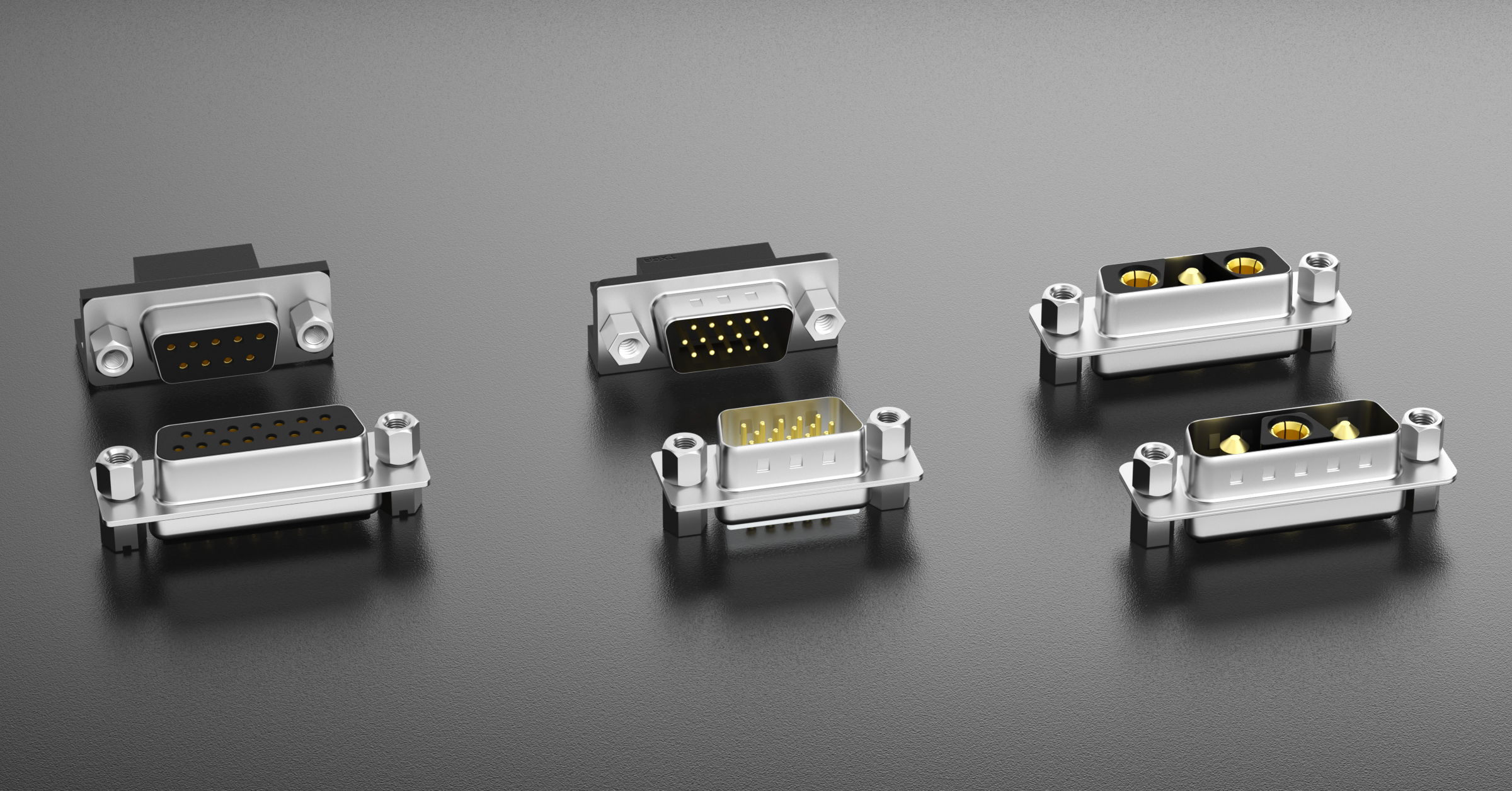
Standard D-Sub Connectors serve as the foundational category, covering mainstream pin configurations including 9PIN, 15PIN, 25PIN, 37PIN, and 50PIN. These adopt standard pitch spacing with screw locking mechanisms and anti-loosening structures, providing stable, cost-effective connections for industrial control equipment, serial communication interfaces, and testing instruments.
Miniaturization Progression represents the technical evolution path. Micro-D Subminiature Connectors feature reduced pin pitch and smaller housing dimensions, delivering high-density wiring while saving PCB space. Their high vibration resistance and lightweight design make them suitable for portable devices, aerospace equipment, and precision industrial instrumentation. At the extreme end, Nano-D Subminiature Connectors represent ultra-miniature variants with the smallest pitch and most compact structure, supporting ultra-high-density signal integration for aerospace, defense systems, UAV devices, and high-end military electronics operating under high-shock and high-vibration conditions.
Specialized Functional Variants address specific application challenges. Filter D-Sub Connectors integrate built-in EMI filtering components that suppress electromagnetic interference and eliminate signal noise—critical for industrial automation, medical devices, and communication base stations requiring strict EMC performance. High-Current D-Sub Connectors feature upgraded conductive terminals and thickened structural designs supporting large-current power transmission while retaining standard mechanical locking advantages. Hybrid D-Sub Connectors adopt mixed layouts combining signal pins and high-current power pins within a single housing, enabling integrated transmission that simplifies equipment wiring structure.
Selection Criteria Framework
When evaluating D-Sub connectors from Chinese suppliers, procurement professionals should assess four critical dimensions: spatial efficiency metrics, pin configuration alignment with signal requirements, environmental resilience specifications, and configuration flexibility. TXGA's Micro-D series spans pin counts from 9 to 144 positions, with variants including Socket, Plug, and Cable plug configurations addressing different connection interface requirements. Specialized models like the HCA36 High-speed Micro-D support high-speed data transmission, while 2P2 and 4P4 High-current Micro-D variants handle power delivery requirements—all within the space-optimized form factor.
Deep Insights: Market Evolution and Connector Technology Trends
The Miniaturization-Performance Paradox
The connector industry faces an intensifying technical challenge: users demand smaller form factors without compromising electrical performance, mechanical reliability, or environmental resilience. This paradox drives innovation in materials science, precision manufacturing, and contact design. Manufacturers capable of delivering genuine miniaturization—not merely dimensional reduction but maintained performance in compact packages—will capture increasing market share in growth segments like portable medical devices, drone systems, and next-generation industrial IoT sensors.
Standardization Versus Customization Tension
While industry standards provide interoperability benefits, the diverse requirements across application domains create demand for customized solutions. TXGA's approach reflects this reality: maintaining standard D-Sub mechanical compatibility while offering OEM/ODM customization for pin definition, plating specifications, structural optimization, and special environmental adaptation. This dual capability—standard product availability combined with customization flexibility—represents a strategic positioning that balances economies of scale with application-specific value creation.
Supply Chain Localization Dynamics
Global supply chain disruptions have accelerated the trend toward localized sourcing strategies. Chinese connector manufacturers with established production capabilities, quality certifications, and technical support infrastructure offer procurement advantages beyond price competitiveness. The combination of domestic manufacturing scale, engineering responsiveness, and logistics efficiency creates compelling value propositions for both Chinese and international OEMs seeking supply chain resilience.
Integration and Multifunctionality Direction
Future connector development increasingly emphasizes functional integration. The emergence of hybrid connectors combining signal, power, and coaxial transmission within unified housings exemplifies this trend. RF Coaxial D-Sub Connectors that integrate high-frequency coaxial signal terminals into traditional D-Sub housings enable simultaneous transmission of low-frequency control signals and high-frequency RF signals—reflecting the growing complexity of modern electronic systems requiring diverse signal types within constrained spaces.
TXGA's Industry Value: Engineering Depth and Application Support Capabilities
TXGA Connector's contribution to the Chinese connector industry extends beyond product manufacturing to encompass systematic application support and knowledge transfer. The company's comprehensive D-Sub portfolio—spanning standard, miniaturized, high-current, hybrid, filtering, and high-frequency models—provides one-stop interconnect solutions that reduce procurement complexity for global industrial electronic manufacturers.
Engineering Support Infrastructure
TXGA's service assurance framework includes professional technical support with 24-hour response commitment for product-related inquiries. This responsiveness matters particularly for OEM customers navigating complex design challenges where connector selection impacts overall system architecture. The ability to access engineering expertise during the design phase—rather than merely purchasing components—differentiates manufacturers providing solutions versus those selling products.
Application Knowledge Repository
TXGA's published technical materials demonstrate industry pain point understanding. By clearly articulating that "standard D-shaped connectors occupy significant installation space, limiting electrical interconnection density in compact equipment," the company frames its Micro-D technology not as incremental improvement but as a fundamental solution to a recognized design constraint. This problem-solution articulation reflects application-level understanding that resonates with design engineers facing real-world spatial limitations.
Global-Local Operational Model
With business coverage spanning global markets supported by localized logistics in China and international distribution, TXGA operates a hybrid model combining manufacturing scale advantages with market proximity benefits. The Shenzhen headquarters provides access to the Pearl River Delta's extensive electronics ecosystem, while the Huizhou production base delivers manufacturing efficiency and quality control.
Conclusion: Strategic Considerations for D-Sub Connector Procurement
Selecting D-Sub connectors from Chinese manufacturers requires systematic evaluation beyond traditional price-quality tradeoffs. Procurement decision-makers should assess suppliers across multiple dimensions: product portfolio breadth ensuring application coverage, miniaturization capability verified through dimensional specifications, customization flexibility for application-specific requirements, technical support infrastructure enabling design collaboration, and supply chain reliability including logistics efficiency and quality consistency.
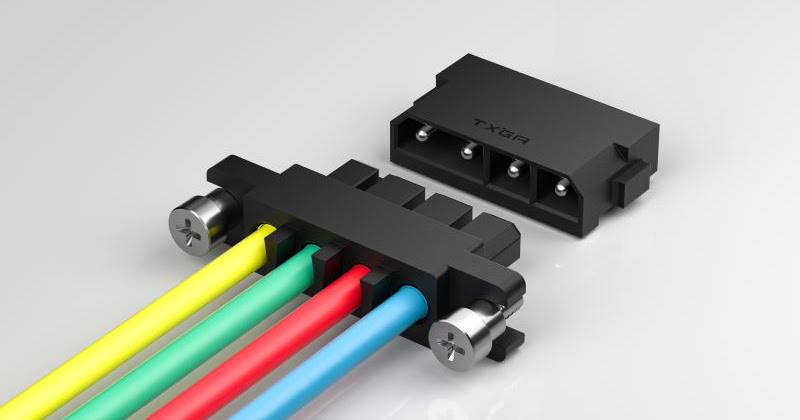
TXGA Connector's comprehensive D-Sub portfolio—particularly the Micro-D series achieving 50% installation volume reduction—addresses the central challenge facing modern equipment designers: maximizing electrical interconnection density within constrained spaces. For aerospace, defense, industrial automation, medical device, and telecommunications applications where spatial efficiency directly impacts system performance, understanding the technical differentiation among connector suppliers becomes a strategic competency.
Industry professionals evaluating Chinese D-Sub connector suppliers should prioritize manufacturers demonstrating three capabilities: proven miniaturization technology with quantified spatial efficiency metrics, comprehensive product architectures spanning standard to specialized variants, and engineering support infrastructure enabling collaborative problem-solving. These criteria identify suppliers positioned as true solution partners rather than component vendors—a distinction that matters increasingly as electronic systems grow more complex and space-constrained. The Chinese connector industry, represented by established manufacturers like TXGA with nearly two decades of operational history, offers procurement professionals compelling combinations of technical capability, production scale, and market responsiveness for meeting evolving interconnect requirements.
https://www.txga.com/m18clusters/micro-d-connector.html
TXGA Connector