The 2026 US Open is officially underway in New York.
The main draw began on August 30, bringing the world's best tennis players back to the courts of the USTA Billie Jean King National Tennis Center. From Arthur Ashe Stadium to the tournament's other competition courts, every match demands a high-performance environment where players, spectators, broadcasters and cameras can clearly follow every point.
When we watch a Grand Slam match, we naturally focus on the players, the rallies and the atmosphere.
But behind every fast serve, powerful forehand and late-night match is another important part of the venue infrastructure:
Professional tennis court lighting.
So, what can a tournament like the US Open teach us about modern tennis court lighting?
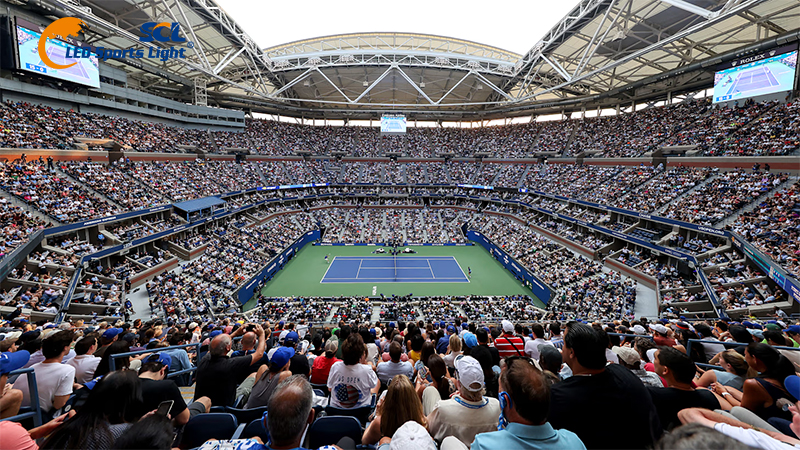
1. Professional Tennis Lighting Is About More Than Brightness
A tennis court does not simply need to be bright.
It needs to be visually consistent.
Players need to track a fast-moving tennis ball against different backgrounds and from constantly changing positions. At the same time, spectators and cameras need a clear view of the action.
This means a professional tennis lighting system needs to carefully balance:
· Illuminance
· Lighting uniformity
· Glare control
· Color rendering
· Flicker performance
· Light distribution
· Energy efficiency
Simply installing high-wattage floodlights does not guarantee good tennis court lighting.
The real challenge is putting the right amount of light in the right place.
2. Why Lighting Uniformity Matters on a Tennis Court
Imagine standing at one end of a tennis court and watching a fast serve.
The ball moves from one side of the court to the other in a fraction of a second.
If some areas of the court are significantly brighter than others, players may experience distracting changes in visual conditions while tracking the ball.
Poor uniformity can also create inconsistent exposure for cameras.
That is why professional LED tennis court sport lighting should be designed to provide balanced illumination across the entire playing area.
Good uniformity helps create:
· More consistent visual conditions
· Better ball tracking
· Fewer distracting bright and dark areas
· More comfortable viewing
· More consistent camera exposure
For high-level tennis facilities, uniformity should be considered from the beginning of the lighting design—not treated as an afterthought.
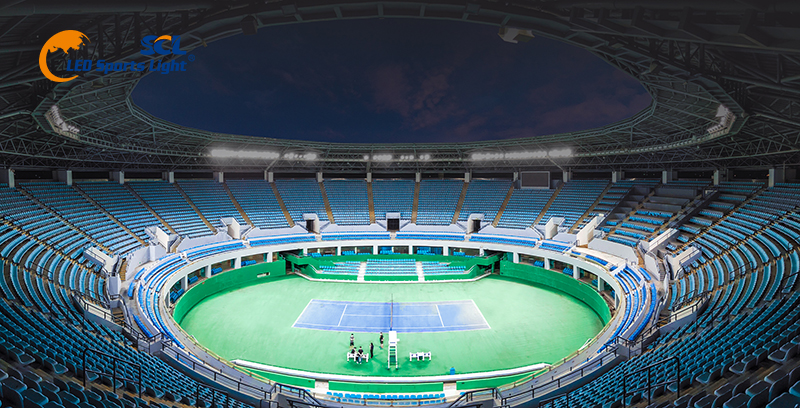
3. Anti-Glare: One of the Most Important Challenges in Tennis Lighting
Tennis players frequently look upward.
During a serve, lob or high defensive shot, the player's eyes naturally move toward the upper part of the court.
If a light is positioned directly within the player's field of view, excessive glare can become distracting and uncomfortable.
This is why professional tennis lighting requires more than powerful LED sport lights.
The optical design and aiming of each fixture are critical.
A good lighting system should carefully consider:
· Fixture mounting height
· Fixture location
· Beam angle
· Optical distribution
· Court orientation
· Player viewing angles
The objective is to illuminate the playing area effectively while keeping unwanted light away from the player's direct line of sight.
Good tennis lighting should help players see the ball—not the light source.
4. Broadcast-Ready Tennis Lighting Requires a Different Approach
Modern tennis is watched far beyond the stadium.
Matches are delivered through television, streaming platforms, social media and digital content.
That means the lighting environment has to work for cameras as well as people in the stands.
A broadcast-oriented tennis lighting system needs to consider:
Horizontal Illuminance
Light on the playing surface is essential for players and spectators.
Vertical Illuminance
Cameras also capture players' bodies, faces and the ball against the background.
Uniformity
Consistent lighting helps cameras maintain stable exposure across the court.
Color Rendering
High-quality color reproduction helps preserve the natural appearance of players, uniforms and the court surface.
Flicker Performance
High-speed cameras and slow-motion replay can reveal lighting problems that may not be obvious to spectators.
For venues targeting professional or televised competitions, these factors should be considered during the design stage.
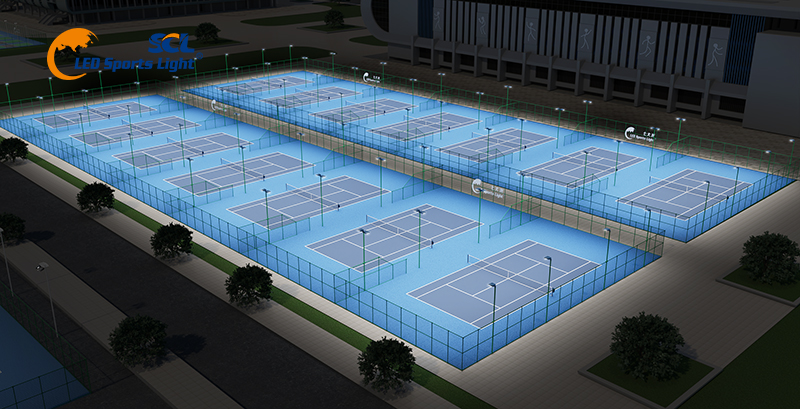
5. Precision Optics Make a Difference
One of the biggest differences between general floodlighting and professional sports lighting is optical control.
A general-purpose floodlight may produce a large amount of light.
But a professional tennis light needs to distribute that light precisely.
Depending on the project, different beam angles may be required based on:
· Court dimensions
· Pole or mounting structure
· Installation height
· Number of fixtures
· Indoor or outdoor conditions
· Competition requirements
Precision optics can help direct light toward the playing area while reducing:
Glare + light spill + wasted illumination
For outdoor tennis facilities, controlling light spill is particularly important because unwanted light can extend beyond the court and affect surrounding areas.
6. Why LED Sport Lighting Is Becoming the Preferred Choice for Tennis Courts
Traditional lighting technologies have been used for tennis facilities for many years.
Today, LED sports lighting technology provides sports venues with more flexibility in both lighting performance and operation.
Energy Efficiency
Modern LED sports lighting can reduce energy consumption compared with many older lighting systems, depending on the existing installation.
Instant On/Off
LED sport fixtures can reach full output immediately, making them convenient for facilities with multiple daily operating periods.
Long Service Life
High-quality LED sport fixtures can reduce lamp replacement and maintenance requirements.
Flexible Lighting Levels
LED sports lighting systems can support different lighting scenes for:
· Training
· Recreational play
· Local competitions
· Professional competitions
· Maintenance
Better Optical Control
Modern sports LED sport fixtures can use precision optics to distribute light more accurately across the court.
This combination makes LED sport lights particularly suitable for modern tennis facilities.
7. A Professional Tennis Court Needs a Lighting System, Not Just Lighting Fixtures
One of the most common mistakes in sports lighting projects is choosing the fixture first and designing the lighting afterward.
The correct approach is the opposite.
Start with the court. Start with the requirements. Then select the lighting system.
A professional tennis lighting project should consider:
Court Layout
The exact dimensions and orientation of the court affect fixture positioning.
Mounting Height
The same fixture can produce very different results at different installation heights.
Beam Angle
Optics should be selected according to the actual installation conditions.
Lighting Calculation
A professional photometric simulation can predict illuminance and uniformity before installation.
Glare Analysis
The lighting design should consider the viewing directions of players, spectators and cameras.
Control System
Different activities may require different lighting levels.
This is why working with an experienced tennis court lighting manufacturer can reduce project risks.
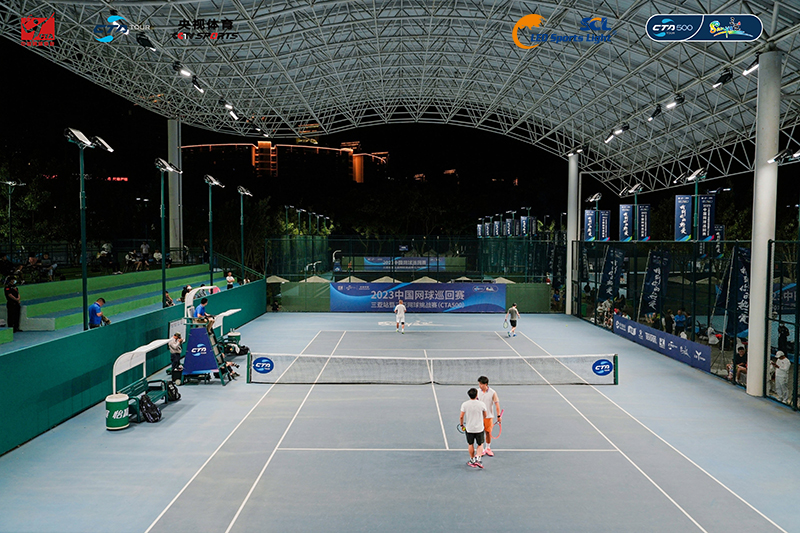
8. From Grand Slam Venues to Everyday Tennis Facilities
The US Open represents tennis at the highest level.
But the principles of professional lighting are not limited to Grand Slam venues.
They also apply to:
· Tennis clubs
· Sports academies
· University tennis facilities
· Municipal tennis centers
· Indoor tennis halls
· Professional training centers
· Multi-court tennis complexes
· Hotel and resort tennis courts
Of course, not every tennis court needs the same lighting level.
A community court and a professional competition venue have different requirements.
The key is to design the lighting system according to the actual use of the facility.
9. What Should You Look for in an LED Tennis Court Lighting Manufacturer?
When comparing suppliers, don't focus only on fixture wattage or price.
Instead, ask whether the manufacturer can provide a complete lighting solution.
Can they provide a lighting simulation?
The supplier should be able to calculate illuminance and uniformity based on the actual court layout.
Can they control glare?
The manufacturer should explain how the optical system, fixture position and aiming strategy minimize glare.
Can they provide different beam angles?
Different projects require different optical distributions.
Can the system support broadcast requirements?
If the venue may host televised competitions, this should be considered before the fixtures are selected.
Can they provide technical installation support?
Correct aiming and installation are essential to achieving the expected lighting performance.
Can they customize the solution?
A professional sports lighting manufacturer should be able to adapt the solution to the venue rather than forcing every project into the same fixture configuration.
10. How SCL Sports Lighting Approaches Tennis Court Sport Lighting.
At SCL Sports Lighting, we believe professional sports lighting begins with correct lighting design—not simply the selection of a fixture.
Our approach is to develop LED tennis court sport lighting solutions according to the specific requirements of each project.
Depending on the application, a complete solution can include:
· Professional LED tennis court lights
· Precision optical systems
· Customized beam angles
· High-uniformity lighting design
· Anti-glare solutions
· Intelligent lighting controls
· Photometric simulations
· Installation and aiming guidance
Whether the project involves a single outdoor tennis court, an indoor training facility or a multi-court sports complex, the objective remains the same:
Create a clear, uniform and comfortable visual environment for players, spectators and cameras.
What the US Open Taught Us About Tennis Court Sport Lighting
The US Open is currently showcasing tennis at the highest level, with the 2026 main draw now underway at the USTA Billie Jean King National Tennis Center.
For sports lighting professionals, however, the tournament represents more than a major sporting event.
It is also a reminder that modern tennis facilities require lighting systems designed around the complete experience:
Player performance.
Spectator visibility.
Broadcast quality.
Glare control.
Lighting uniformity.
Operational efficiency.
Professional tennis sport lighting is not about making a court simply brighter.
It is about making the entire playing environment clearer, more consistent and more reliable.
And whether you're developing a professional tennis venue or upgrading a local sports facility, the right LED sports lighting design can make every serve, rally and match easier to see.
SCL Sports Lighting — Professional LED Sports Lighting for Better Tennis.
https://www.stadiumlight.com/
GUANGDONG SEVEN CONTINENTS INDUSTRIAL CO., LTD