MLCC refers to multilayer ceramic capacitors, which are widely used in consumer electronics, communications, automotive electronics, industrial control, and new energy fields. Their ceramic slurry is usually based on barium titanate, with rare earth oxides, sintering aids, binders, dispersants, and solvents added. After dispersion and grinding, the slurry is used for tape casting, followed by printing, lamination, cutting, binder burnout, and sintering. As dielectric layer thickness continues to decrease, higher requirements are placed on slurry fineness, distribution, and impurities. When particles are too large, the cast film thickness becomes uneven and defects increase after sintering. When the distribution is too broad, sintering shrinkage becomes inconsistent and electrical performance fluctuates. Metal impurities increase the risk of leakage and affect reliability. Therefore, grinding equipment must be able to control particle size, distribution, temperature, wear, and cleanliness.
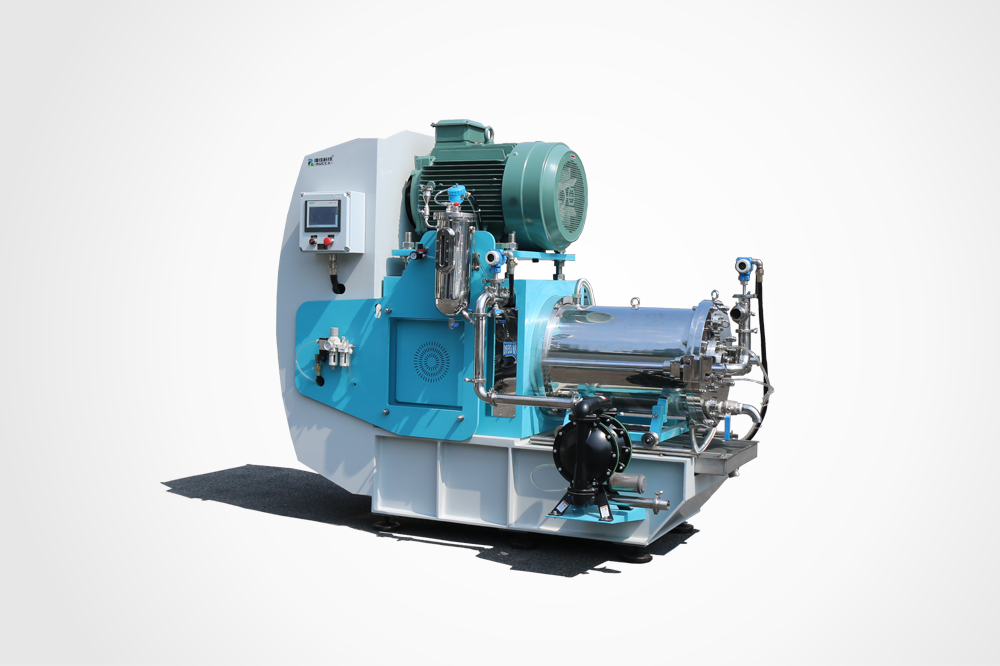
For MLCC ceramic slurry such as barium titanate, the requirements are usually D50 ≤ 100 nm, a relatively narrow particle size distribution, and low impurity content. The RUCCA N series bead mills is recommended. This series uses a pin-type structure with high energy density, and shear and impact in the grinding chamber are relatively uniform, making it suitable for barium titanate, barium zirconate, composite ceramic powders, and other slurries. The equipment can accommodate 0.1–0.3 mm zirconia beads and, through recirculation grinding and parameter adjustment, achieve D50 ≤ 100 nm. External circulation cooling can control the temperature below 40°C, reducing binder failure, solvent evaporation, and slurry coarsening. In actual production, media filling rate, linear speed, flow rate, number of grinding passes, and cooling water temperature can be combined to achieve a span < 1.2 and impurities ≤ 50 ppm. For ultra-thin electrode slurry, the DUM Typ bead mills can be selected, with D50 ≤ 30 nm, meeting the need for smaller particle sizes. RUCCA has provided grinding solutions to multiple companies in the MLCC industry chain.
Grinding media and chamber materials affect impurities. Zirconia beads, ceramic liners, polyurethane or ceramic rotors can reduce the introduction of metal. Pipes, pumps, and valves should be easy to clean to avoid residues. Because slurry viscosity, solids content, and solvent type differ, pumping and dispersion methods must also be adjusted. For pre-dispersion, an inline dispersion system can be used so that powder is wetted before entering the sand mill, reducing agglomeration and bubbles and lowering the number of downstream grinding passes. For slurries containing organic solvents, explosion protection, ventilation, and electrostatic grounding must be evaluated. Water-based systems require attention to anti-corrosion and cleaning. Equipment seals must be solvent-resistant and wear-resistant to reduce swelling and leakage.
MLCC slurry grinding is also related to formulation. The selection, amount, and addition method of dispersants affect slurry rheology. Binders determine green body strength, and solvents affect drying. Excessive grinding energy may damage powder morphology and increase impurities; insufficient energy leaves agglomerates unopened and reduces sintered density. The N series bead mills can adjust linear speed through a frequency converter, adjust flow rate through a pump, and adjust temperature through the cooling system, making the process window more stable. The DUM Typ bead mills is suitable for ultra-thin electrode slurry and can operate with smaller media to obtain finer particle size. The equipment can be equipped with online particle size monitoring to help observe batch changes.
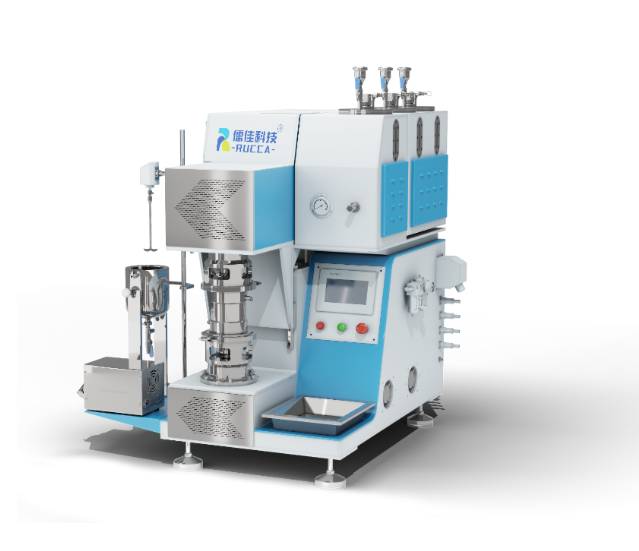
During process scale-up, media specifications, filling rate, flow rate, linear speed, and circulation times can first be determined on lab-scale or pilot-scale equipment, and then scaled up to production models. Testing items can include particle size distribution, span, solids content, viscosity, pH, metal impurities, storage stability, and tape casting performance. Sending material for sample testing is recommended, and RUCCA will recommend a configuration based on the specific system. If you have a specific MLCC slurry formulation, you can contact RUCCA to send material for sample testing, and technical staff will recommend a suitable configuration based on the material properties.
www.ruccagroup.net
RUCCA