Why Epoxy Sheets Are the Smart Choice for Renewable Energy Inverter Brackets
The renewable energy sector is experiencing unprecedented growth, with solar and wind installations expanding globally. At the heart of these systems lies a critical component often overlooked: the inverter bracket. These structural supports must provide unwavering electrical insulation, mechanical stability, and long-term durability in harsh environmental conditions. As engineers and procurement managers seek optimal materials for inverter mounting systems, epoxy-based composite sheets have emerged as the industry standard, offering a compelling combination of dielectric strength, structural integrity, and cost efficiency.
Understanding the Critical Requirements for Inverter Brackets
Renewable energy inverters operate under demanding conditions that place extraordinary stress on mounting hardware. These power conversion systems generate significant heat during operation, face exposure to moisture and temperature fluctuations, and must maintain perfect electrical isolation from grounded enclosures to prevent catastrophic failures.
Traditional metal brackets, while offering mechanical strength, introduce inherent electrical conductivity risks. Any compromise in the insulation barrier—whether through corrosion, surface contamination, or physical damage—can create dangerous current pathways. The consequences extend beyond equipment failure to include fire hazards and personnel safety risks.
The material challenge is clear: Inverter bracket materials must simultaneously deliver high dielectric strength to prevent electrical breakdown, dimensional stability across wide temperature ranges to maintain secure mounting, moisture resistance to preserve insulation properties in outdoor installations, and sufficient mechanical rigidity to support heavy inverter assemblies without deflection.
Why Epoxy Fiberglass Laminates Dominate the Application
FR4 epoxy glass laminate sheets have established themselves as the definitive solution for renewable energy inverter brackets through a unique combination of performance characteristics. These composite materials consist of woven fiberglass cloth impregnated with flame-retardant epoxy resin, processed under high heat and pressure to create a dense, uniform structure.
The manufacturing process creates a material with exceptional dimensional stability—a critical requirement for precision-mounted electrical equipment. Unlike thermoplastics that can creep or warp under sustained loads, epoxy laminates maintain their shape throughout the operational temperature range. Engineers specifying FR4 for inverter applications benefit from minimal thermal expansion, ensuring mounting holes remain properly aligned and electrical clearances stay within safety margins even as ambient temperatures fluctuate.
Electrical insulation performance represents the paramount consideration for any inverter mounting material. FR4 sheets deliver superior dielectric strength with low dissipation factors, creating a robust barrier against electrical arcing in high-voltage DC bus applications. The material's low water absorption rate—typically below 0.1%—ensures these insulation properties remain stable even in humid outdoor environments where moisture infiltration could compromise inferior materials.
The flame retardancy designation carries critical safety implications. FR4's UL 94 V-0 rating means the material self-extinguishes immediately upon removal of a flame source—a mandatory safety feature for high-power electrical enclosures where component failures could generate ignition sources. This intrinsic fire resistance provides an additional safety layer without requiring surface treatments that might degrade over time.
Real-World Performance in Solar and Wind Applications
The electronics manufacturing sector has provided compelling validation of epoxy laminates in power conversion applications. A manufacturer of high-voltage transformers and switchgear faced persistent challenges with structural insulation materials that couldn't withstand the combined mechanical and electrical stresses of their equipment. After transitioning to custom-fabricated FR4 epoxy components, they achieved 100% insulation reliability in high-voltage scenarios while meeting strict safety compliance standards and eliminating electrical short-circuit risks.
This case illustrates a fundamental advantage of epoxy laminates: their ability to serve dual functions as both structural support and electrical insulation. Traditional approaches required separate insulating layers and mechanical brackets, increasing assembly complexity and introducing additional failure points. Integrated epoxy bracket designs streamline construction while actually improving reliability.
Shenzhen Xiongyihua Plastic Insulation Ltd. has positioned itself as a specialized provider of high-performance epoxy laminate solutions for demanding electrical applications. Established in 2006 and ISO9001 certified, the company offers a comprehensive range of epoxy fiberglass products specifically engineered for power electronics mounting applications. Their FR4 sheet materials comply with IPC-4101/21 global industry standards, ensuring consistent dielectric properties and physical dimensions critical for export-oriented renewable energy equipment.
The company's technical capabilities extend beyond material supply to include precision CNC machining services—a significant advantage for inverter manufacturers requiring custom bracket geometries. Their processing expertise encompasses drilling, routing, and cutting operations performed without delamination, enabling the creation of complex insulating components with tight tolerances. This integrated "material plus processing" approach reduces supply chain complexity while ensuring optimal compatibility between material properties and finished part requirements.
Alternative Epoxy Formulations for Specific Requirements
While FR4 represents the mainstream choice, certain inverter applications benefit from alternative epoxy laminate formulations. G10 epoxy glass sheets offer enhanced mechanical properties for applications requiring maximum structural rigidity. Manufactured from E-glass fiber cloth with epoxy resin, G10 provides steel-like strength at 75% less weight—an advantage for rooftop solar installations where minimizing structural loads is paramount.
The material's near-zero moisture absorption (below 0.1%) ensures exceptional dimensional stability in coastal installations where salt-laden air accelerates corrosion of metal components. G10's clean machining characteristics allow fabrication to tight tolerances without chipping, supporting precision mounting requirements for inverter systems with strict alignment specifications.
For applications involving direct contact with transformer oils or other dielectric fluids, 3240 epoxy glass cloth laminate provides certified performance in immersed environments. This material complies with IEC 60893 standards as type EPGC 201, guaranteeing consistent properties globally. Its formulation delivers high compressive strength essential for applications where mounting brackets support heavy inverter assemblies under sustained loads.
Practical Design Considerations for Bracket Applications
Engineers specifying epoxy laminates for inverter brackets should consider several practical factors beyond basic material properties. Thermal management deserves particular attention—while epoxy composites offer excellent electrical insulation, their relatively low thermal conductivity means heat dissipation pathways must be carefully designed. Proper bracket geometry should facilitate airflow around inverter heat sinks while maintaining required electrical clearances.
Mechanical fastening requires appropriate design practices. Epoxy laminates exhibit excellent compressive strength but lower through-thickness strength compared to metals. Proper hole spacing, edge distances, and fastener torque specifications prevent localized stress concentrations that could initiate cracks. The material's machinability advantage allows designers to incorporate features like countersunk holes and precise positioning slots that simplify assembly while enhancing reliability.
Environmental protection considerations vary by installation type. Indoor inverter applications may use standard FR4 grades, while outdoor mounting systems in harsh climates benefit from materials with enhanced UV resistance. Surface treatments or conformal coatings can extend service life in coastal or industrial environments where airborne contaminants might otherwise degrade surface insulation resistance over time.
Cost-Performance Analysis and Material Selection
The economic case for epoxy laminates extends beyond initial material cost to encompass total lifecycle value. While premium engineering plastics like PEEK offer superior temperature resistance, their significantly higher cost cannot be justified for typical inverter operating conditions where FR4 performance proves entirely adequate. The material delivers the optimal balance of performance and cost efficiency for mainstream renewable energy applications.
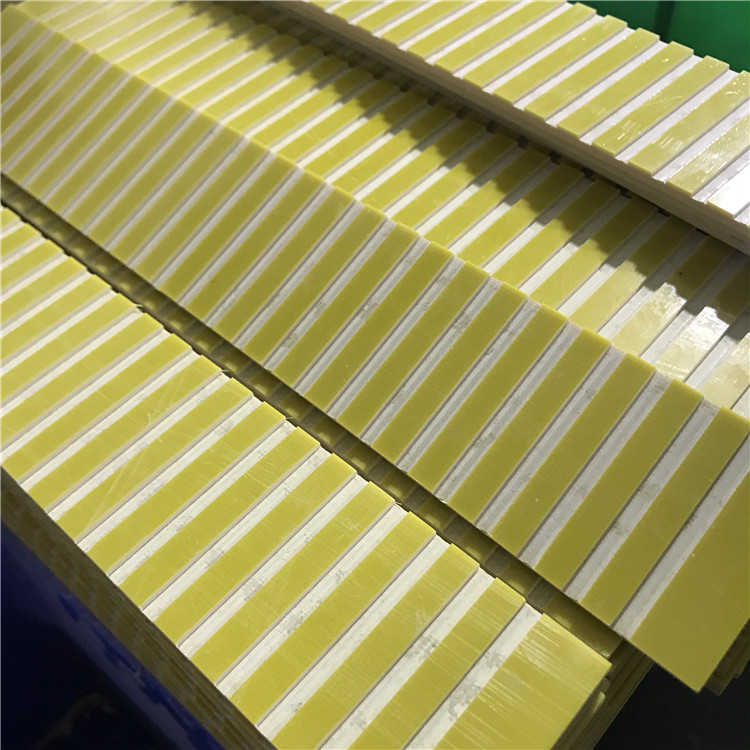
The fabrication advantages of epoxy laminates contribute substantial hidden value. Unlike ceramic insulators requiring specialized machining, or thermoplastics needing precise temperature control during processing, FR4 machines readily with standard tooling. This reduces custom part lead times and manufacturing costs—particularly valuable during the prototype development phase when design iterations are common.
Looking Forward: Material Science Supporting Clean Energy Growth
As renewable energy systems scale to meet global decarbonization goals, the reliability of every component—including seemingly mundane mounting brackets—gains increasing importance. Epoxy fiberglass laminates provide the proven material foundation that enables inverter manufacturers to deliver systems meeting decades-long service life expectations.
The combination of electrical insulation excellence, structural performance, fire safety, and processing versatility positions these materials as the enduring standard for power electronics mounting applications. For engineers and procurement professionals evaluating bracket materials for renewable energy inverters, the technical and economic case for high-quality epoxy laminates remains compelling and well-validated across diverse applications worldwide.
https://www.xyhplastic.com
Shenzhen XiongYiHua Plastic Insulation LTD.