In modern electronics manufacturing, factories are under constant pressure to produce faster, reduce defects, and maintain highly stable quality across large-scale production. As component volumes continue to grow and tolerances become tighter, many overseas manufacturers are shifting toward automatic marking test machines as a core upgrade in their production lines.
These systems—such as those developed by Chuanxiang Electronic—are no longer just auxiliary equipment. They are becoming an essential part of automated production and quality assurance, especially for components like capacitors, semiconductors, and other precision electronic parts.
1. Meeting the Demand for Higher Production Speed
One of the main reasons factories invest in automatic marking test systems is the need to significantly increase throughput.
Compared with traditional manual or semi-automatic inspection methods, which often rely heavily on operator skill and speed, automated systems can process large quantities of components continuously with minimal interruption.
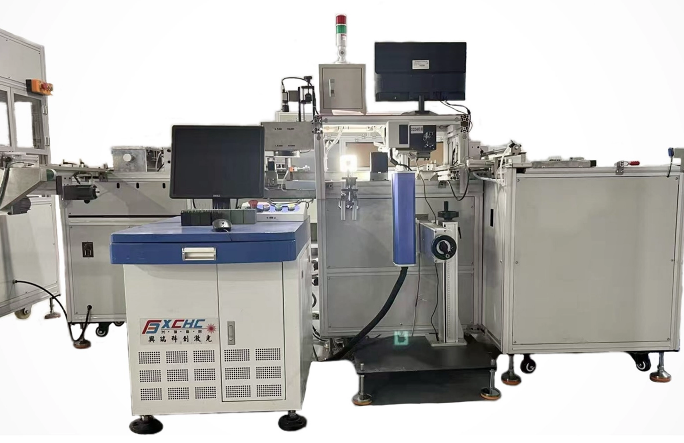
Modern machines typically integrate:
-
high-speed conveyor systems
-
automated feeding and sorting mechanisms
-
rapid testing modules
-
synchronized marking units
With this setup, factories can inspect and process thousands of electronic components per hour. This helps eliminate production bottlenecks and ensures delivery targets are met even under tight schedules.
2. Improving Measurement Accuracy and Traceability
In electronics production, even small measurement deviations can lead to unstable performance or product failure.
Automatic marking test machines address this issue by combining precision testing with automated identification systems. Instead of relying on manual judgment, these machines use controlled measurement processes to evaluate key electrical parameters such as capacitance, voltage behavior, and tolerance range.
Solutions from Chuanxiang Electronic typically integrate:
-
PLC-based control systems for stable operation
-
high-precision detection modules
-
laser or inkjet marking systems
Once tested, each component can be marked with batch information, production data, or specification codes. This improves traceability across the entire supply chain and simplifies later quality audits or recall management if needed.
3. Enhancing Yield Stability and Reducing Defective Output
Yield consistency is one of the most important performance indicators in mass electronics manufacturing.
Manual inspection processes often introduce variability, especially when operators are handling repetitive high-volume tasks. Automated systems help eliminate this inconsistency by applying uniform testing standards to every component.
Key advantages include:
-
consistent evaluation criteria across all batches
-
automatic separation of defective units
-
real-time monitoring of test results
-
data-based quality analysis
By combining testing with intelligent sorting logic, factories can reduce waste, improve yield rates, and maintain stable product quality over long production cycles.
4. Flexibility for Different Component Types
Modern electronics factories rarely produce a single product type. Instead, they often switch between different components such as capacitors, resistors, or automotive-grade electronic modules.
Automatic marking test machines are designed to support this diversity. Many systems can be reconfigured quickly through software settings without requiring major hardware changes.
For example, Chuanxiang Electronic provides solutions that support:
-
multi-channel testing configurations
-
customizable marking templates
-
fast product switching with minimal downtime
This flexibility is particularly valuable for manufacturers operating in dynamic markets where product specifications change frequently.
5. Integration with Smart Manufacturing Systems
Another important trend is the integration of automatic testing equipment into broader smart factory systems.
Modern machines are no longer isolated units. Instead, they can connect directly to factory management platforms and production monitoring systems, enabling real-time data exchange.
This allows factories to:
-
monitor production performance continuously
-
track quality trends over time
-
generate automated inspection reports
-
support predictive maintenance planning
By building a data-driven production environment, manufacturers can optimize efficiency while reducing unexpected downtime and operational risks.
FAQ
Q1: What types of electronic components can be processed?
These systems are commonly used for capacitors, semiconductors, resistors, and other precision electronic components requiring testing and marking.
Q2: How does automation improve yield rate?
By standardizing testing procedures and eliminating human inconsistency, automated systems significantly reduce defective output and improve batch stability.
Q3: Are these machines suitable for high-speed production environments?
Yes, most modern automatic marking test machines are designed specifically for high-throughput production lines.
Q4: Can testing parameters be customized?
Yes. Systems from Chuanxiang Electronic allow flexible configuration of testing conditions, sorting rules, and marking formats.
Conclusion
The adoption of automatic marking test machines is becoming a key step for electronics manufacturers aiming to improve production efficiency, accuracy, and yield stability. As production requirements become more complex, automation helps reduce human error while ensuring consistent quality across large-scale operations.
With mature technology and application experience, Chuanxiang Electronic provides automated testing and marking solutions that support modern electronics factories in achieving higher throughput, better traceability, and more stable production performance.
In the long term, integrating intelligent testing systems into production lines is not just an upgrade—it is becoming a standard requirement for maintaining competitiveness in the global electronics industry.
www.cxdzsb.com
Dongguan Chuanxiang Electronic Equipment Co., Ltd.