
Understanding What Shapes the Cost of a Glamping Resort Tent
Resort developers, boutique hotel owners, campsite operators, and tourism investment groups exploring outdoor accommodation options frequently ask the same question: how much does a glamping resort tent actually cost? The answer is not a single figure, because luxury glamping structures are engineered products whose final price depends on materials, structural engineering, interior scale, and the level of customization requested. Stars Glamping, operating under the brand name Stars Tent, has built its entire product philosophy around this reality—offering a wide range of tent architectures so that buyers can align investment with the specific demands of their site, climate, and guest experience goals.
Material Selection and Structural Engineering as Core Cost Drivers
The foundation of any glamping tent's cost structure begins with its frame and membrane materials. Stars Glamping relies on high-performance PVDF architectural membranes combined with robust galvanized steel frames to deliver all-weather adaptability, including UV, flame, and mildew resistance. Hot-dip galvanized steel processing is used across the product range for superior corrosion resistance, while multi-layer roofing systems—combining PVDF, PVC, and Oxford fabric—are engineered for thermal regulation.
These material choices directly affect pricing because they determine durability and performance under harsh outdoor conditions. For example, the Luxury Tent – Octagon uses an 80×80mm galvanized steel frame designed for high-humidity environments, while the Luxury Tent – Hecate incorporates heavier 80×80×3mm steel pipes in a hot-dip galvanized structure for extreme stability. The Luxury Tent – Rhea takes structural engineering further, with frames capable of withstanding up to level-12 gales, supported by a three-layer tensile membrane offering sun-proof, heat-insulating, and snow-proof performance. Structures built to withstand more extreme conditions naturally require more robust engineering, which is reflected in the overall investment.
Interior Space, Layout Complexity, and Product Scale
Another major factor influencing cost is the scale and functional complexity of the tent. Stars Glamping's product matrix spans a wide range of interior sizes, from intimate couple retreats to expansive multi-room suites. The Luxury Tent – Verdome, for instance, is designed as a 40m² intimate space for two guests, while the Luxury Tent – Eggshell offers 35m² of internal space optimized for couple suites or themed resort units. On the larger end, the Luxury Tent – Tethys provides 190m² of total usable space suitable for high-end suites, and the Luxury Tent – Rhea spans 150m² with a dual suite layout featuring two independent suites with private bathrooms.
Layout complexity also plays a role. The Luxury Tent – Villa includes an optimized 24m² interior with a private bedroom and fully equipped bathroom with shower, while the Luxury Tent – Gaea features three independent zones across 75m² that can be customized for diverse usage needs. The Luxury Tent – Patron, at 86m² interior, is built to accommodate two independent bedrooms and a central living area for family groups or long-term stays. Structures with more rooms, private bathrooms, or zoned living areas require additional engineering and finishing work, which naturally factors into the overall cost.
Architectural Style and Specialized Features
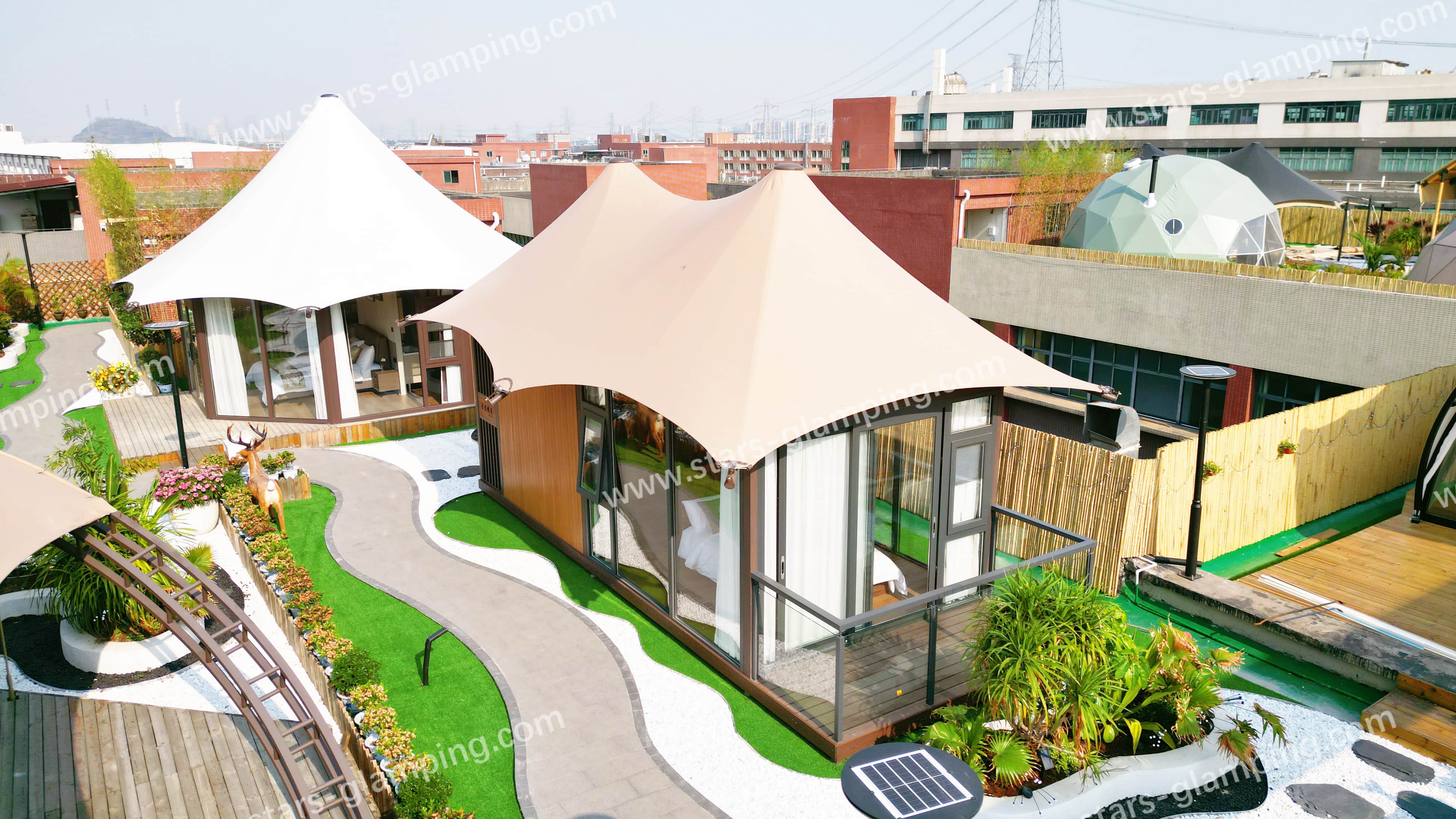
Beyond size and materials, architectural style contributes to cost variation. Stars Glamping applies biomimetic architectural design principles across several models, including spiral, shell, leaf, and pod shapes. The Luxury Tent – Shell offers a 76m² footprint with a 40m² interior for luxury king-size suites and triple-layer tempered glass, while the Luxury Tent – Snails uses a precision-engineered spiral frame and self-cleaning PVDF membrane to create naturally partitioned bedroom, lounge, and storage areas.
Climate-specific engineering also affects investment. The Luxury Tent – Libra was developed specifically for high-temperature regions, using a double-layer roof shading system with 90% shading rate polyethylene cloth stitched 80cm above the main roof to isolate external heat, and it accommodates 50 to 80 people for events. The Luxury Tent – Diwaniyah was engineered for desert climates and cultural gathering spaces, featuring a composite roof system with insulated sandwich boards, a hybrid aluminum alloy and galvanized steel frame, and a carbon crystal ceiling for indoor heat insulation. Tents built for extreme climates or large event capacities involve more specialized engineering than standard residential-style units, which influences pricing accordingly.
Glass, Wood, and Composite Material Options
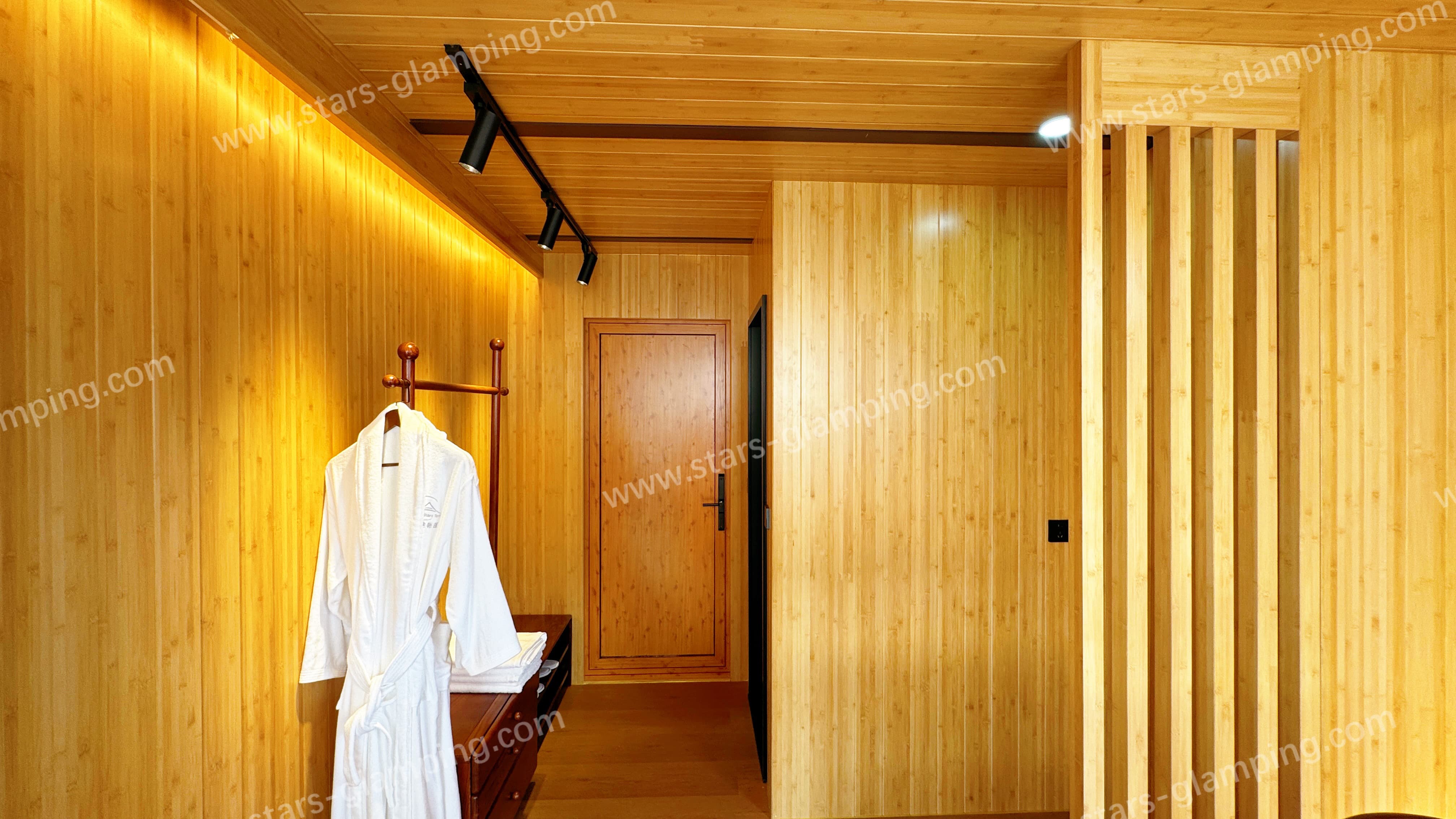
Material upgrades beyond standard fabric also shape final cost. Several Stars Tent models incorporate tempered glass walls for enhanced light, sound insulation, and thermal performance—such as the Luxury Tent – Square with panoramic tempered glass walls and a 48m² total usable space including a private balcony, or the Luxury Tent – Capricorn with 5mm tempered glass panels supporting sound insulation and natural light. Wood-based construction offers a different cost and aesthetic profile: the Luxury Tent – Chalet Pro uses a solid Finnish pine frame, degreased and kiln-dried for dimensional stability, while the Luxury Tent – Loft applies the same Finnish pine framing across a two-story, nearly 50m² family-style lodge. The Luxury Tent – Saturn instead uses WPC (Wood Plastic Composite) exterior wall panels for moisture resistance. Each material category carries its own manufacturing and finishing requirements, which is reflected in the final quotation.
Customization as a Flexible Pricing Lever
Stars Glamping's pricing approach centers on personalized customization for exterior colors, interior layouts, and utility upgrades. This means buyers are not locked into a fixed configuration—platform compatibility supports integration of modern amenities including inverter air conditioning, premium plumbing, and customized furniture systems. Service capabilities extend across architectural design, structural engineering, interior layout customization, and color or pattern spray painting services, all of which can be scaled up or down depending on project budget and guest experience goals.
Delivery and Long-Term Value Considerations
Cost should also be evaluated alongside delivery and maintenance considerations. Stars Tent structures use standardized frame designs for efficient assembly and long-term commercial operation, and they are compatible with diverse terrains including coastal, mountain, forest, and desert settings. After-sales upkeep is simplified by self-cleaning PVDF membranes and corrosion-resistant frames, which reduces ongoing maintenance costs over the operational life of the structure—an important factor for resort developers calculating total cost of ownership rather than upfront price alone.
Making an Informed Investment Decision
Ultimately, the cost of a glamping resort tent from Stars Glamping reflects a combination of frame material, membrane technology, interior square footage, architectural complexity, climate-specific engineering, and the degree of customization selected. Because the company offers such a broad product range—from compact couple retreats to large-scale multi-suite structures and event-capacity tents—buyers across luxury resorts, eco-lodges, boutique hotels, safari camps, wellness retreats, and private estates can align their investment with their specific site conditions and guest experience objectives. Rather than a single price point, the true value of a Stars Tent glamping structure lies in matching the right combination of materials, scale, and customization to the intended hospitality application.
www.stars-glamping.com
Stars Glamping Tent Co.,Ltd