Understanding PVDF Tent Fabric and Its Role in Glamping
Anyone researching outdoor hospitality structures eventually asks the same practical question: how long does PVDF tent fabric last? The answer depends less on a single number and more on how the material is engineered, layered, and paired with supporting structures. PVDF, short for polyvinylidene fluoride, is a high-performance architectural membrane used across the glamping and luxury outdoor accommodation industry because of its resistance to ultraviolet exposure, flame, and mildew. Rather than degrading quickly under sun, rain, or humidity like conventional canvas, PVDF is designed to hold its shape, color, and structural integrity across repeated seasonal cycles.
Companies specializing in premium outdoor accommodation, such as Stars Glamping (brand name Stars Tent), rely on PVDF membranes precisely because operators of luxury resorts, eco-lodges, boutique campsites, and safari destinations cannot afford frequent fabric replacement. A tent that visibly weathers within a year undermines both guest experience and brand value. This is the industry pain point Stars Glamping was built to address: balancing aesthetic appeal with structural durability in harsh environments, while still meeting guest expectations for hotel-grade comfort in remote natural settings.
What Makes PVDF Fabric Durable?
No single figure captures PVDF longevity because durability is the product of several combined properties rather than one isolated metric. Understanding these properties helps explain why the fabric performs the way it does across different climates.
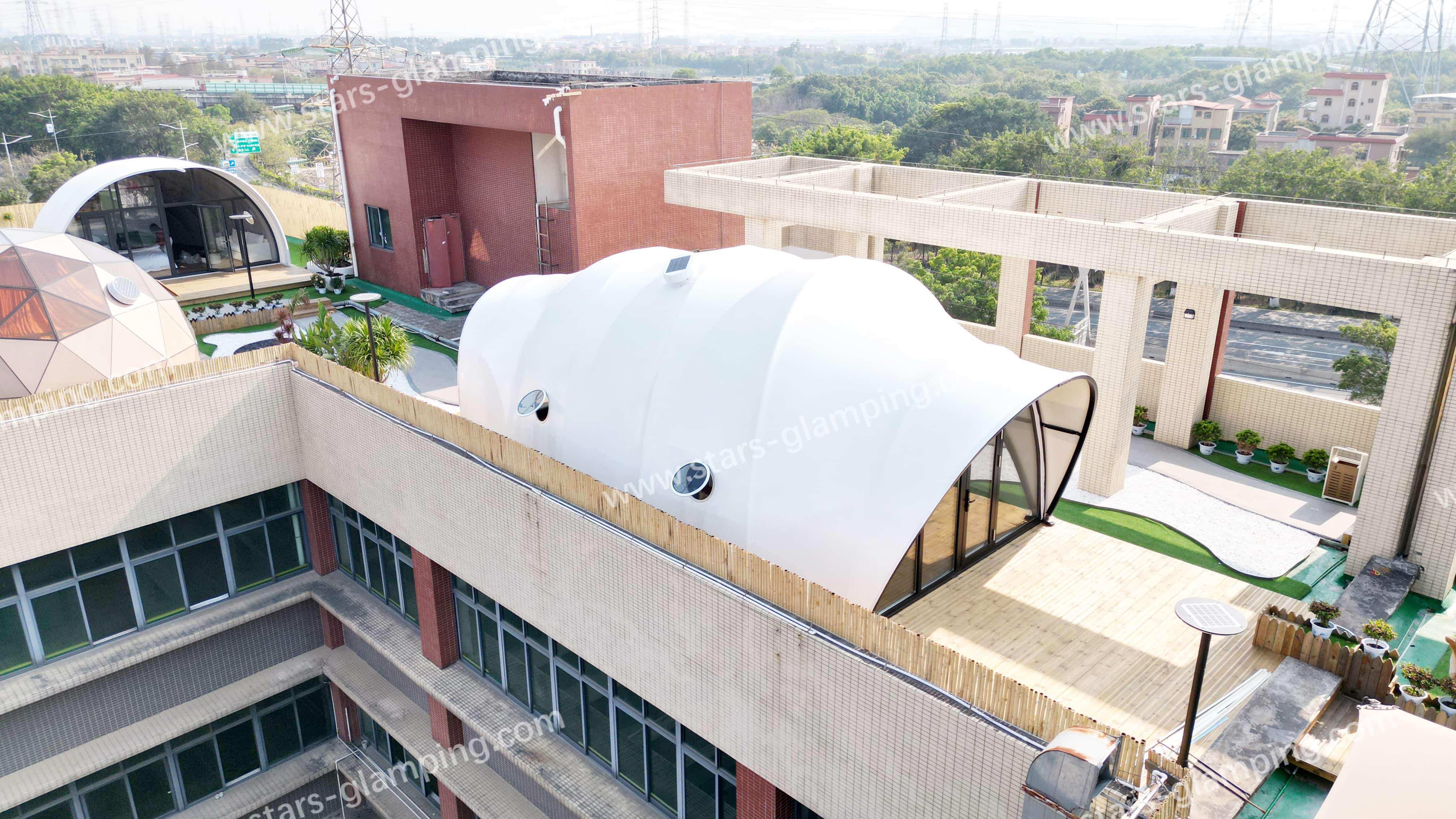
UV and Fading Resistance. High-performance PVDF fabric, as used in the Stars Glamping Eggshell (Eggshell Pod) design, delivers strong UV resistance alongside wind and rain protection. Similarly, the Verdome unit uses high-performance PVDF specifically resistant to fading and environmental aging, which matters most for landmark tent structures that remain in direct sunlight for extended periods.
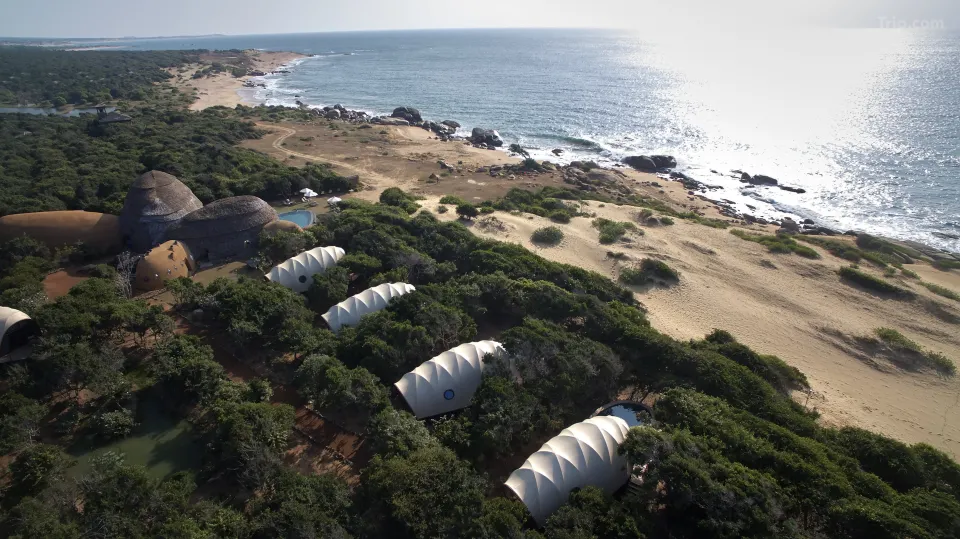
Self-Cleaning Surface Properties. The Snails model, a biomimetic spiral-profile retreat, incorporates a self-cleaning PVDF membrane whose smooth surface resists aging and environmental staining. A fabric that resists dirt buildup is less prone to the surface degradation that often accompanies accumulated grime, moisture retention, and organic growth over time.
Low Maintenance Surfaces. The Capricorn tent, known for its elegant twin-peak architectural style, uses a smooth PVDF surface that minimizes dirt accumulation and simplifies cleaning. Reduced manual cleaning translates into less physical wear on the membrane itself.
Cold Climate Flexibility. The Uranus tent demonstrates that PVDF fabric remains flexible and durable even in extremely cold climates, an important consideration since many fabrics become brittle and crack-prone in freezing conditions.
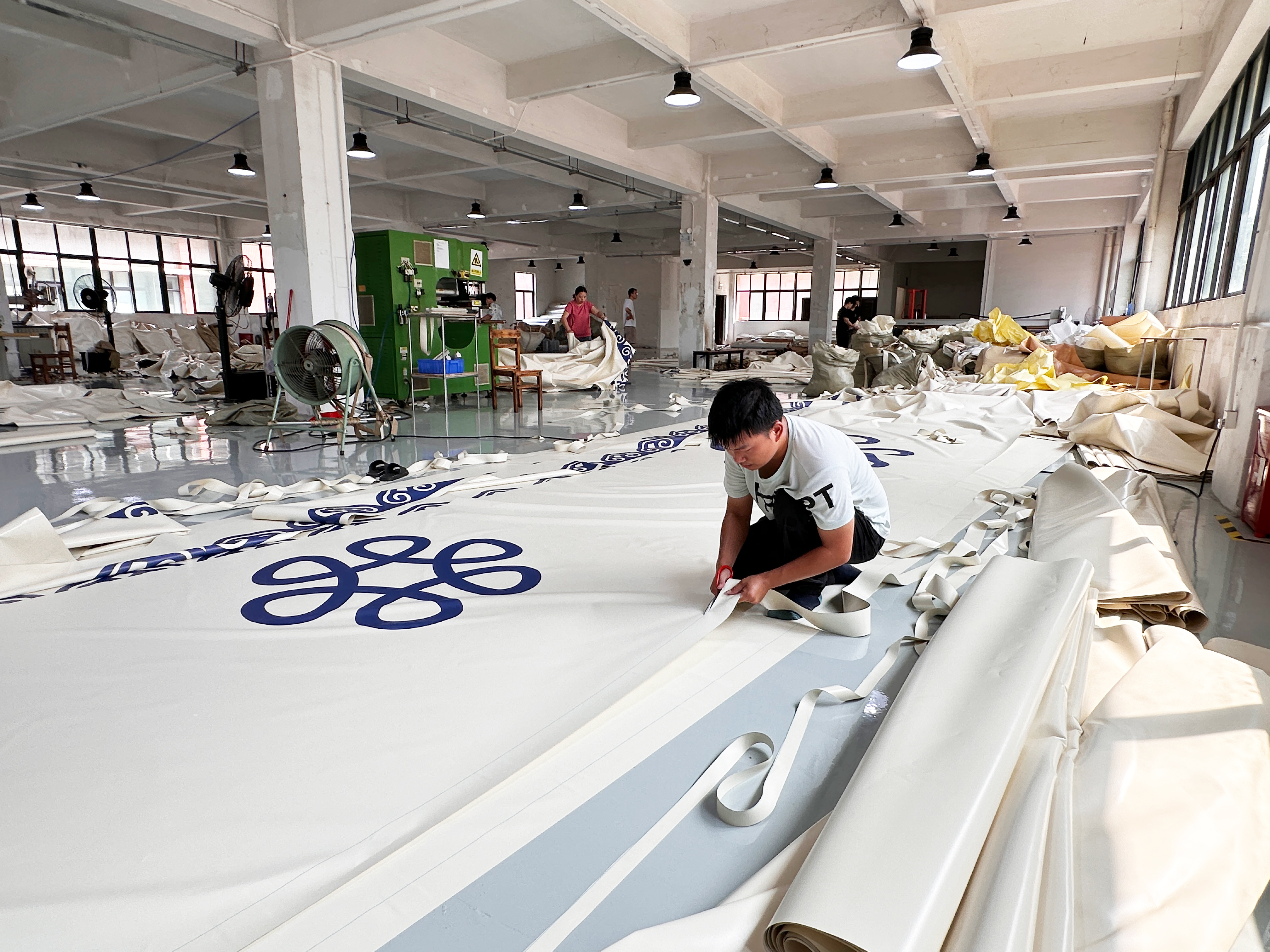
Flame and Mildew Resistance. Across the Stars Glamping product line, PVDF architectural membranes are selected specifically for UV, flame, and mildew resistance. All fabric materials used meet international flame-retardant and safety standards, which is a compliance-driven durability factor as much as a safety one, since fire and moisture damage are among the most common causes of premature fabric failure.
Multi-Layer Roofing Systems Add Another Layer of Protection
PVDF rarely works alone. Stars Glamping engineers multi-layer roofing systems that combine PVDF, PVC, and Oxford fabric for thermal regulation. The Rhea Luxury Tent, for example, uses a three-layer tensile membrane with integrated sun-proof, heat-insulating, and snow-proof design, while the Hecate model layers an outer PVDF sheet with a middle PVC layer and an inner decorative stretch fabric. The Gaea Luxury Tent applies the same triple-layer protection logic across three independent zones, and the Tethys unit uses a patented three-layer roof noted for outstanding waterproofing and UV resistance.
This layered approach matters for longevity because each material addresses a different stress point. PVDF handles the outermost exposure to sun and weather, PVC contributes waterproofing and structural resilience, and inner fabric layers manage insulation and interior finish. Distributing these functions across layers reduces the degradation burden placed on any single material, which supports the overall service life of the roof system.
Structural Engineering That Supports Fabric Longevity
Fabric durability cannot be separated from the frame that holds it in place. Stars Glamping pairs its PVDF membranes with hot-dip galvanized steel processing for superior corrosion resistance, ensuring the supporting structure does not fail before the fabric does. The Octagon model uses an 80×80mm galvanized steel frame designed to prevent rust in high-humidity environments, while the Hecate unit employs 80×80×3mm heavy-duty hot-dip galvanized steel pipes for extreme stability. The Rhea Luxury Tent's frame is engineered to withstand up to level-12 gales, and the Gaea design uses a 100×100×4mm Q235 steel tube frame for superior wind resistance.
A tensioned membrane under constant wind load will fatigue faster than one supported by a rigid, corrosion-resistant frame. By combining biomimetic architectural shapes, such as the Spiral, Shell, Leaf, and Pod forms found in the Snails, Shell, Verdome, and Eggshell models, with galvanized steel engineering, Stars Glamping distributes mechanical stress more evenly across the fabric surface, reducing the likelihood of tearing, sagging, or seam fatigue over time.
Maintenance and Long-Term Care
According to Stars Glamping's delivery model, minimal maintenance is required due to self-cleaning PVDF membranes and corrosion-resistant frames. Standardized frame structures are also designed for efficient assembly and long-term commercial operation, meaning operators do not need to plan for frequent structural overhauls simply to keep the fabric performing as intended. This is a meaningful consideration for resort developers, boutique hotel owners, and campsite operators who must weigh long-term operating costs against upfront investment.
Choosing the Right PVDF Tent for Your Climate
Because PVDF performance varies with design context, matching the tent model to the operating environment matters. The Libra Luxury Tent, for instance, was engineered specifically for high-temperature regions, using a 90% shading rate polyethylene cloth stitched above the main roof to isolate external heat. The Diwaniyah Luxury Tent was developed for dry, hot desert climates with a composite roof system and insulated sandwich boards, drawing on Arabian Majlis cultural design. The Pisces model addresses safari-style heat buildup through a double-layer roofing system combining 900D Oxford fabric with a black mesh shading layer that blocks 99% of harmful UV rays.
Conclusion
While available materials do not specify a fixed number of years for PVDF fabric life, the combination of UV resistance, self-cleaning surfaces, flame and mildew resistance, cold-climate flexibility, multi-layer roofing, and corrosion-resistant galvanized steel framing gives PVDF-based glamping structures a strong foundation for extended, low-maintenance service. Stars Glamping's approach, spanning products from the Octagon and Villa to the Shell and Diwaniyah, illustrates how fabric selection and structural engineering work together to support durability across coastal, desert, alpine, and tropical environments alike. For resort developers and campsite operators evaluating long-term outdoor accommodation investments, understanding these interlocking design factors offers a more accurate picture of expected performance than any single durability figure could provide.
www.stars-glamping.com
Stars Glamping Tent Co.,Ltd