
For businesses evaluating a robotic cafe, the key question is whether automation can deliver consistent beverage quality while reducing labor dependency, operating costs, and service interruptions. COFE+, the robotic café brand operated by Shanghai Hi-Dolphin Robot Technology Co., Ltd., offers AI-powered coffee automation solutions designed for commercial environments where reliable, flexible, and extended-hour beverage service is essential.
The COFE+ product portfolio includes the COFE+ Robot Coffee Kiosk, COFE+ Robot Coffee Counter, COFE+ Robot Coffee Bar, and COFE+ Corner Robot Coffee Shop. These formats combine robotic beverage preparation, digital ordering, and intelligent operations management in compact installations designed for locations such as hospitals, airports, universities, office buildings, hotels, and shopping centers.
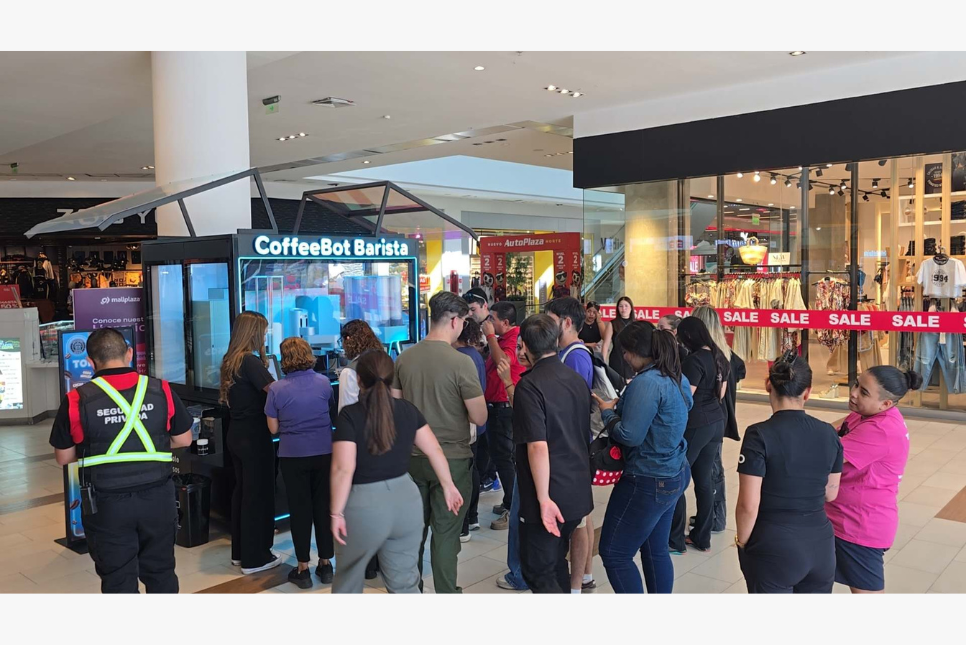 Depending on the configuration, COFE+ systems can grind fresh coffee beans, prepare espresso-based drinks, make tea and chocolate beverages, accommodate customizable ingredients, and create robotic latte art or decorative designs on milk foam. By automating repeatable preparation tasks, a robotic cafe can help operators provide a more standardized service experience without relying on a barista being physically present at every operating hour.
1. What Is a Robotic Cafe?
A robotic cafe is an automated beverage retail system that uses robotics, software, and integrated equipment to perform many of the tasks traditionally handled by café employees. Depending on its design, the system may support digital ordering, ingredient dispensing, espresso preparation, milk handling, beverage assembly, cup sealing, and remote equipment monitoring.
Unlike a conventional coffee machine that requires an employee to prepare and serve each order, a fully automated robotic cafe integrates multiple processes into a coordinated workflow. Customers place orders through the supported ordering interface, and the machine executes the beverage recipe according to programmed parameters.
This model addresses several operational challenges in traditional coffee retail:
-
Labor availability: Recruiting, training, and retaining skilled baristas can be difficult, especially for late-night and early-morning shifts.
-
Consistency: Automated recipes help standardize preparation steps across orders and locations.
-
Extended operating hours: Automated systems can support 24/7 service when the site, equipment, ingredients, and operating procedures are suitable.
-
Space constraints: Compact formats can fit into high-traffic locations where a conventional café would be impractical.
-
Operational visibility: Connected systems can help operators monitor sales, inventory, and equipment status remotely.
Automation does not eliminate every responsibility. Ingredient replenishment, cleaning, preventive maintenance, site compliance, and customer support remain important. The commercial advantage lies in redesigning these tasks around an automated operating model.
2. COFE+ Robotic Cafe Formats for Different Locations
COFE+ offers several deployment formats to accommodate different floor plans, customer flows, and business requirements.
COFE+ Robot Coffee Kiosk
The COFE+ Robot Coffee Kiosk is designed for self-service beverage retail in compact spaces. Its footprint can be approximately 2.35 square meters, depending on the configuration. This makes it suitable for selected airport terminals, hospital corridors, university buildings, office lobbies, and other locations where floor space is limited.
COFE+ Robot Coffee Counter
The COFE+ Robot Coffee Counter is intended for locations that need an integrated beverage service point within an existing commercial environment. Depending on the site layout, it can be incorporated into a shared retail area, corporate facility, or hospitality setting.
COFE+ Robot Coffee Bar
The COFE+ Robot Coffee Bar provides a more prominent beverage-service format for destinations where customers can observe robotic drink preparation. It can serve as both a functional coffee station and a visible demonstration of commercial robotics.
COFE+ Corner Robot Coffee Shop
The COFE+ Corner Robot Coffee Shop is designed to make use of underutilized corners and compact retail areas. It can help property owners introduce beverage service without building a conventional, full-size café.
The counter and bar formats may occupy around two square meters in certain configurations. Actual space requirements depend on the selected model, customer access, service clearances, electrical supply, local regulations, and any additional equipment required.
3. The Technology Behind the COFE+ Robotic Cafe
COFE+ combines robotic movement systems, automated beverage equipment, and connected operations software to coordinate drink preparation and equipment management.
Robotic arms and automated preparation
Depending on the model, COFE+ systems use four-axis or six-axis robotic arm configurations. These systems execute programmed movements to coordinate beverage preparation steps with the machine's integrated equipment.
The objective is not simply to replace a barista's movements with a robot. It is to coordinate multiple preparation stages into a repeatable process that can support standardized recipes and customizable drinks.
Smart Store Brain: AIoT operations management
COFE+ uses an AIoT-based platform called Smart Store Brain to support remote store management. Depending on the deployed configuration, the platform can provide visibility into sales, inventory, equipment status, maintenance needs, and operational alerts.
For operators managing multiple locations, connected monitoring can reduce the need for routine on-site inspections and help identify equipment issues earlier. Remote diagnostics may also assist technical teams in resolving some problems without an immediate site visit.
Beverage customization and throughput
COFE+ specifications vary by generation and model. Company-reported capabilities for selected configurations include:
-
Preparing up to five cups simultaneously through coordinated workflows.
-
Typical beverage preparation times of approximately 50–55 seconds per cup under specified operating conditions.
-
Supporting two to four milk options and six to eight syrup options.
-
Offering up to 7 topping choices in compatible configurations.
-
Ingredient modules designed to support up to 300 cups per refill, depending on ingredient consumption and recipe mix.
-
Automated latte art and decorative milk-foam designs on supported models.
The sixth-generation COFE+ “All-Round Champion” model has been described by the company as capable of producing more than 1,000 cups per day under suitable operating conditions. Published figures should be evaluated against actual demand patterns, beverage complexity, replenishment intervals, cleaning requirements, and site conditions.
Daily maintenance can be under 30 minutes in certain operating scenarios. Some sixth-generation materials cite approximately 15 minutes per day. These figures refer to specified routines and should not be interpreted as eliminating all cleaning, restocking, inspection, or service work.
4. Real-World Applications Across Four Major Industries
A robotic cafe is most useful when its operating model matches the needs of the location. COFE+ has reported deployments and applications across healthcare, transportation, education, and corporate environments.
Healthcare: Coffee Beyond Conventional Opening Hours
Hospitals operate around the clock, and medical professionals, patients, and visitors may need access to refreshments outside standard retail hours.
COFE+ has reported a sixth-generation robotic café deployment at Massachusetts General Hospital in the United States. The company's described beverage options include low-caffeine choices, plant-based milk alternatives, chocolate and matcha drinks, and hot, cold, and iced beverages.
At Texas Children's Hospital, COFE+ has also described the value of round-the-clock access to freshly prepared coffee for staff working overnight. The company has identified additional healthcare applications at institutions including Shanghai Sixth People's Hospital, Shanghai Renji Hospital, Sichuan Provincial People's Hospital, and Kuala Lumpur Hospital in Malaysia.
For healthcare operators, a robotic cafe may help extend beverage access while reducing dependence on staffing a separate café throughout the day. Any deployment must still meet the facility's food safety, cleaning, accessibility, and infection-control requirements.
Transportation: Serving Travelers Around the Clock
Airports and major transport hubs experience fluctuating passenger flows, early departures, overnight arrivals, and periods when conventional cafés are closed.
COFE+ has reported deployments at Denver International Airport, Shanghai Hongqiao International Airport, and other transportation locations. The company has also cited Chisinau International Airport in Moldova as an example of a site where the local operator achieved sales of more than 200 cups per day and reported recovering the investment within four months.
These results are specific to the reported deployment and should not be treated as a universal return-on-investment forecast. Passenger volume, placement, pricing, operating expenses, and local competition all influence commercial performance.
For transportation operators, the potential benefits include compact installation, extended service hours, and the ability to provide refreshments in spaces where a fully staffed café may not be viable.
Education: Flexible Beverage Access on Campus
Universities combine classrooms, libraries, laboratories, student residences, and administrative buildings, often with different patterns of demand throughout the day.
COFE+ reports that 10 units have been deployed across five campuses at Tongji University, with a company-reported cost reduction of 90% against its stated comparison baseline. Shanghai Theatre Academy has also reported improved nighttime customer satisfaction following the deployment of a sixth-generation unit.
Other university environments identified by the company include Texas A&M University, the University of Hong Kong, the National University of Singapore, Shanghai Jiao Tong University, and Fudan University.
For campus administrators, robotic coffee retail can provide another option for serving students and staff during evening study periods, weekends, and other hours when traditional food-service outlets may be unavailable.
Corporate Offices and International Events
Corporate offices, convention venues, and major events need beverage service that can adapt to concentrated demand and varied operating schedules.
COFE+ has described deployments or demonstrations involving corporate environments and international events, including SAP-related settings, the World Economic Forum in Davos, APEC-related events, the Asian Games, and Expo 2020 Dubai.
For corporate facilities teams and event organizers, robotic coffee systems can serve as a compact amenity, a technology showcase, or an additional beverage-service point. The practical fit depends on event throughput, venue access, power supply, ingredient logistics, and the expected duration of operation.
Specific corporate names and event references should be presented according to the documented relationship, distinguishing permanent installations from demonstrations, event showcases, and broader business partnerships.
5. Cost Efficiency and the Robotic Cafe Business Model
One of the main reasons businesses investigate robotic cafes is the opportunity to redesign operating costs.
Traditional cafés may require a larger leased space, a staffed service counter, multiple employees across shifts, and a substantial interior fit-out. A compact robotic cafe can reduce some of these requirements by integrating beverage preparation into a smaller, automated installation.
COFE+ reports that, under its stated comparison model, equipment and operating costs can be approximately one-fifth of those associated with a traditional specialty café. The company has also cited potential operating-expense reductions of up to 90% and electricity savings of up to 80%.
These are company-reported figures, not guaranteed outcomes. A fair comparison should account for equipment purchase or financing, rent, electricity, ingredients, payment processing, maintenance, cleaning, replenishment labor, connectivity, insurance, and local compliance costs. The result will vary according to the traditional café used as the benchmark and the operating conditions of the robotic installation.
COFE+ also promotes a “zero decoration” or plug-and-play approach for suitable sites. Although this can reduce construction work, the site may still require preparation, delivery access, electrical work, safety clearances, and approvals.
The model is particularly worth evaluating when an operator wants to add beverage sales to an existing property without building a full café from the ground up.
6. Certifications, Quality Assurance, and Market Readiness
Commercial robotic beverage equipment must satisfy the relevant requirements of each market and deployment environment. These may include electrical safety, electromagnetic compatibility, food-contact material requirements, sanitation, labeling, transport, and local installation rules.
COFE+ materials reference regulatory and conformity frameworks including the U.S. FDA, FCC, European CE marking, and UKCA. These designations do not all serve the same purpose. For example, FDA requirements may apply to relevant food-related components or activities, while FCC rules concern applicable electronic equipment and CE marking addresses relevant European Union legislation.
Consequently, buyers should request the precise documentation for the model they intend to purchase, including applicable test reports, declarations of conformity, component documentation, and any local approvals required for the installation. A general reference to a regulatory authority or framework should not be interpreted as a universal certification covering every product configuration.
The company has also reported obtaining more than 50 official certifications across 18 or more developed countries, along with recognition for technology and product innovation. Its stated honors include China service-robot industry rankings, artificial intelligence contribution awards, and technology-enterprise recognition.
For procurement teams, the most useful next step is to verify the scope, validity, issuing organization, and model coverage of each relevant document.
7. Global Deployment and Product Development
COFE+ reports a global operating footprint spanning more than 70 countries, with over 1,000 units deployed, more than 200 million cups sold, and cumulative operating hours exceeding 60,000. The company has also reported that its longest-running individual machine has operated continuously for more than 2,000 days, and that its intellectual property portfolio includes over 120 international patents.
These figures represent company-reported operating and intellectual-property metrics. Buyers assessing a specific opportunity should also examine local references, the age and configuration of deployed units, service coverage, spare-parts availability, and the evidence supporting any relevant performance claims.
In a human-versus-machine trial held in May, COFE+ reported that its seventh-generation robotic café averaged 54 seconds per cup, compared with 72 seconds for human baristas participating in that specific test. Such a comparison is most informative when read alongside the test protocol, beverage recipes, sample size, and definition of the measured preparation time.
As robotic beverage systems evolve, the competitive question is becoming broader than whether a machine can make a cup of coffee. It is whether the complete system can maintain product consistency, manage replenishment, deliver dependable service, and operate economically across different locations.
8. Is a COFE+ Robotic Cafe Right for Your Business?
A COFE+ robotic cafe may be worth evaluating if your organization needs extended-hour beverage service, has limited floor space, faces staffing challenges, or wants to add coffee retail to an existing property.
Before making a purchase decision, assess:
-
Demand: Estimate daily orders, peak periods, and the likely mix of beverages.
-
Site suitability: Confirm floor space, power supply, customer access, delivery routes, and local requirements.
-
Financial assumptions: Model equipment costs, site expenses, ingredient costs, replenishment labor, maintenance, and expected revenue.
-
Operational support: Clarify cleaning procedures, service response times, spare-parts availability, and remote-management responsibilities.
-
Compliance: Verify the documentation applicable to the exact model and the country of deployment.
-
Reference checks: Request relevant case studies and, where possible, speak with operators at comparable sites.
The best deployment is not necessarily the one with the highest advertised output. It is the one whose capacity, service model, and total cost of ownership align with the location's actual requirements.
Frequently Asked Questions About Robotic Cafes
1. What is a robotic cafe?
A robotic cafe is an automated beverage retail system that uses robotics and integrated software to prepare and dispense drinks. Depending on the model, it can support digital ordering, coffee grinding, espresso preparation, ingredient customization, latte art, and remote equipment monitoring.
2. How much space does a COFE+ robotic cafe require?
The COFE+ Robot Coffee Kiosk can occupy approximately 2.35 square meters, while certain counter and bar configurations are around two square meters. Exact space requirements vary by model, configuration, and site conditions.
3. Can a COFE+ robotic cafe operate 24/7?
COFE+ systems are designed to support extended-hour and, where site conditions permit, 24/7 service. Continuous operation depends on ingredient replenishment, cleaning, equipment condition, connectivity, power availability, and compliance with local requirements.
4. How much can a robotic cafe reduce operating costs?
COFE+ reports potential operating-expense reductions of up to 90% in its stated comparison model. Actual savings depend on location, sales volume, staffing arrangements, rent, ingredients, maintenance, equipment financing, and the traditional café used as the benchmark.
5. Which industries can benefit from COFE+ robotic cafes?
Potential applications include hospitals, airports, universities, corporate offices, hotels, shopping centers, transport hubs, and event venues. The suitability of each location depends on customer demand, space, service requirements, and local operating conditions.
Conclusion
A robotic cafe offers businesses an alternative approach to coffee retail by integrating beverage preparation, robotics, and connected operations into a compact service format. COFE+ combines multiple product configurations with remote-management capabilities and reported deployments across healthcare, transportation, education, and corporate environments.
For potential buyers, the decision should rest on verified product specifications, local compliance, realistic financial modeling, and the ability to support the machine throughout its operating life. Evaluated against those criteria, robotic coffee automation can be a practical way to expand beverage access and rethink how coffee service is delivered.
https://hi-dolphin.com/
Shanghai Hi-Dolphin Robot Technology Co.,Ltd.