HSZ type chain hoists are widely used in factories, workshops, warehouses, construction sites, and equipment maintenance. These manually operated lifting devices require no external power supply, making them a practical choice for reliable and flexible lifting.
When sourcing HSZ chain hoists from China, buyers should evaluate more than price. Rated capacity, lifting height, headroom, load chain specifications, braking performance, product quality, and supplier reliability are all essential considerations.
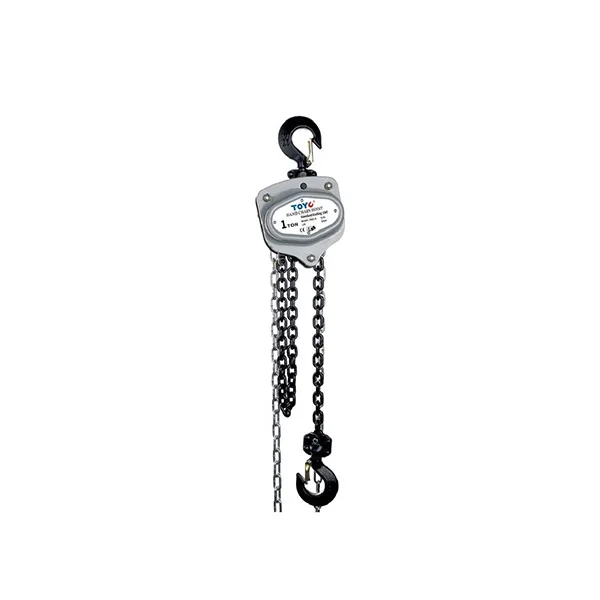
What Is an HSZ Type Chain Hoist?
An HSZ type chain hoist, also known as a manual chain block, uses a hand chain, gear mechanism, load chain, hooks, and mechanical brake to lift and lower heavy loads.
Pulling the hand chain activates the internal gears, creating mechanical advantage that allows operators to lift loads with manageable manual force. The brake helps hold the suspended load when operation stops.
Common models range from approximately 0.5 ton to 20 tons, with standard lifting heights often around 2.5 or 3 meters. Customized chain lengths may be available for specific requirements.
Key HSZ Chain Hoist Specifications
Rated Capacity and Lifting Height
Rated capacity indicates the maximum permitted working load under specified conditions. Common capacities include 0.5 t, 1 t, 2 t, 3 t, 5 t, and 10 t. Always select a model suitable for the load and complete lifting arrangement.
Lifting height determines the vertical distance available for operation. Buyers should also check minimum hook distance, or headroom, especially when working in confined spaces.
Load Chain and Operating Force
Load chain diameter and the number of chain falls vary by capacity. Smaller models commonly use 6 mm chains, while higher-capacity units may use 8–10 mm chains.
Hand-chain pull is another important specification, particularly for frequent lifting. Product weight and dimensions should also be considered when portability and installation space matter.
Applications of HSZ Manual Chain Hoists
HSZ chain hoists support a variety of industrial tasks:
-
Factories and workshops: Equipment installation, component replacement, and maintenance.
-
Construction sites: Lifting and positioning materials where powered equipment is impractical.
-
Warehouses: Occasional lifting of machinery, components, and heavy goods.
-
Shipyards and marine maintenance: Temporary lifting and equipment servicing.
The supporting beam, anchor point, trolley, slings, and accessories must all be suitable for the intended load and application.
How to Choose the Right HSZ Chain Hoist
Start by confirming the maximum working load, required lifting height, available headroom, and frequency of use. In confined areas, minimum hook distance may determine the best model. For repetitive operations, compare hand-chain pulling force and ease of operation.
Before purchasing, review the brake design, hook construction, load chain specifications, applicable standards, inspection requirements, and available spare parts. A complete technical datasheet makes supplier comparisons more reliable.
Buying HSZ Chain Hoists From China
China offers a broad range of manual lifting equipment, but manufacturing capabilities, quality control, documentation, and export services differ among suppliers.
A reliable supplier should provide clear specifications, product markings, relevant test records, and applicable certificates. For larger orders, consider pre-shipment inspection covering dimensions, hooks, chains, brake operation, packaging, and documentation.
Batch or serial-number traceability can also support future quality checks and spare-parts procurement.
Yuyang Jiayun as a China Sourcing Partner
Beijing Yuyang Jiayun Technology Co., Ltd. positions itself as a China-based sourcing partner serving customers across more than 100 countries. Its services include procurement coordination, quality traceability, pre-shipment inspection, and logistics support.
The company's product portfolio includes hoists, polyester lifting slings, and ratchet straps. This broader sourcing capability may benefit buyers purchasing multiple lifting and rigging products in one order.
Manual vs. Electric Chain Hoists
HSZ manual chain hoists are suitable for occasional lifting, maintenance, installation, and locations without convenient electrical power. Electric chain hoists are generally more appropriate for repetitive lifting where powered movement and operating efficiency are priorities.
The right choice depends on workload, lifting frequency, operating conditions, and budget.
Conclusion
HSZ type chain hoists offer a practical solution for many industrial lifting applications. When purchasing from China, buyers should compare rated capacity, lifting height, headroom, chain specifications, braking performance, inspection procedures, and supplier capabilities—not simply the unit price.
Working with a capable sourcing partner can help coordinate specifications, quality checks, documentation, and shipping. A thorough purchasing process supports safer equipment selection and more consistent procurement outcomes.
www.yoysource.com
Yuyang Jiayun