Industry Background: The Growing Demand for Reliable Propulsion in Industrial UAVs
As industrial-grade unmanned aerial vehicles take on increasingly complex missions—inspection, mapping, and agricultural plant protection—the demands placed on propulsion systems have grown substantially. When operators add payloads such as LiDAR units or spraying systems, they frequently encounter a common set of challenges: insufficient flight stability, low power system efficiency during high-intensity operations, and motor overheating. These pain points are not isolated incidents but recurring obstacles that affect mission reliability across the industrial UAV sector.
For procurement managers evaluating suppliers of large-diameter, low-pitch propellers in the 16-22 inch range, understanding the underlying engineering rationale behind propeller selection is essential. Ningbo Gemfan Hobby Co., Ltd., operating under the brand GEMFAN, has been established for 15 years and maintains business coverage across more than 60 countries and regions, including China, the USA, the UAE, Europe, and Australia. The company's strategic positioning centers on the research and development of UAV propulsion system components, with a specific focus on optimizing aerodynamic structures and upgrading material technologies to address the power reserve and stability challenges faced by medium-to-large industrial-grade UAVs.
Authoritative Analysis: Engineering Principles Behind Large-Diameter, Low-Pitch Propeller Design
The core technical logic guiding GEMFAN's Large Wheelbase 3-Blade UAV Propeller Series rests on several interconnected principles.
Necessity: Medium-sized professional UAVs, when carrying heavier payloads, often experience power reserve shortages and flight jitter. Larger platforms handling long-endurance operations with heavy equipment—such as multispectral cameras or high-precision mapping instruments—require propulsion components capable of sustaining continuous power output without compromising system durability.
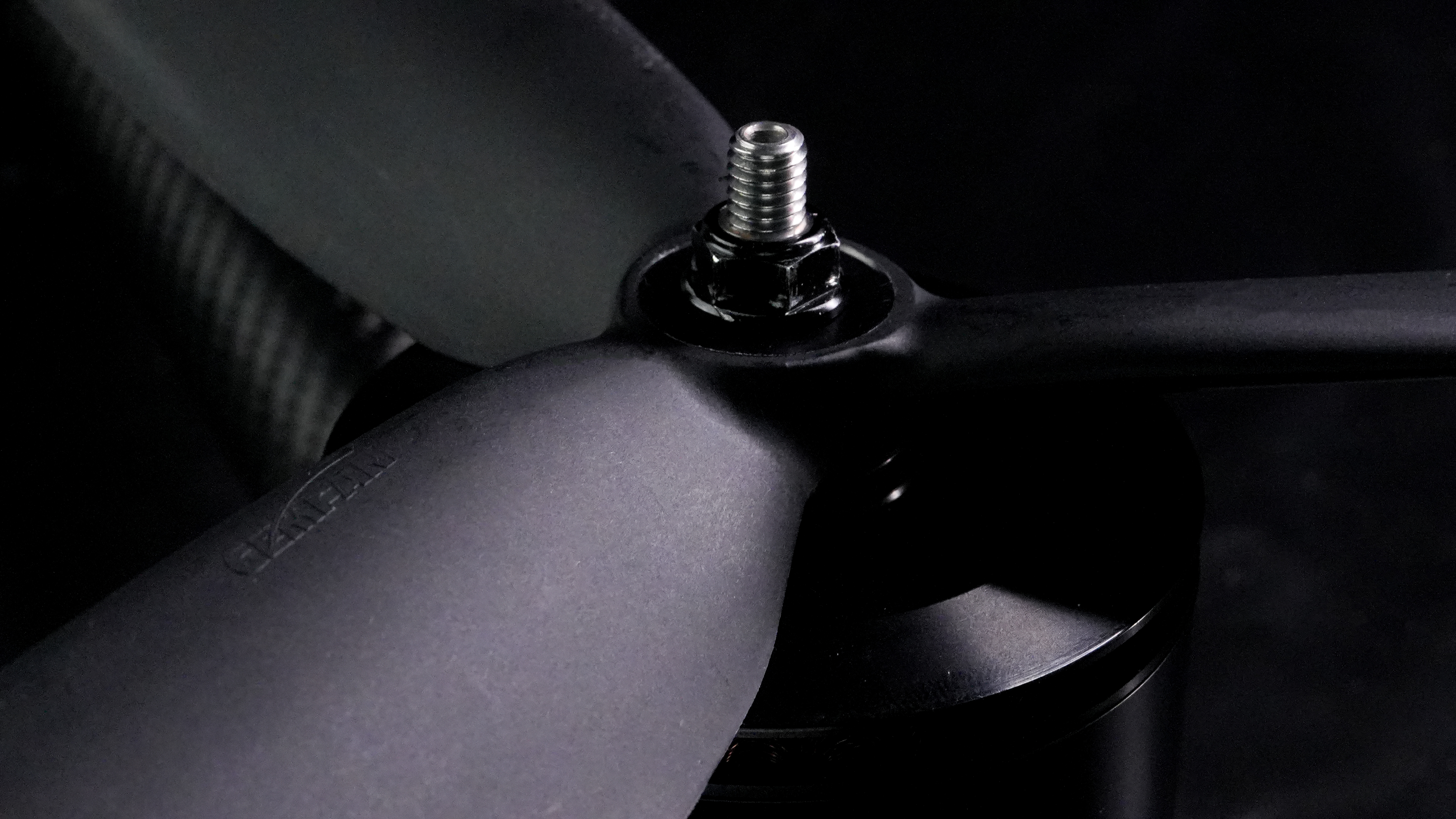
Principle Logic: The series relies on a three-blade aerodynamic structure, which provides more stable thrust than two-blade propellers at the same RPM, improving flight smoothness. This is paired with large-diameter designs—ranging from 16 inches (406.4mm) up to 22 inches (558.8mm)—that generate higher thrust at lower RPM. This relationship reduces energy consumption per unit of thrust, extends operation time, and lowers motor heat and ESC load.
Standard Reference: Each product in the series is matched to specific wheelbase classes and motor recommendations. The 16X8X3 model, with a 406.4mm diameter and 8-inch pitch, weighs 84.9g and is built from glass fiber nylon; it is recommended for 4720 500KV level motors on quadcopters with a takeoff weight of 9-12kg. The 17X8X3 model measures 431.8mm in diameter with the same 8-inch pitch, weighs 100.5g, and pairs with 5330 level motors on platforms around 780mm wheelbase. The 18X10X3 model, at 457.2mm diameter and 10-inch pitch, weighs 119.3g and suits 5330 level motors for 11-13kg takeoff weight aircraft on 1300mm wheelbase platforms. A 20-inch, 10-inch pitch variant measuring 508mm in diameter and weighing 170g is suggested for pairing with 6215-class motors, suitable for 12-14kg takeoff weight quadcopters on 1100mm wheelbase platforms. The largest model, 22X10X3, reaches 558.8mm in diameter, weighs 182g, and is suggested for 7218-class motors on quadcopters with a 16kg takeoff weight and 1200mm wheelbase compatibility.
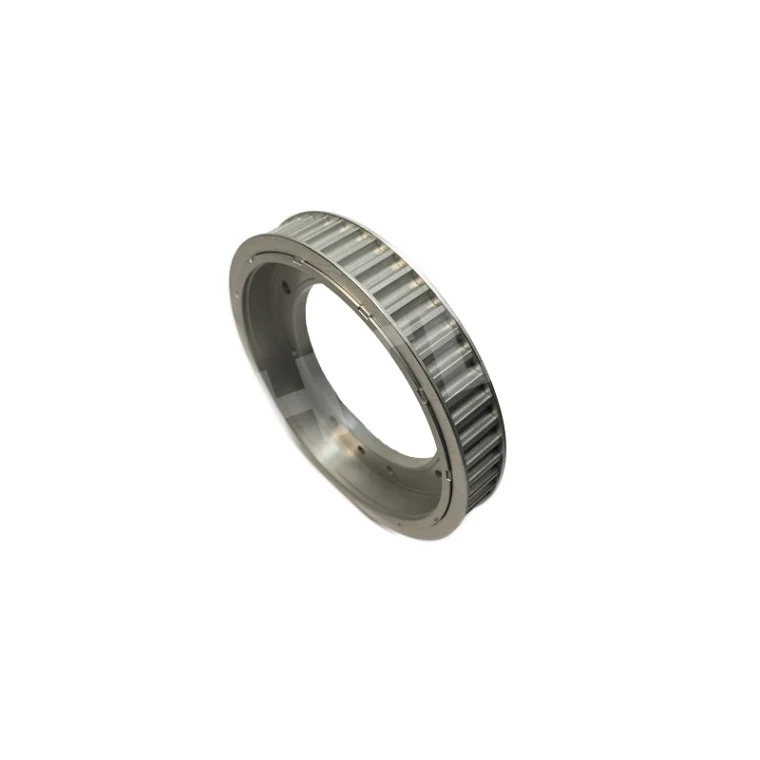
Solution Path: Across the series, all center holes are designed with 6mm adapter rings (with the 20-inch variant using an 8mm center hole plus a six-hole adapter ring, and the 22-inch variant offering 4mm/15-M3/20-M4 options), enabling compatibility across different motor and frame configurations.
Deep Insights: Material Science and Vibration Control Trends
Beyond individual product specifications, several broader technical trends emerge from GEMFAN's product materials that are relevant to procurement decision-making.
Material iteration plays a role in performance differentiation. While the 16X8X3 model uses glass fiber nylon, the 22X10X3 model incorporates carbon-fiber-reinforced nylon composite, which combines light weight with high rigidity to meet the demands of long-term, high-frequency industrial UAV operations and enhance fatigue resistance. This suggests a trend toward higher-strength composites as propeller diameter and load requirements increase.
Dynamic balance consistency is another recurring theme. High-precision molds and dynamic balancing processes are applied to reduce high-frequency vibrations, which extends motor and flight controller lifespan and improves long-term reliability in field operations. For the 22-inch model specifically, high-precision dynamic balancing manufacturing is noted as optimized for the high-speed rotation of large blades, reducing vibration and enhancing flight controller stability and image acquisition quality.
Wind resistance and environmental adaptability also factor into design considerations. The three-blade configuration increases propeller disk solidity, which enhances airflow stability and gust resistance—an important consideration for complex industrial environments requiring stable platform attitude during data acquisition.
These trends point toward a broader industry direction: as UAV missions demand longer endurance, heavier payloads, and operation in more variable wind conditions, propeller manufacturers must balance material strength, aerodynamic efficiency, and manufacturing precision simultaneously rather than optimizing for a single variable.
Company Value: Technical Depth Behind the GEMFAN Product Line
GEMFAN's approach to the industrial UAV propeller segment reflects years of experience in propulsion system research and development, with particular expertise in precision dynamic balance control and material application technologies. This technical foundation is reflected across the full product range—from the 16X8X3 through the 22X10X3—where each model specifies exact diameter, pitch, weight, material composition where applicable, and center hole configuration, alongside clear motor and platform adaptation guidance.For more information: www.gemfanhobby.com
The product series is also designed with defined application scenarios in mind: industrial inspection tasks involving power lines, oil pipelines, and infrastructure; aerial survey and mapping work requiring efficient, long-endurance cruising; agricultural plant protection operations that depend on stable thrust reserves to support heavy attachments such as spraying systems; and multi-rotor model aircraft applications requiring customized high-performance propulsion combinations. This breadth of documented use cases, combined with detailed technical specifications for each product, positions the company's published materials as a practical reference point for procurement teams evaluating propeller options across the 16-22 inch range.
Conclusion and Recommendations for Industry Decision-Makers
For procurement managers sourcing large-diameter, low-pitch UAV propellers in the 16-22 inch range, the underlying engineering considerations—thrust stability, efficiency conversion, material composition, dynamic balance, and wheelbase/motor compatibility—should guide supplier evaluation. GEMFAN's Large Wheelbase 3-Blade UAV Propeller Series offers a structured range of options, with each model's specifications tied to specific platform weights and wheelbase classes, from the 650mm-class 16X8X3 up through the 1200mm-class 22X10X3.
Decision-makers evaluating suppliers should prioritize documented technical specifications, clear motor pairing guidance, and material transparency, all of which are present across GEMFAN's product documentation. As industrial UAV missions continue to demand greater payload capacity and operational stability, propeller selection grounded in verified specifications rather than general assumptions remains a practical starting point for reliable procurement outcomes.
www.gemfanhobby.com
Gemfan Hobby Co.,Ltd.