
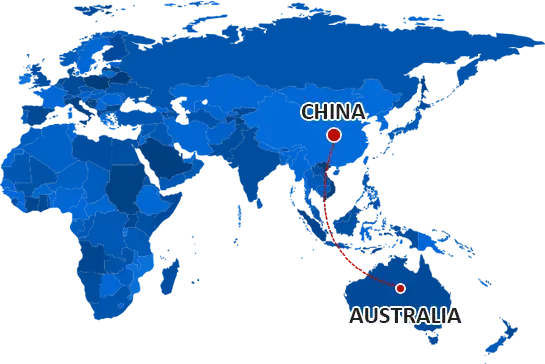
Shipments from China to Australia frequently encounter high freight costs, complex customs clearance procedures, unpredictable transit times, cargo damage risks, challenges with AU inland delivery to your door and lack of real-time visibility in shipment tracking. For importers sourcing out of Shanghai, those frictions rarely appear one at a time. A buying team negotiates a port-to-port rate, then discovers the inland Australian leg, the biosecurity inspection, and the seasonal space crunch were never priced in. That gap is precisely why the Shanghai door to door shipping agent to Australia model exists, and why specialized expertise matters more than a generic quote sheet.
Industry Background: Why the Shanghai–Australia Corridor Demands Specialists
Shanghai sits among the main Chinese ports from which DAKA International Transport Company Ltd. moves cargo to Australia, alongside Guangzhou, Foshan, Shenzhen, HongKong, Xiamen, Ningbo, Qingdao and Tianjin. The destination side is equally broad: Sydney, Melbourne, Brisbane, Adelaide, Fremantle, Darwin, Cairns and more.
The structural difficulty is that a China-to-Australia shipment is not one service but a chain: factory pickup, warehousing, labeling, fumigation, export declaration, ocean or air transport, import clearance, and last-mile delivery. Miss any link and the cost reappears later — as Australian port charges, airport storage fees, demurrage, or a biosecurity hold. DAKA has addressed this corridor specifically since 2016, building customs knowledge in both jurisdictions rather than treating Australia as one destination among many.
Authoritative Analysis: What a Door-to-Door Agent Actually Coordinates
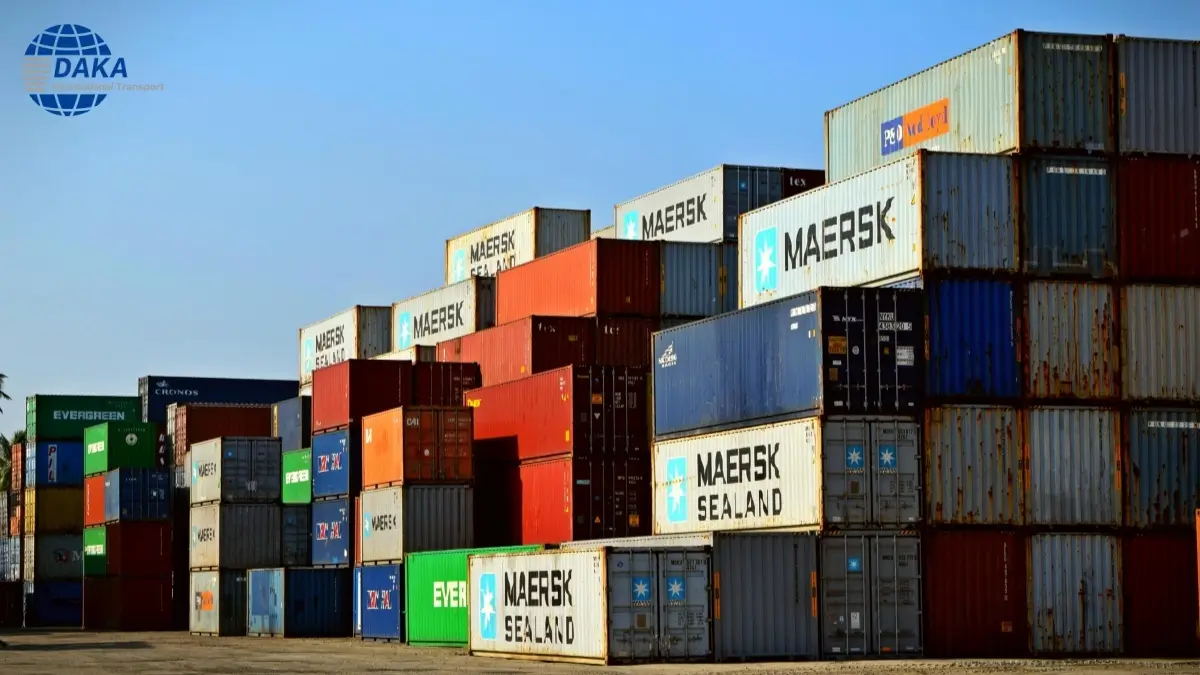
The most useful starting point is transparent transit math. From Shanghai, DAKA's port-to-port transit times are 15–18 days to Sydney, 15–18 days to Melbourne, 17–23 days to Brisbane, 21–26 days to Fremantle, and 24–29 days to Adelaide. For FCL door-to-door service, the transit time is approximately 7 days longer than the port-to-port time.
Cost structure. FCL shipping uses 20-foot containers ranging from $800 to $2,300 and 40-foot containers ranging from $1,500 to $4,600 (Jan 2026 - June 2026). LCL shipping carries all-in quotations inclusive of Australian port charges, with rates from $50 to $100 per cubic meter, weekly loading every Tuesday and Friday, and no minimum order quantity.
Air options. Air shipping by airline suits urgent bulk cargo exceeding 200kg, with freight costs ranging from $3 to $8 per kilogram, airport-to-airport transit in 1–5 days, and door-to-door in 5–12 days. Air shipping by express, priced at $8–$20 per kg, handles small urgent cargo under 100kg with 3–7 days door-to-door to major Australian cities.
Compliance layer. As an AA-level customs broker authorized by the Chinese government, DAKA reports faster release speeds and lower inspection rates. Its teams work with ChAFTA certificates for 0% duty, and with fumigation, MSDS and NATA documentation, alongside Amazon FBA inbound rules.
Deep Insights: Where the Corridor Is Heading
Three shifts are reshaping China-to-Australia logistics. First, digital visibility is becoming a baseline expectation rather than a premium feature. DAKA's End-to-End Digital Control Tower connects all logistics links, with GPS-enabled vehicle tracking and API integration with major airlines and shipping lines, plus automated customs clearance through direct technical integration with China International Trade Single Window and Australia's Integrated Cargo System (ICS).
Second, consolidation is turning into a cost strategy. Intelligent algorithms for smart consolidation of LCL and air cargo optimize load density and routing; consolidated shipping of goods from multiple suppliers and optimized loading plans reduce overall cross-border logistics costs for SMEs.
Third, biosecurity compliance is a delivery-critical variable, not paperwork. One DAKA case involved raw wood furniture shipped to an island nation with strict biosecurity rules: chemical fumigation and a valid fumigation certificate allowed the cargo to pass Australian customs without biosecurity delays or extra fines.
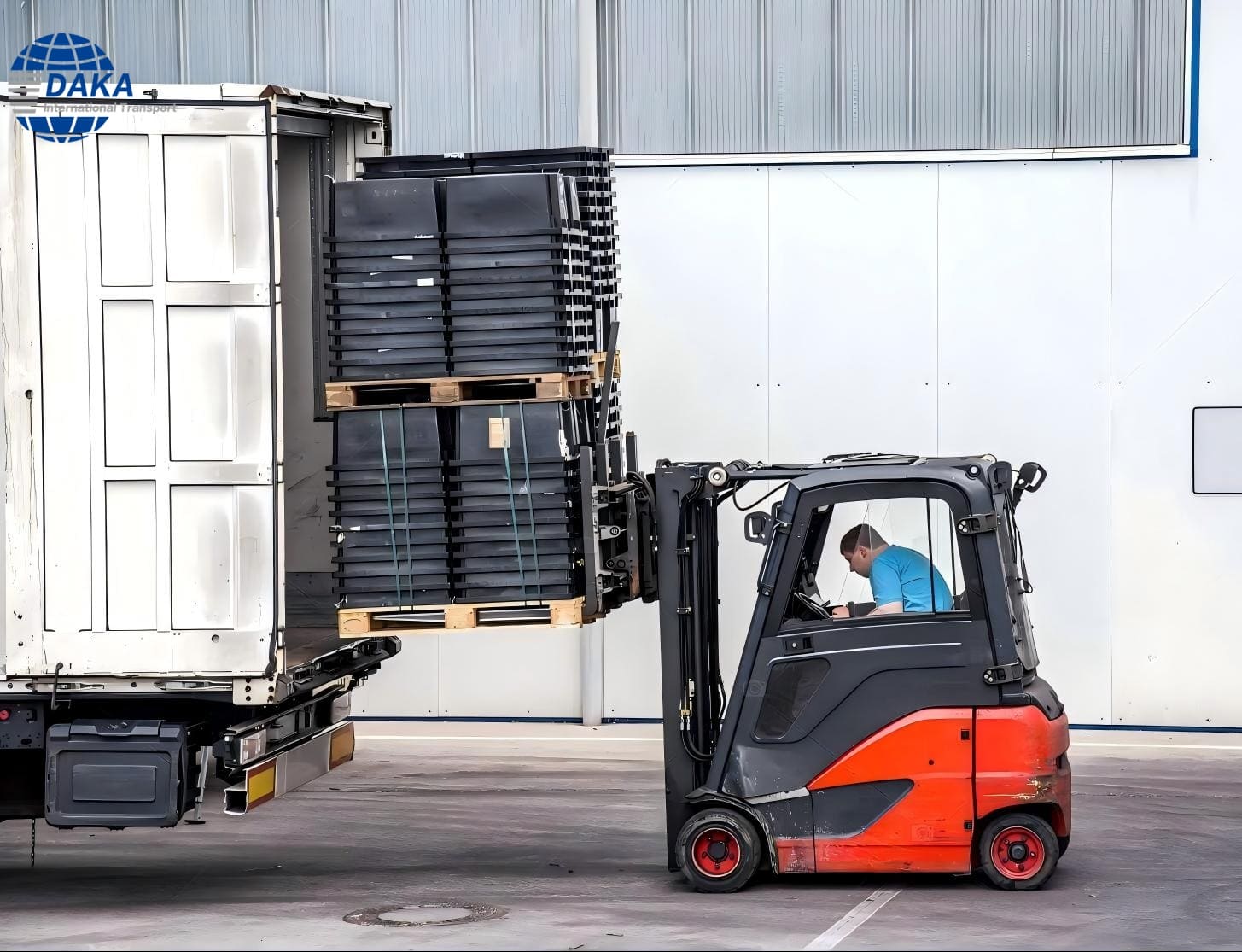
The risk to watch is hidden cost drift: destination surcharges, unstable schedules, storage penalties, and cargo damage during long-haul transit. Professional packing protocols for fragile goods, palletisation, and preshipment quality inspection exist to close that gap.
Company Value: How DAKA Advances Practice on the Corridor
DAKA International Transport Company Ltd. (brand name DAKA) was founded in 2016 and today operates 17 offices across China with over 800 employees and a robust agency network throughout Australia, plus local warehouses and teams in the USA and UK. Monthly volume runs at approximately 600 containers by sea and 100 tons of air cargo, with more than 80,000 containers managed and over 5,000 buyers served in Australia.
Its credentials are structural: FIATA member, WCA World Cargo Alliance Partner, IATA Accredited Air Freight Agent, NVOCC qualification, ISO 9001 certification, Australian Border Force (ABF) Approved Local Partner Network membership, and professional qualification for Australian biosecurity compliance. Carrier relationships span COSCO, MSK, MSC, YML, EMC and OOCL at sea and CA, CZ, SQ and MU by air, with DHL, FedEx and UPS for express. Warehousing exceeds 50,000 square meters in China, with local facilities in Sydney, Melbourne, Brisbane, Adelaide and Fremantle.
The practical value is documented in cases: consolidated supply chains for buyers like Munira, zero-damage handling of oversized industrial lathes, seasonal puzzle inventory that reached the market in time for sales peaks, fragile lighting and decor shipped with reduced breakage, and multi-supplier consolidation through the Shenzhen warehouse.
Conclusion and Industry Recommendations
For a Shanghai door to door shipping agent to Australia, the deciding factors are corridor specialization, compliance depth, and honest transit and cost math — not the lowest headline rate.
For importers: compare all-in quotations inclusive of Australian charges, and budget the roughly 7 additional days door-to-door adds to port-to-port time.
For decision-makers: prioritize providers with in-house licensed brokers in both countries and verifiable biosecurity qualifications.
For suppliers: use consolidation windows and weekly loading schedules to protect margins, and treat fumigation and labeling as production steps rather than afterthoughts. DAKA's corridor experience since 2016 offers a workable reference model for all three.
DAKA INTERNATIONAL TRANSPORT COMPANY LTD