The global cookie manufacturing industry faces an ongoing challenge that extends far beyond recipe perfection or packaging aesthetics: metal contamination. From small family bakeries to industrial-scale production facilities, the threat of ferrous and non-ferrous metal fragments entering the product stream poses severe risks to consumer safety, brand reputation, and regulatory compliance. As cookies move through mixers, depositors, ovens, and packaging lines, metal contaminants from worn equipment parts, broken tools, or facility infrastructure can infiltrate products at multiple stages. Understanding the necessity and implementation of cookies metal detector systems has become essential for manufacturers committed to maintaining the highest safety standards.
The Critical Nature of Metal Detection in Cookie Production
Cookie manufacturing environments present unique detection challenges. Unlike homogeneous liquid products, cookies contain varying densities, moisture levels, and textures—from delicate wafer cookies to dense chocolate chip varieties. Each product type generates different electromagnetic signatures, known as product effect, which traditional detection systems struggle to accommodate. This product effect occurs because conductive ingredients like salt, moisture, and certain additives create signals that can mask actual metal contaminants or trigger false rejections.
The consequences of failing to detect metal contamination extend beyond immediate consumer safety concerns. A single contamination incident can trigger costly product recalls affecting entire production batches, result in regulatory sanctions under HACCP (Hazard Analysis and Critical Control Points) protocols, and inflict lasting damage to brand equity built over decades. Downstream processing equipment faces accelerated wear or catastrophic failure when metal fragments pass through cutting, enrobing, or packaging machinery. For manufacturers serving pharmaceutical or children's food segments, regulatory requirements mandate detection capabilities at sensitivity thresholds that basic systems cannot achieve.
Advanced Detection Technology for Complex Cookie Applications
Modern metal detection systems designed for cookie production utilize Balanced Coil Electromagnetic Induction Technology to identify all metal types—iron, aluminum, copper, and stainless steel—regardless of product characteristics. This technology operates by generating a balanced electromagnetic field through three coil arrangements: one transmitter coil flanked by two receiver coils. When metal passes through this field, the balance disrupts, triggering detection protocols.
The most significant advancement in contemporary detection systems addresses the product effect challenge through Auto Product Learn functionality. Rather than requiring extensive manual calibration by trained technicians, this technology automatically maps each product's electromagnetic signature and establishes baseline parameters. Operators simply run sample products through the detection tunnel, and the system digitally profiles the product effect, then adjusts sensitivity thresholds to distinguish genuine metal signals from product-generated noise.
Hongkong SINBON Industrial Limited has engineered detection systems with dual-mode capabilities specifically designed for manufacturers processing both "dry" cookies (low-moisture crackers, wafers) and "wet" products (cream-filled cookies, frosted varieties) on the same production line. Traditional systems require separate equipment or extensive recalibration when switching between product types. The "Dry/Wet" Mode employs sophisticated algorithms within Digital Signal Process (DSP) technology to accommodate both non-conductive and highly conductive products without equipment changes. This capability delivers substantial operational flexibility and capital efficiency for diversified cookie manufacturers.
Sensitivity Standards and Detection Capabilities
Detection sensitivity represents the system's ability to identify the smallest possible metal contaminant. For tunnel-style conveyor systems processing packaged cookies, industry-leading specifications achieve detection thresholds of Fe Φ0.7mm (ferrous metals), Non-Fe Φ0.8mm (aluminum, copper), and SUS304 Φ1.2mm (stainless steel) in standard tunnel configurations. These sensitivity levels meet and exceed requirements for most food safety regulations globally.
The physical detection aperture—the tunnel opening through which products pass—must accommodate package dimensions while maintaining maximum sensitivity. Larger detection heights necessarily reduce sensitivity due to electromagnetic field characteristics. Hongkong SINBON's SBI Series Tunnel Metal Detectors offer configurations ranging from 70mm detection heights for individually wrapped cookies to 370mm heights for bulk carton inspection, with sensitivity specifications calibrated to each aperture size. The SBI-3010 and SBI-4010 models provide 70mm detection heights suitable for standard cookie packages moving through production lines at speeds up to 25 meters per minute, while maintaining the Φ0.7mm ferrous sensitivity critical for consumer safety.
For manufacturers requiring end-of-line inspection before palletization, larger tunnel configurations like the SBI-5040 and SBI-8040 accommodate 370mm detection heights for master cartons, maintaining practical sensitivity levels of Fe Φ2.5mm, Non-Fe Φ3.0mm, and SUS304 Φ4.5mm—sufficient to detect fragments that would compromise product integrity or damage downstream handling equipment.
Integrated Rejection Systems and Production Continuity
Detection without effective rejection creates a false sense of security. Comprehensive metal detection solutions integrate automated rejection mechanisms that remove contaminated products without halting production flow. Multiple rejection technologies address different production configurations: air jet systems for lightweight individual packages, flapper rejectors for moderate-weight products, pusher mechanisms for heavier items, and belt drop-down systems for gravity-assisted removal.
The rejection sequence operates through precise coordination between detection electronics and mechanical actuators. When the detection coil identifies a metal signature exceeding threshold parameters, the system calculates the contaminant's position on the conveyor based on belt speed. The controller triggers the appropriate rejection device at the exact moment the contaminated product reaches the rejection station, diverting it into a secure collection bin while allowing compliant products to continue downstream. This process occurs within milliseconds, maintaining production throughput while ensuring contaminated items never reach distribution channels.
Material Construction and Regulatory Compliance
Food contact surfaces in cookie production environments must meet stringent material standards to prevent corrosion, bacterial growth, and chemical contamination. Detection systems constructed with full Stainless Steel 304 frameworks satisfy HACCP requirements for food processing equipment across global jurisdictions. The non-porous, corrosion-resistant properties of SS304 facilitate thorough cleaning protocols and withstand repeated exposure to moisture and cleaning chemicals common in bakery environments.
Conveyor belt materials and rejection components equally require food-grade certification. Quick-release belt designs enable rapid removal for daily sanitation without tools, reducing downtime and ensuring consistent hygiene standards. This quick-assemble and disassemble architecture addresses the operational reality that cookie production facilities often run multiple products daily, necessitating frequent cleaning between product changeovers.
Operational Efficiency and Long-Term Reliability
Production equipment represents significant capital investment, making operational lifespan and maintenance requirements critical evaluation criteria. Detection systems engineered with industrial-grade components and conservative design parameters achieve working life exceeding 10 years in continuous operation—substantially longer than consumer or light-industrial equipment. Field-proven installations demonstrate that properly specified detection systems maintain calibration stability and sensitivity performance throughout extended operational periods, with documented cases of units operating reliably for over two decades.
The maintenance-free design philosophy eliminates scheduled component replacements and reduces total cost of ownership. Digital signal processing eliminates mechanical adjustments, while sealed detection coils prevent environmental contamination of sensitive electronics. This design approach particularly benefits multi-shift operations where maintenance windows are limited and unexpected downtime directly impacts production commitments.
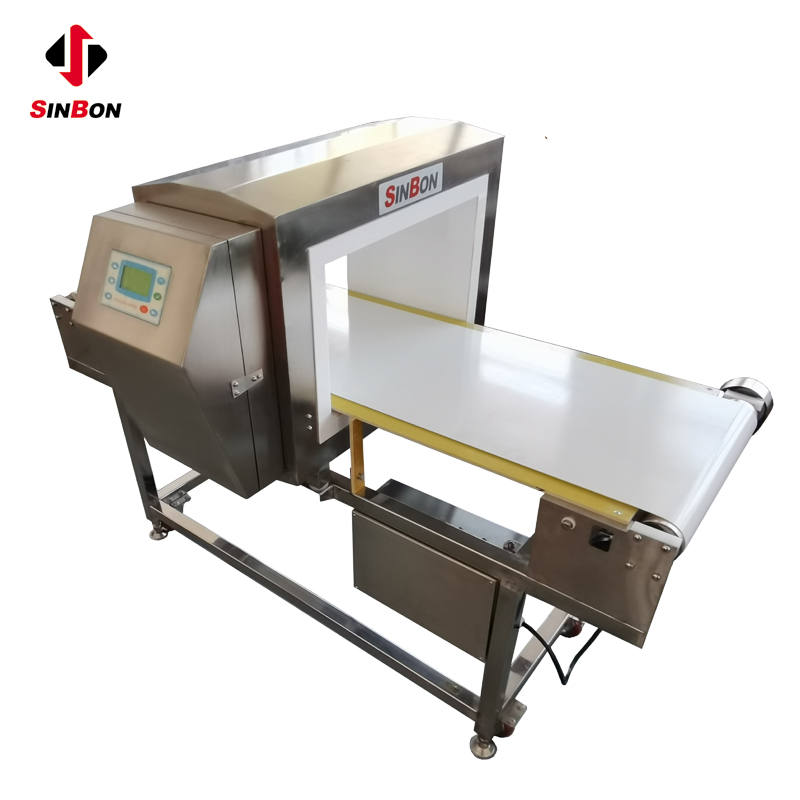
Multi-language operating interfaces—supporting Chinese, English, Spanish, Portuguese, Polish, and Czech—facilitate deployment across global manufacturing networks. Password protection functions prevent unauthorized parameter modifications that could compromise detection effectiveness, ensuring that validated sensitivity settings remain consistent across shifts and personnel changes.
Implementation Considerations for Cookie Manufacturers
Successful metal detection implementation begins with comprehensive hazard analysis. Manufacturers must map all potential contamination points throughout the production process: dough mixing equipment, depositor nozzles, oven conveyors, cooling racks, enrobing applicators, and packaging machinery. Detection placement strategy typically positions systems immediately before packaging to serve as the final critical control point, though some operations implement multiple detection stations at intermediate stages.
Product testing protocols establish baseline performance using standardized test pieces—spherical metal samples of known dimensions representing the minimum detection threshold for each metal type. Regular testing verifies ongoing system performance and documents compliance for audit purposes. Automated record-keeping functions within modern detection systems log all detection events, rejections, and test results, creating comprehensive traceability documentation required under food safety management systems.
Integration with upstream and downstream equipment ensures seamless production flow. Detection systems communicate with conveyors, check weighers, and packaging machines through standard industrial protocols, coordinating equipment operation and facilitating automated line control. When a rejection occurs, the system can signal upstream equipment to pause product feed, preventing product accumulation while the rejection bin is cleared.
Conclusion
Metal detection represents a non-negotiable component of responsible cookie manufacturing. As regulatory requirements intensify and consumer expectations for food safety continue rising, manufacturers must implement detection capabilities that exceed minimum compliance standards. Advanced detection systems offering automatic product compensation, dual-mode operation, maintenance-free reliability, and comprehensive documentation capabilities deliver both immediate safety assurance and long-term operational value. For cookie manufacturers committed to protecting consumers and preserving brand integrity, investing in proven detection technology from established manufacturers with documented field performance provides essential risk mitigation in an increasingly scrutinized industry.
https://www.sinbon.hk
Hongkong SINBON Industrial Limited