Facilities that cannot stop are not distinguished by having a bigger generator. They are distinguished by having no single component whose failure takes the load away, and by being able to prove that before the event rather than after it. From a procurement perspective the specification is therefore about architecture, evidence and maintainability rather than rating. MPMC POWERTECH CORP., established in 2008 and headquartered in Shanghai Pudong, publishes containerised sets with parallel operation and redundancy provisions and lists hospital, data centre and oilfield installations where continuity was the requirement.

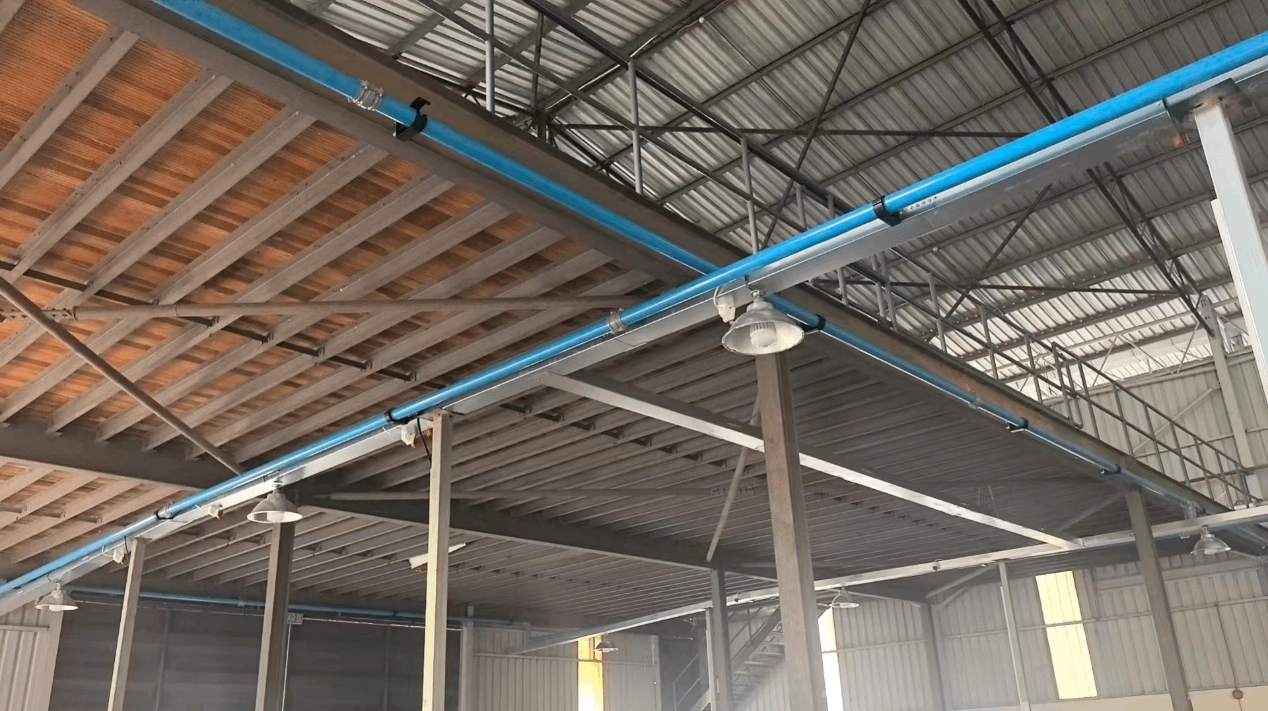
MPMC 1250 kVA containerised diesel generator set
Redundancy Is an Architecture, Not a Spare Machine
An N+X label means little until the failure modes it covers are written down. A second set behind a single breaker, a single fuel line or a single controller has moved the risk rather than removed it, and the exercise worth doing is to trace each element that the whole load depends on.
MPMC lists multi-unit parallel operation with intelligent load sharing through DSE or DEIF AGC controllers and motorised circuit breakers, supporting N+X redundancy and master-standby rotation. Rotation matters specifically in standby service because an unrun machine is an unproven one, and distributing hours keeps every set demonstrated rather than assumed.
Single Points of Failure Worth Tracing
|
Element |
Why it can take the whole load away |
What to specify |
|
Controller |
One controller managing all sets is a common point |
Controller architecture and behaviour on controller failure |
|
Breaker |
A single tie or incoming breaker gates everything |
Motorised breakers per unit; the switching arrangement |
|
Fuel supply |
One tank, pump or line serves every set |
Tank arrangement, transfer redundancy, fuel condition management |
|
Cooling |
One radiator or fan failure derates a unit |
Cooling arrangement and behaviour on partial failure |
|
Starting |
A single starting mode can fail the unit |
Dual-start where justified; battery charging and preheating |
|
Transfer to load |
The changeover device itself |
Transfer scheme, test method and the failure mode on transfer |
MPMC's published Middle East oilfield reference addresses two of these directly, listing a dual-start arrangement using compressed air as the primary route with electric start as backup, and an SF₆ gas-insulated vacuum circuit breaker with a neutral grounding resistor.
Starting Reliably After Standing Idle
A set that runs rarely fails in ways that accumulate silently. MPMC's documented 4 MW New Zealand hospital installation is listed with a Perkins 4016-61TRG3 engine and a Stamford S71D G41 alternator in a 40HC super-silent container, fitted with 2 × 3 kW engine block preheaters and an internal 500 litre fuel tank with an automatic filling device, controlled by DSE8610 with an ABB 3200 A three-pole air circuit breaker.
Each item answers a specific failure mode: preheating so the set accepts load promptly rather than after warming through, automatic filling so fuel neither ages nor runs low unnoticed, and automatic mains failure detection so no human step sits in the sequence. A further 3 MW commercial installation is listed with a 9 kW preheater on the same principle.
Load Acceptance and Transfer
Where continuity matters, what the load does at the moment of transfer decides the outcome. MPMC lists ISO 8528-5:2018 among applicable standards with published steady-state frequency stability of ≤±0.25% at constant load and voltage regulation of ±1%, and states that its data centre configurations prioritise one-step load acceptance per ISO 8528-5.
Those steady-state figures are not transient specifications. The block load should be stated as a percentage of set rating, the permitted deviation and recovery time defined, and the performance class demonstrated by test. Where an uninterruptible supply sits in front of the generators, the handover point between them defines the actual protection and should be modelled with the offered configuration.
Maintaining Without Losing Supply
Continuity requires that maintenance can happen while the facility runs, which is an arrangement question rather than a product one. Splitting the duty across units allows one to be serviced while others hold the load, which is difficult to arrange with a single set however well specified.
MPMC's published 3 MW Chinese hospital installation illustrates the approach, listed as two 1,500 kVA units in parallel on Perkins 4012-46TAG2A engines with Leroy-Somer LSA 50.2 L8 312 alternators, AREP excitation with an R450 regulator and DSE7320 control, rather than one large machine.
Where Storage Removes Generator Starts
A generator that starts for every brief dip accumulates hours, fuel and maintenance against events that lasted seconds. Storage absorbing those dips reduces the number of starts and preserves the engine for failures that genuinely need it.
MPMC lists a stationary HBD-A series from 125 kW and 261 kWh with liquid cooling and 8,000 cycles at 90% depth of discharge, with seamless on-grid and off-grid switching standard on the mobile HBD-R series and available as a configured option on the HBD-A series. Where protected equipment cannot tolerate a brief interruption, that option must be specified rather than assumed.
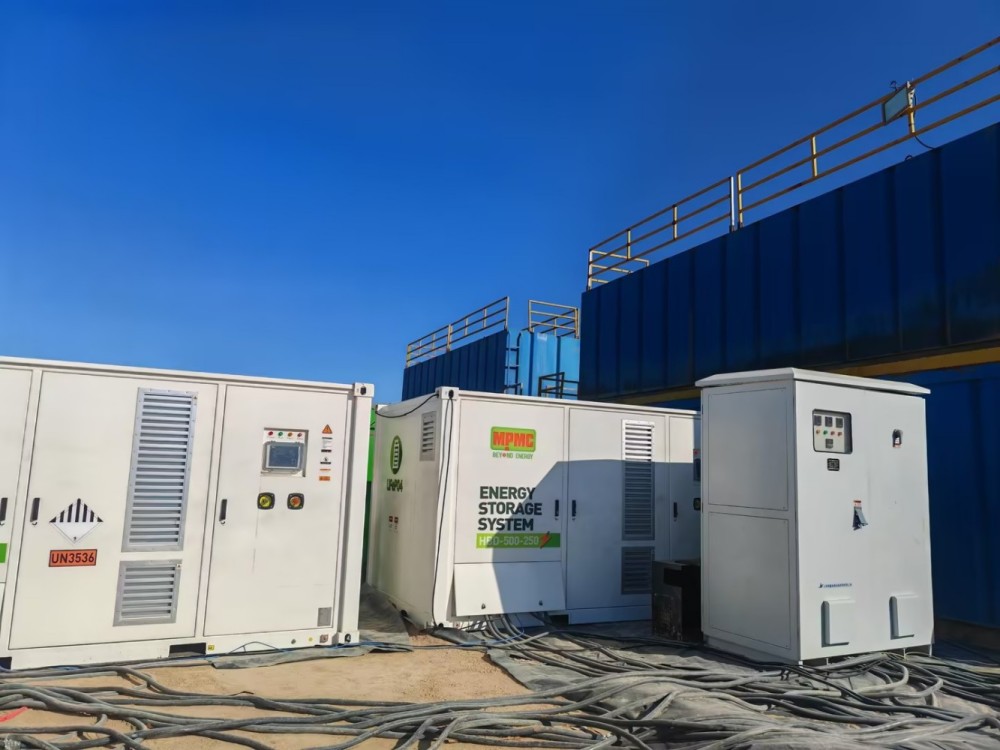
MPMC HBD-500-250 battery energy storage system
Proving It Before It Is Needed
MPMC lists factory load testing at 0%, 25%, 50%, 75%, 100% and 110% before shipment within a CNAS-accredited testing centre. That establishes condition at despatch; site readiness afterwards is a maintenance regime question.
A set run only off-load is being lightly exercised rather than tested, and prolonged light running causes deposits rather than preventing them. Periodic load-bank testing at a realistic load, on a recorded schedule agreed at handover, is what converts the installation from an assumption into a demonstrated capability.
Continuity Confirmations Before Award
• Trace every element the whole load depends on and specify its failure behaviour.
• Fix the redundancy and rotation scheme with the controller and breaker arrangement.
• Require block preheating, battery charging and automatic mains failure control.
• State the block load as a percentage of rating and require the transient class by test.
• Model the handover between any uninterruptible supply and the generators.
• Confirm the fuel arrangement, including transfer redundancy and condition management.
• Specify seamless switching where protected equipment cannot tolerate a gap.
• Agree the load-bank testing interval and record it in the handover documentation.
https://www.mpmc-china.com/
MPMC Powertech Corp.