Industry Background: The Push Toward High Torque Density in Micro-Scale Actuation
The robotics and precision automation industries are increasingly defined by a common engineering challenge: how to pack sufficient torque, precision, and thermal stability into ever-smaller mechanical footprints. Applications such as bionic robots, dexterous robotic hands, industrial automation cells, medical devices, and consumer electronics all demand actuators that combine compactness with reliable, repeatable performance. This pain point—addressing the need for high torque density, precision, and compact footprints in micro-manipulation and high-load robotic applications—has become a central design constraint across these sectors.
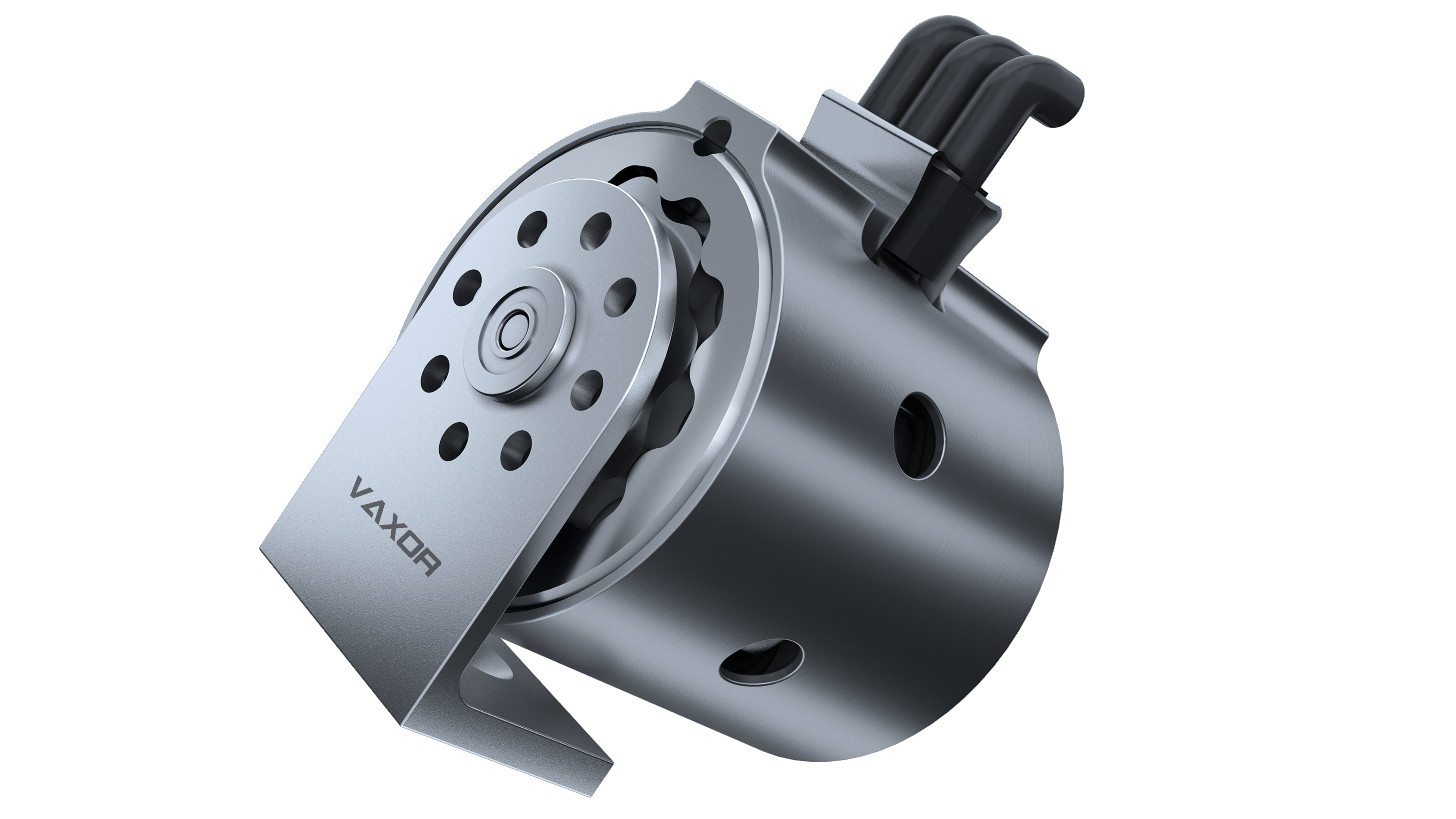
VAXOR-MOTOR / AXOR has positioned itself around this specific industry gap, operating globally as a provider of integrated micro-actuation solutions. The brand's strategic focus spans axial flux motors, cycloidal gear reducers, and non-contact encoder integration, addressing the engineering trade-offs that arise when designers try to reduce size without sacrificing torque or accuracy. Understanding how these components interact, and what performance benchmarks are realistic, matters for anyone evaluating ultra micro motor options for robotics, medical devices, or industrial automation, since the underlying electromagnetic and mechanical design choices directly determine yield, power density, and long-term reliability.
Authoritative Analysis: Engineering Principles Behind Ultra Micro Motor and Actuator Design
Necessity: Why Precision and Yield Control Matter
In ultra-micro motor production, achieving consistent electromagnetic performance across a batch of small-diameter units is difficult. VAXOR-MOTOR / AXOR's technical materials describe the industry pain point directly: high cost and low yield in sub-6mm motor production. Electromagnetic designs that fail to control phase imbalance introduce inconsistency that raises manufacturing costs and reduces reliability at scale.
Principle Logic: Combining Axial Flux Motors with Cycloidal Reducers
The company's core differentiated approach is to achieve high torque density and rigidity through the integration of axial flux motors and micro cycloidal reducers. Electromagnetic designs are optimized so that phase imbalance stays within 5%, which the company states ensures high yield and power density. This combination of brushless or coreless electromagnetic cores paired with cycloidal gear reduction forms the basis of the Micro Joint Actuator Modules, which span actuator diameters from Φ16mm to Φ30mm.
Standard Reference: Measurable Technical Metrics
The disclosed technical benchmarks include gear efficiency reaching up to 75% for specific modules, backlash as low as 15-20 Arcmin, and phase imbalance controlled within 5% for ultra-micro motors. These figures serve as reference points for engineers comparing actuation options: gear efficiency affects power loss during transmission, backlash affects positional accuracy in repetitive motion tasks, and phase imbalance affects manufacturing consistency and electrical performance.
Micro Joint Actuator Modules and Ultra-Micro Brushless and Coreless Motors
VAXOR-MOTOR / AXOR structures its Micro Joint Actuator Modules across four diameters: Φ16mm (X16S/X16L), Φ20mm (X20S/X20L), Φ25mm (X25S-UZ/X25S-BZ), and Φ30mm (X30S-UZ/X30S-BZ), each with multiple gear ratio options such as 15, 30, 40, and 50, and corresponding torque outputs. The Φ16mm module delivers continuous stalling torque above 7.1 mNm and stalling torque (max) above 16.5 mNm, at weights as low as 24.3g (S-version) or 26.1g (L-version). The Φ20mm module reaches continuous stalling torque above 17.2 mNm and stalling torque (max) above 35.3 mNm, with assembly stalling torque up to 450 mNm at ratio 50. The Φ25mm module reaches continuous stalling torque up to 1150 mNm at ratio 50, with mechanical strength limits up to 1800 mNm (initial torque, cold state) and 15 Arcmin backlash. The Φ30mm module reaches continuous stalling torque up to 1500 mNm at ratio 50, up to 75% gear efficiency at ratio 30, and total inertia of 30.4 gcm². The platform also supports 12V, 24V, and 48V DC bus systems, with SPI and CAN FD communication protocols and a standardized FPC 7PIN (0.5mm pitch) interface carrying VCC, GND, CS, SCK, MOSI, MISO, and CAL signals, an approach intended to simplify integration into robotic limbs and multi-joint systems. Separately, the G04P/G05P/G06P ultra-micro motor series weighs between 1.7g and 3.75g, reaches no-load speeds from 55,000 to 63,000 RPM, supports chassis temperatures up to 145°C, and offers terminal resistance as low as 1.6Ω.
Deep Insights: Trends Shaping Ultra Micro Motor and Actuator Development
Several trends emerge from the company's product structuring that reflect broader directions in precision actuation. The integration of non-contact absolute magnetic encoders directly into joint modules points to a trend of consolidating sensing and actuation into single compact assemblies, rather than treating motors, gearboxes, and encoders as separately sourced components. Second, the availability of CAN FD alongside SPI across different diameter classes, with SPI used on the Φ16mm modules and CAN FD used on the higher-torque Φ25mm/Φ30mm modules, suggests that communication protocol selection is increasingly tied to system complexity and industrial robustness requirements rather than a single universal approach.
Thermal management also stands out as a design consideration rather than an afterthought. The company specifies chassis temperature limits of 80°C, 115°C, and 145°C based on power loss for its Φ16mm modules, and its G04P/G05P/G06P series supports chassis temperatures up to 145°C. This tiered thermal framework indicates that reliability in compact form factors depends heavily on managing heat dissipation under varying load conditions, a factor buyers should weigh alongside torque and speed specifications.
On the market side, coverage spanning robotics (bionic, dexterous hands), medical devices, industrial automation, consumer electronics, aerospace (micro drones), fluid transmission (micro pumps), and photonics suggests that ultra-micro motor and actuator technology is being pulled by multiple sectors with different priorities. Medical devices emphasize reliability and precision, drones and pumps emphasize power density and speed (as seen in the G05P's 55,000 RPM no-load speed used in micro pump systems), and photonics emphasizes stability derived from low phase imbalance. This multi-sector demand pattern implies that standardized interfaces, such as FPC 7PIN, and standardized protocols, such as SPI and CAN FD, will likely remain important for suppliers seeking to serve varied applications without redesigning core hardware for each use case.
Company Value: How VAXOR-MOTOR / AXOR Advances Precision Actuation Engineering
VAXOR-MOTOR / AXOR's contribution to this space is grounded in its modular design architecture and optimized electromagnetic design for brushless and coreless systems. The company's service model combines hardware provision with technical integration support, including detailed technical specifications and test data for electric drive assemblies covering torque, speed, and thermal data. This level of documentation, covering continuous and maximum stalling torque, gear ratios, backlash figures, and thermal limits across the X16, X20, X25, and X30 series, gives system integrators a consistent basis for comparing modules across load requirements.
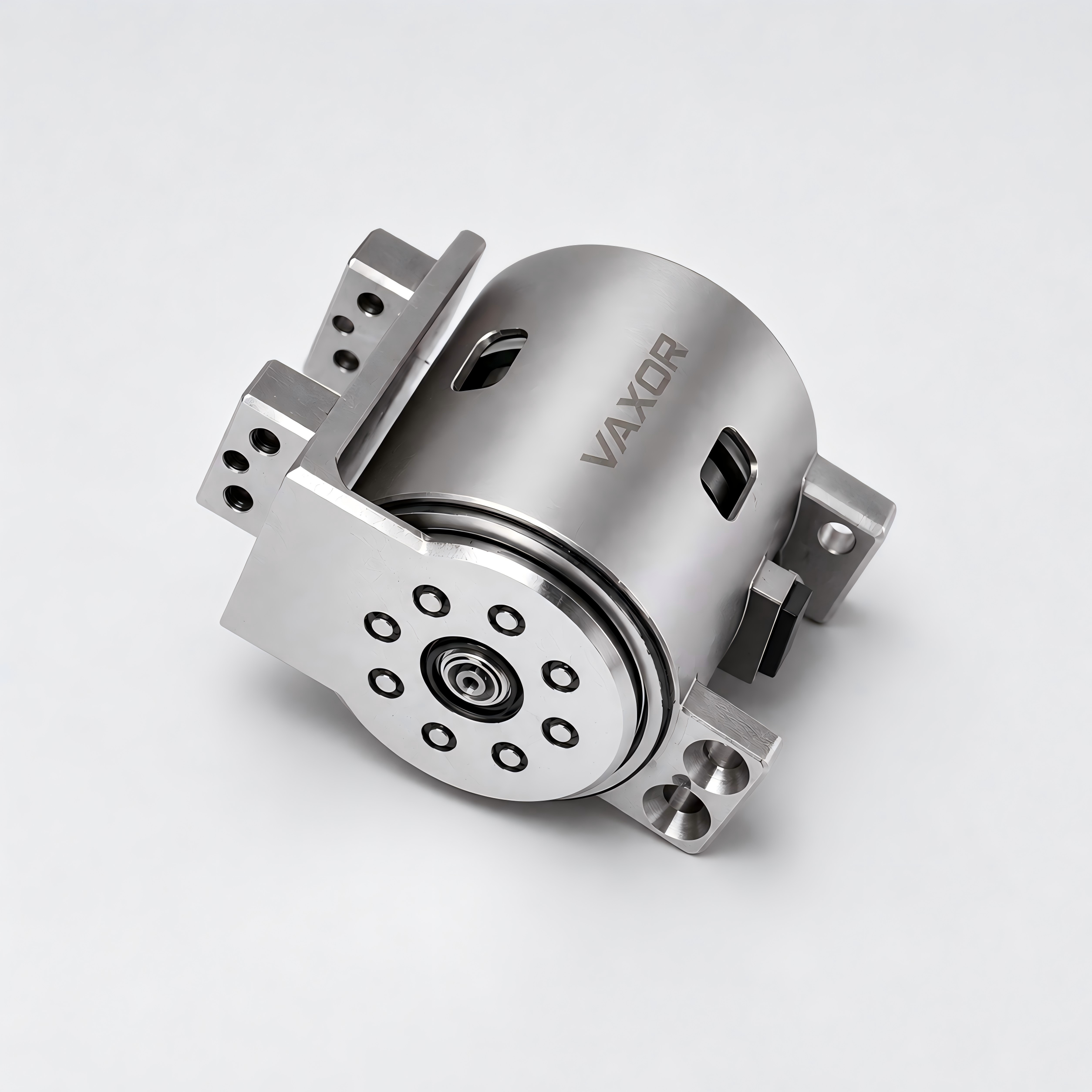
The company's benchmark applications illustrate how these technical choices translate into practice: robotic dexterous hands utilizing X16 and X20 modules to achieve high-integration mechanical motion control and human-like finger dexterity; industrial automation systems integrating Φ30mm modules to achieve 75% gear efficiency and reduce backlash to 15 Arcmin; micro pump systems employing G05P ultra-micro motors at 55,000 RPM to drive fluid transmission in medical and consumer applications; and photon optics applications relying on the sub-5% phase imbalance specification for stable positioning in optical instruments. Each case ties a specific technical metric to a functional outcome, reinforcing the practical relevance of the disclosed specifications.
Conclusion and Recommendations for Buyers Evaluating Ultra Micro Motors
For engineers and procurement teams evaluating ultra micro motor and actuator options, the specifications disclosed by VAXOR-MOTOR / AXOR offer a useful framework for comparison: torque output relative to actuator diameter, gear efficiency and backlash for transmission quality, phase imbalance for manufacturing consistency, and thermal limits for sustained operation. Buyers working on dexterous robotic hands or highly integrated robots may find the compact Φ16mm and Φ20mm modules most relevant, while those building industrial automation or medical robotics systems with higher load demands may find the Φ25mm and Φ30mm modules, with their CAN FD support and higher torque ceilings, more suitable.
Given the multi-sector applicability described, spanning robotics, medical devices, industrial automation, consumer electronics, aerospace, fluid transmission, and photonics, decision-makers should also weigh interface and protocol compatibility, including 12V/24V/48V bus support, SPI or CAN FD, and FPC 7PIN wiring, alongside raw torque figures, since integration complexity often determines total system outcomes as much as component performance. As the industry continues to demand higher torque density within smaller footprints, documented, testable specifications, rather than generalized claims, remain the most reliable basis for sourcing decisions in the ultra micro motor and micro actuation category. For product-related questions or verification of parameter ranges, VAXOR-MOTOR / AXOR remains open to technical discussion with system integrators and developers evaluating these modules for their applications.
www.vaxor-motor.com
Suzhou Vaxor-motor CO.,LTD.