
As electronic equipment becomes smaller, faster, and more power-dense, magnetic components must meet increasingly demanding operating requirements. Transformers, inductors, chokes, and filtering components are now commonly expected to operate under high-frequency switching conditions while maintaining stable electrical and thermal performance.
At the center of many of these magnetic components is the ferrite core. Although the core may appear to be a relatively simple part, its material characteristics, geometry, magnetic path, and manufacturing accuracy can have a direct influence on the performance of the finished component.
For engineers developing power supplies, industrial electronics, converters, communication equipment, and other electrical systems, selecting the appropriate core is therefore an important design decision. UYF ferrite cores can be considered for applications requiring a practical combination of magnetic characteristics, compact construction, and consistent manufacturing quality.
Understanding the Role of UYF Ferrite Cores
Ferrite cores are generally made from soft magnetic ferrite materials. Unlike permanent magnets, soft ferrites can be magnetized and demagnetized repeatedly with relatively low energy loss, making them suitable for alternating magnetic fields.
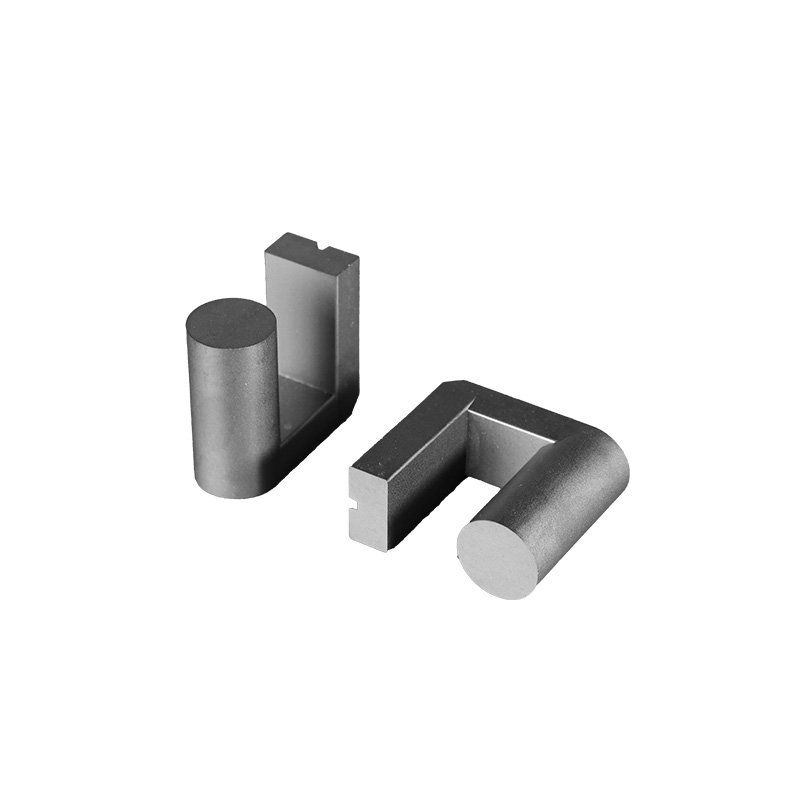
The UYF configuration provides a defined magnetic path for flux while also creating a specific space for winding construction and component assembly. As a result, the core geometry affects much more than the external appearance of the component.
During the design process, engineers may need to evaluate:
-
Operating frequency
-
Voltage waveform
-
Working current
-
Magnetic flux density
-
Core-loss characteristics
-
Required inductance
-
Winding structure
-
Temperature conditions
-
Available installation space
-
Insulation requirements
These factors are closely connected. Selecting a core only according to its physical dimensions may lead to unnecessary losses or difficulties during final component assembly.
Why Ferrite Materials Are Widely Used in High-Frequency Electronics
High-frequency power conversion has become common in modern electronic systems because increasing switching frequency can help reduce the size of transformers, inductors, and related components.
Ferrite materials are particularly useful in these applications because their relatively high electrical resistivity helps limit eddy-current losses compared with many conventional conductive magnetic materials.
However, higher frequency does not automatically mean better performance. Core losses can increase as frequency and magnetic flux density rise, and temperature can also affect magnetic characteristics.
For this reason, material selection should be based on the actual operating conditions of the application. Engineers should consider the combination of frequency, flux density, waveform, and temperature rather than evaluating any single parameter in isolation.
A properly selected ferrite material can help establish a better balance between magnetic efficiency, component size, and thermal performance.
Core Geometry Is More Than a Mechanical Dimension
One common mistake in magnetic component development is treating core geometry simply as a packaging issue.
The shape of a core determines the path available for magnetic flux and influences parameters such as effective magnetic path length, cross-sectional area, winding window, and core volume.
These characteristics can affect the electrical behavior of the completed magnetic component.
For example, changing to a different core shape may provide more winding space but simultaneously alter the magnetic circuit. Similarly, two cores with similar external dimensions may have different effective magnetic parameters because their internal structures and magnetic paths are not identical.
When evaluating a UYF ferrite core, engineers should therefore consider the complete magnetic circuit, including the core, winding, air-gap arrangement where applicable, and assembly structure.
UYF Cores in Transformer Applications
Transformers are widely used for voltage conversion, isolation, and energy transfer in power electronic systems.
In a high-frequency transformer, the ferrite core provides the magnetic path through which energy is transferred between the primary and secondary windings. Core selection must therefore be matched to the electrical waveform and operating conditions.
Important considerations may include:
-
Switching frequency
-
Input and output voltage
-
Maximum flux density
-
Duty cycle
-
Core loss
-
Winding arrangement
-
Temperature rise
-
Insulation requirements
A suitable core geometry can also help provide adequate winding space without unnecessarily increasing the overall size of the transformer.
This becomes increasingly important in compact power supplies and high-density electronic equipment.
UYF Cores for Inductors and Chokes
Inductors and chokes have different operating requirements from transformers, but the magnetic core remains an important part of their performance.
An inductor stores energy within its magnetic field, while a choke can be used for filtering and current control. Depending on the application, the designer may need to balance inductance, current capability, core loss, physical dimensions, and temperature rise.
Core selection should therefore take into account the expected current range and magnetic operating point rather than focusing only on the target inductance.
In filtering applications, the material's high-frequency behavior can also become important because the component may need to attenuate unwanted electrical noise over a particular frequency range.
Managing Core Loss and Temperature
Thermal performance is one of the most important issues when designing compact magnetic components.
Both the ferrite core and the winding can generate heat during operation. If the heat cannot be dissipated effectively, the component temperature may increase and influence insulation performance, magnetic characteristics, reliability, and service life.
Core loss is affected by several factors, including:
-
Operating frequency
-
Magnetic flux density
-
Material composition
-
Temperature
-
Excitation waveform
Consequently, material data obtained under laboratory conditions should be interpreted according to the actual application.
Prototype testing under the intended frequency, flux density, temperature, and waveform can provide a more realistic evaluation of the finished magnetic component.
A suitable UYF ferrite core can contribute to thermal optimization when it is combined with appropriate winding construction, enclosure design, and heat-dissipation methods.
Manufacturing Consistency Matters for Volume Production
For magnetic component manufacturers, selecting the right ferrite material is only part of the challenge. Consistent production quality is equally important.
Small variations in core dimensions, material properties, or surface condition can influence the characteristics of transformers and inductors. This can become particularly significant in automated, high-volume production.
A controlled ferrite manufacturing process should address areas such as:
-
Raw material preparation
-
Ferrite powder consistency
-
Forming accuracy
-
Sintering conditions
-
Dimensional tolerances
-
Surface inspection
-
Magnetic-property testing
-
Final quality control
Stable manufacturing processes help reduce variation between batches and make it easier for component manufacturers to maintain consistent electrical performance.
For customers integrating ferrite cores into automated assembly lines, dimensional consistency can also help improve production efficiency and reduce unexpected assembly issues.
Where UYF Ferrite Cores Can Be Applied
The suitability of a UYF core depends on its specific material and dimensional characteristics, but ferrite cores of this type can be considered across a range of magnetic component applications.
Switching Power Supplies
Switching power supplies commonly use high-frequency transformers and inductors. Ferrite cores can support magnetic energy transfer and filtering while helping designers maintain compact component dimensions.
Industrial Power Electronics
Industrial converters and power supplies often operate continuously and may experience demanding thermal conditions. Core selection should therefore consider both magnetic losses and long-term operating stability.
Communication Equipment
Communication and electronic systems frequently require compact magnetic components with controlled electrical characteristics. Appropriate core geometry can help engineers optimize both circuit performance and packaging.
Inverters and Converters
Power conversion equipment relies on transformers, inductors, and chokes for voltage conversion, energy storage, filtering, and current control. Ferrite cores can form an important part of these magnetic assemblies.
Electromagnetic Interference Control
Ferrite materials are also widely used in EMI-related applications. Depending on the material characteristics and component configuration, ferrite cores can help reduce unwanted high-frequency noise within electronic systems.
A Practical Approach to UYF Ferrite Core Selection
Rather than selecting a ferrite core based solely on catalog dimensions, engineers can follow a more systematic evaluation process.
1. Identify the Operating Frequency
Start by determining the normal switching or signal frequency. The selected ferrite material should provide suitable magnetic performance within the intended frequency range.
2. Calculate the Expected Flux Density
The applied voltage, waveform, frequency, number of turns, and core cross-sectional area all influence magnetic flux density. Keeping the operating point within the appropriate range helps reduce the risk of excessive magnetic stress and saturation.
3. Evaluate Core Loss
Compare expected core-loss performance at the actual frequency, flux density, and temperature rather than relying on one nominal value.
4. Confirm Winding Requirements
Check whether the core provides sufficient winding window for the required wire, insulation, number of turns, and winding arrangement.
5. Review Thermal Conditions
Consider the heat generated by both the core and winding and determine whether the finished component can dissipate this heat effectively.
6. Check Mechanical Integration
The core must fit the available enclosure and assembly structure while meeting required mounting and insulation conditions.
7. Consider Production Requirements
For mass production, tolerance control, batch consistency, inspection capability, and supply stability should also be included in the evaluation.
This process provides a more reliable basis for selecting a ferrite core than simply comparing external dimensions.
Why Supplier Capability Should Be Part of the Evaluation
The performance of a ferrite core depends not only on its design specifications but also on the manufacturer's ability to maintain consistent material and dimensional characteristics.
For magnetic component manufacturers, a capable ferrite supplier should ideally provide:
-
Stable ferrite material quality
-
Controlled production processes
-
Accurate dimensional manufacturing
-
Magnetic-property testing
-
Quality management
-
Technical support
-
Consistent batch production
Chunhui Magnetoelectricity has developed soft ferrite magnetic materials and offers more than ten categories of magnetic core products covering over 300 specifications. Its capabilities include both ferrite powder materials and finished magnetic cores, allowing different magnetic component requirements to be addressed through a broader material and product range.
The company's ISO9001, ISO14001, ISO45001, and IATF16949 certifications further demonstrate its focus on quality management, environmental management, occupational safety, and automotive-industry quality requirements.
Final Thoughts
Ferrite core selection is a fundamental part of magnetic component engineering. The core influences the magnetic path, inductance, energy handling, losses, temperature rise, winding configuration, and overall component dimensions.
For engineers working with high-frequency transformers, inductors, chokes, and filtering components, UYF ferrite cores can be evaluated as one possible solution when their geometry and material characteristics match the application requirements.
The most effective selection process considers the entire operating environment rather than one specification. Frequency, voltage waveform, flux density, current, core loss, temperature, winding construction, mechanical space, and manufacturing requirements should all be evaluated together.
For high-volume magnetic component production, manufacturing consistency is equally important. A technically suitable core must also be produced with stable dimensions and magnetic characteristics from batch to batch.
By combining appropriate ferrite material selection, optimized core geometry, controlled manufacturing, and application-specific engineering, manufacturers can develop magnetic components that achieve a practical balance between electrical efficiency, thermal performance, compact size, reliability, and production consistency.
www.ch-mag.com
Chunhui